
This is a 12-week off-season strength training program for football players to build a foundation of strength, muscle mass, and explosive power that translates to the field for any position, from quarterback to lineman.
- Duration: 12 weeks
- Frequency: Four days per week.
- Level: High school to college level
Note: This guide is about American football. If you came here looking for soccer, check out Strength Training for Soccer instead.
Do you want to be the player who delivers pancake blocks, breaks tackles, and explodes off the line of scrimmage?
That kind of speed and power isn’t something you wish for and watch happen.
It’s built in the weight room.
This training program for football builds the kind of total-body strength that makes you a problem for the other team and lasts four quarters.
Go directly to the program in StrengthLog.
Table of Contents
How Important Is Strength and Power for Football?
It’s more than important. Physical capacity is the price of admission. You cannot compete at a high level without being a phenomenal athlete.
Success on the gridiron is built on three key physical foundations:
Size and Strength
Nowhere is the importance of sheer size and strength more obvious than in the trenches with the offensive and defensive linemen.
These are the behemoths of the team, often tipping the scales at over 300 pounds.
Their job is to push opponents out of the way or hold their ground, and they are like human bulldozers, with strength and mass being the most valuable currencies.
Explosive Speed and Agility
On the flip side, you have the skill positions like wide receivers, defensive backs, and running backs.
They need maximum acceleration to get open for a pass, the speed to outrun defenders, and the ability to change direction on a dime without losing momentum, all dependent on their muscles delivering the necessary power (the ability to produce force quickly).
Hybrid Athletes
Then you have positions like linebackers and tight ends.
These guys need to be big and strong enough to take on blockers and make tackles, but still fast and agile enough to cover receivers downfield.
That’s a combination of power and athleticism that requires both strength and strength-speed work in the gym.
It’s Not Just About Brawn, But… It’s a Lot About Brawn
Now, don’t get me wrong. Football is also a very strategic and mentally demanding game.
A quarterback, for example, needs a brain that matches his arm. He must be able to read the defense, make quick decisions, and have perfect throwing mechanics (and I’m not just talking about the physical aspects).
Tom Brady was never the most physically gifted quarterback when it came to speed or arm strength, but his ability to outthink his opponents, his accuracy, and his work ethic made him the GOAT.
However, even the most brilliant football brain can’t succeed without a body that can handle the game. A quarterback still needs the arm to get the ball downfield and the mobility to not be flattened by a 300-pound defensive end.
So, how dependent is American football on physical capacity? I’d say it’s about as dependent as a fish is on water. Strategy and skill make the game, but physical power is the element it’s played in.
And how do you develop that power in the most effective way? With strength training.
Strength Training for American Football: The Basics
Let’s talk about getting bigger, faster, and stronger for the gridiron.
Whether you’re a newbie or in the NFL, the work you put in the weight room is what separates the players from the pretenders.
Here’s a breakdown of what a strength and conditioning program might look like for a football player, from high school to college.
Your training is broken down into different phases over the year, each with its own goals.
| Training Phase | Typical Duration | Typical Weekly Strength Dose |
|---|---|---|
| Off-season | ~8–12 weeks | 3–4 sessions per week. Often during late spring and summer: prime time for significant gains in strength, work capacity, and muscle mass. |
| Pre-season | ~6–8 weeks | 2–3 sessions per week. Leads into competition season; shift focus to power, speed, and conditioning. |
| In-season | ~12–20+ weeks (the entire competitive season) | 1–2 sessions per week. Maintain strength with reduced volume but high intensity (≥80% 1RM) to avoid fatigue during games. |
Do You Need Different Strength-Training Programs for Different Positions?
At higher levels of play, yes, you do need a strength-training routine adapted for your position. An NFL lineman will not train the exact same way as a skill-based player.
That being said, at the high school to college levels, a “position-agnostic” (meaning it works regardless of your role on the team) program is not only possible but very effective.
While the pros have their hyper-specialized routines, a foundational, universally applicable lifting routine is the bedrock upon which all successful football careers are built.
Every player on the field, from the cornerback to the offensive lineman, benefits from improving strength, power, change of direction, explosive speed, acceleration/deceleration, and functional mobility.
And all these qualities are exactly what strength training improves.1
However, a one-size-fits-all approach doesn’t work year-round at any level. Your training program needs to adapt to your football calendar.
Examples of Go-To Exercises for Football
| Function in football | Go-to exercises | Main muscles worked | Why it matters |
|---|---|---|---|
| First-step explosion off the snap | Hang Clean, Power Clean | Glutes, hamstrings, quads, traps | Converts force for 0–10 yard bursts and beating the snap. |
| Drive blocking & tackling power | Trap Bar Deadlift, Sled Push | Posterior chain, quads, core | Low pad-level power to move opponents and win contact. |
| Punch & lockout for offensive & defensive lines | Bench Press, Push-Up | Pecs, triceps, front delts | Stronger strike, separation, and control on blocks/sheds. |
| Change-of-direction & deceleration | Split Squat, Side Lunge | Quads, glutes, adductors | Cut stability and safer braking for quick redirects. |
| Top-speed hamstring protection | Nordic Hamstring, Romanian Deadlift, Good Morning | Hamstrings (eccentric), glutes, erectors | Protects hamstrings and supports maximal sprinting. |
| Short-area burst & jumping | Trap Bar Jump Squat, Box Jump | Quads, glutes, calves | Peak power for 5–10 yard bursts and high-pointing the ball. |
| Overhead strength & shoulder stability | Overhead Press, Push Press, Face Pull | Delts, serratus, rotator cuff, mid/lower traps | Strong and durable shoulders for blocking, tackling, catching, throwing. |
| Rotational power (throws/sheds) | Landmine Rotational Press, Wood Chop, Rotational Throw | Obliques, lats, hip rotators | Transfers hip-to-hand power for quarterbacks and defenders. |
| Grip & posture under contact | Farmer’s Walk, Plate Pinch | Forearm flexors/extensors, traps, core | Ball security, jersey control, and posture. |
| Neck & cervical stability | Neck Curl, Neck Extension, Shrug | Neck flexors/extensors, upper traps | Protect against collision forces and whiplash. |
All of the above movement patterns and muscle groups are strategically covered in Strength Training for Football.
Sample Week of Strength Training for a High School or College-Level Player
Here is what a sample week of training could look like for an intermediate-level football player, not a pro, but one who still balances training and school and can do one session per day.
| Training Day | Training Type |
|---|---|
| Monday | Lower Body Strength |
| Tuesday | Upper Body Strength |
| Wednesday | Speed & Agility: Sprint drills, cone drills, lateral shuffles, and plyometric conditioning |
| Thursday | Lower Body Power |
| Friday | Upper Body Power |
| Saturday | Conditioning & Mobility: Position-specific conditioning drills, and mobility/flexibility training |
| Sunday | Rest & Recovery |
Strength Training Program for Football
This is a training program for football players (high school to college) who want to develop their strength, power, speed, and stability and prevent injuries on the field.
It’s suitable for the off-season and into the pre-season parts of your training.
The program works best if you already have some strength training experience. It features many different, relatively complex exercises, and if you have never lifted weights before, it might be too much for you to jump right into.
If you’re new to the gym, start with one of our beginner programs, like the Beginner Barbell Training Program. You train three times per week, alternating between workouts A and B.
Workout A
| Exercise | Sets | Reps |
|---|---|---|
| Squat | 3 | 8–10 |
| Bench Press | 3 | 8–10 |
| Barbell Row | 3 | 8–10 |
Workout B
| Exercise | Sets | Reps |
|---|---|---|
| Deadlift | 3 | 6–8 |
| Lat Pulldown (or Pull-Ups) | 3 | 8–10 |
| Overhead Press | 3 | 8–10 |
In other words, you’ll train workouts A B A week one and B A B week two, then go back to week one and keep alternating between the two.
This beginner program is free in our workout log app, StrengthLog.
You can use the strength you gain to become better at football. It’s a great way to teach your muscles, brain, and nervous system to play ball together, allowing you to move on to more complex programs.
If you do have some weight training experience, you’re ready for Strength Training for Football.
12-Week Off-Season/Pre-Season Strength Training Program for American Football
This program is designed to be effective for any position by focusing on the universal athletic foundations required for the sport: strength, power, speed, and durability.
It’s a 12-week, position-agnostic plan built on a 4-day upper/lower body split (with slight deviations during the last four weeks). It follows a periodized model for progress and peak readiness for pre-season camp.
You’ll build a foundation of strength, muscle mass, and explosive power that will translate to the field for any position.
Note: The program is intermediate-level and above, but that is regarding your strength-training experience. You don’t have to have extended football experience to follow it, but it will likely be too advanced if you are completely new to strength training.
The program follows a 3-phase progression:
| Day | Focus |
|---|---|
| Weeks 1–4 | Base Strength & Hypertrophy: Focus on building muscle mass and work capacity |
| Weeks 5–8 | Maximal Strength & Force Production: Focus on increasing maximal strength by lifting heavier weights for fewer reps |
| Weeks 9–12 | Strength-Speed & Power Conversion: Focus on converting your newfound strength into explosive, sport-specific power. |
Week 8 is a “deload” where you use lower weights and less intensity to recover and prepare for the final phase.
Important Considerations Before You Start
You can pick which days you hit the weights to fit your schedule, but training on Monday, Tuesday, Thursday, and Friday is the most popular option and gives you the weekend free.
Do your technical/tactical/agility work on other days, and take at least one rest day per week.
- Progression: This program is divided into three phases (Weeks 1–4, 5–8, 9–12). Within each phase, try to increase weight slightly (2.5–5 lb increments for upper body lifts, 5–10 lb increments for lower body) when you can complete all prescribed reps without breaking form. During the power phase, focus on bar speed and intent, and keep the weights submaximal but fast.
- Rest: Rest 90–120 seconds between heavier lifts (strength-focused sets of 5–6 reps) and around 60 seconds for accessory or higher-rep work. Power exercises often need slightly longer rest (2–3 minutes) to maintain explosiveness.
Never sacrifice proper form to lift heavier weight. Bad form leads to injury. If you are unsure of an exercise, check the animated instructions in the article or watch them in-app in StrengthLog.
Soreness is normal. Sharp, shooting, or joint pain is not. Know the difference and don’t be afraid to take an extra rest day if you feel run down.
Many of the lifts in the program are based on your one-repetition maximum (1RM). That’s the heaviest weight you can currently lift a single time. If you don’t know your 1RM, you can use our calculator:
The calculator is also handily available in the app.
Dynamic Warm-Up
(5–10 minutes)
Don’t skip this part. Do it before each training session, and you’ll increase blood flow, activate your nervous system, and lubricate your joints to perform better.
- Jump Rope or Jog: 2 minutes (light pace)
- Jumping Jacks: 30 seconds
- High Knees: 2 x 20 yards
- Butt Kicks: 2 x 20 yards
- Walking Lunges: 2 x 10 yards
- Leg Swings (Forward & Sideways): 10 each leg, each direction
- Arm Circles (Forward & Backward): 10 each direction
- Cat-Cow Stretch: 10 reps
- Band Pull-Aparts: 2 sets of 15 reps
Weeks 1–4: Base Strength & Hypertrophy
Goal: Build work capacity, lean muscle mass, general strength, and stability.
Workout 1
| Exercise | Sets |
|---|---|
| Squat | 4–5 |
| Romanian Deadlift | 3–4 |
| Walking Lunge | 3–4 |
| Leg Curl | 3 |
| Calf Raise | 3–4 |
| Dead Bugs | 3 |
Workout 2
| Exercise | Sets |
|---|---|
| Bench Press | 4 |
| Dumbbell Row | 4 |
| Incline Dumbbell Press | 3–4 |
| Reverse Dumbbell Fly | 3 |
| External Shoulder Rotation | 3 |
| Pallof Press | 3 |
| Superset: Neck Curl + Neck Extension * | 3 + 3 |
* Perform one set of neck curls immediately followed by one set of neck extensions, then rest.
Workout 3
| Exercise | Sets |
|---|---|
| Trap Bar Deadlift | 4–5 |
| Front Squat | 3–4 |
| Box Jump | 3 |
| Bulgarian Split Squat | 3–4 |
| Nordic Hamstring Eccentric | 3–4 |
| Side Plank | 3 |
Workout 4
Weeks 5–8: Maximal Strength & Force Production
Goal: Increasing maximal strength. Heavier weights, fewer reps.
Workout 1
| Exercise | Sets |
|---|---|
| Squat | 4–5 |
| Good Morning | 3–4 |
| Bulgarian Split Squat | 3–4 |
| Leg Curl | 3–4 |
| Calf Raise | 3 |
| Ab Wheel Rollout | 3 |
Workout 2
| Exercise | Sets |
|---|---|
| Bench Press | 4–5 |
| Pull-Up | 4–5 |
| Overhead Press | 4 |
| Barbell Row | 4 |
| Face Pull | 3 |
| Horizontal Wood Chop | 3 |
| Superset: Neck Curl + Neck Extension | 3 + 3 |
Workout 3
| Exercise | Sets |
|---|---|
| Horizontal and Vertical Jump | 3 |
| Trap Bar Deadlift | 4–5 |
| Front Squat | 4 |
| Hip Thrust | 3 |
| Farmer’s Walk | 3 |
| Core Twist | 3 |
Workout 4
| Exercise | Sets |
|---|---|
| Ball Slam | 3 |
| Incline Dumbbell Press | 4 |
| Dumbbell Row | 4 |
| Push Press | 3–4 |
| Lat Pulldown | 3–4 |
| Reverse Dumbbell Fly | 3 |
| Copenhagen Plank | 3 |
Weeks 9–12: Strength-Speed & Power Conversion
Goal: Speed and explosiveness. Move heavy-ish loads fast. Keep some heavy work but more power work: translate strength to speed and explosive movement. Focus on high speed and technique; increase the load once speed drops <90%.
Workout 1
| Exercise | Sets |
|---|---|
| Box Jump | 3 |
| Squat | 4–5 |
| Romanian Deadlift | 3–4 |
| Bulgarian Split Squat | 3 |
| Kettlebell Swing | 3–4 |
| Ab Wheel Rollout | 3 |
Workout 2
| Exercise | Sets |
|---|---|
| Medicine Ball Chest Pass | 3 |
| Bench Press | 5–6 |
| Pull-Up | 4 |
| Push Press | 3–4 |
| Barbell Row | 4 |
| Medicine Ball Rotational Throw | 2–3 |
Workout 3
| Exercise | Sets |
|---|---|
| Hang Power Clean | 5 |
| Trap Bar Deadlift | 4–5 |
| Front Squat (max speed) | 4 |
| Farmer’s Walk | 3 |
| Pallof Press | 3 |
| Superset: Neck Curl + Neck Extension | 3 + 3 |
Workout 4
| Exercise | Sets |
|---|---|
| Bench Press (max speed) | 5–6 |
| Bulgarian Split Squat (bodyweight, max speed) | 3–4 |
| Single Leg Romanian Deadlift | 3–4 |
| Copenhagen Plank | 3 |
| Sled Push | 3 |
| Face Pull | 3 |
Follow the Strength Training for Football Program in StrengthLog
This and many more training programs are in the StrengthLog workout log app. The app is free to use, forever, with no ads. This program, however, is a premium program (it offers advanced percentage-based progression and periodization), which means it requires a premium subscription.
We offer all new users a free 14-day premium trial. You can activate it in the app without any strings attached.
Download StrengthLog and start tracking your workouts today:


Strength Training for Football: Exercises
Here are detailed descriptions of all the exercises in the Strength Training for Football program in the order they appear.
Squat


The barbell squat is the king of all lower-body lifts for almost all athletes, including football players.
Squats build the leg strength and explosiveness you need for nearly every position, whether you’re a lineman, running back, or even a quarterback. They train your quads, glutes, adductors, and core, and make you better at everything from sprinting to jumping to tackling. Or at staying upright when a 300-pound monster is trying to flatten you.
In addition to the performance benefits, a higher 1RM in the squat is linked to a lower risk of injury during the season. Research recommends that male players should be able to squat at least 2.2 times their body weight and females 1.6 times their body weight.2
Both regular back squats and front squats are great for football players. Back squats are great for raw strength, and front squats are great for agility, speed, and posture. I recommend using both in a periodized program, which is exactly how Strength Training for Football is programmed.
How to Squat
- Place the bar on your upper back with your shoulder blades squeezed together. Inhale and brace your core slightly, and unrack the bar.
- Take two steps back, and adjust your foot position.
- Squat as deep as possible with proper form.
- With control, stop and reverse the movement, extending your hips and legs again.
- Exhale on the way up or exchange air in the top position.
- Repeat the movement for the desired number of repetitions.
How to Front Squat
- Grip the bar slightly wider than shoulder-width. Step forward and place the bar on the front of your shoulders: on top of your clavicles, and tight against your throat.
- Inhale and brace your core slightly, and unrack the bar.
- Take two steps back, and adjust your foot position.
- Squat as deep as possible with good technique.
- With control, stop and reverse the movement, extending your hips and legs again.
- Repeat the movement for the desired number of repetitions.
Romanian Deadlift


The Romanian deadlift (RDL) trains something every position needs: posterior chain strength. That’s your hamstrings, glutes, and lower back, the power trio for sprinting, jumping, and bulldozing your way through the line.
Unlike the traditional deadlift, the RDL starts from the top, from where you use a controlled movement and tension throughout the entire range of motion, improving hip hinge mechanics and training the exact motion you use when you push off the line or explode into contact.
Plus, this kind of eccentric training protects against hamstring strains, which are too common in high-speed sports like football.
The Strength Training for Football program includes both regular RDLs and the single-leg variation. The latter introduces a balance and coordination component and challenges your hip stability, all of which help your on-field performance.
How to Do Romanian Deadlifts
- Get into the starting position by deadlifting a barbell off the floor or by unracking it from a barbell rack. Stand feet hip-width, inhale, and brace your core slightly. If you’re doing single-leg RDLs, lift one leg off the ground.
- Lean forward by hinging in your hips. Keep your knees almost completely extended.
- Lean forward as far as possible with good form (no rounding your back). You don’t have to touch the barbell to the floor, although it is OK if you do.
- Reverse the movement and return to the standing position. Exhale on the way up.
- Repeat the movement for the desired number of repetitions.
How to Do Single-Leg Romanian Deadlifts
- Stand upright and hold the bar with your hands about shoulder-width apart.
- Brace your core, and lift one leg off the ground.
- Keep the back straight and lean forward by hinging at the hips. Lower until you feel a stretch in the standing leg’s hamstring. Make sure to keep your hips still; you don’t want the side with your lifted leg to start rotating upwards.
- Return to the starting position. Finish all your reps on one side first, then repeat on the other leg.
Note: The dumbbell Romanian deadlift is a viable alternative to the barbell variant.
Walking Lunges

The walking lunge is kind of a “do-it-all” exercise for your lower body. It directly trains what the game demands: power through one leg at a time, control under pressure, powerful push-off to move forward with force and balance. And the stretch you get at the bottom is great for hip mobility, too.
Because of the unilateral (one-sided) nature of the lunge, you force your core and stabilizing muscles all over your body to activate, improving your balance and body control. That means you’ll be harder to knock off your feet.
I’ve programmed the dumbbell walking lunge as the default exercise (it puts greater demands on your stability and it’s easier to bail) but feel free to do barbell walking lunges instead.
How to Do Dumbbell Walking Lunges
- Hold a pair of dumbbells in your hands.
- Stand with your feet shoulder-width apart, with a slight knee bend. Make sure that your core is engaged.
- Step forward with one of your legs, bending both knees at the same time. Stop the movement just before the back knee touches the floor; you should have about a 90-degree angle in both knees.
- Drive through your front foot and extend the knee until you get back to a standing position.
- Continue by repeating the movement on the other side.
- Repeat for the desired number of repetitions.
Leg Curl


The leg curl is an isolation exercise for the hamstrings you’ll train in the foundational strength and hypertrophy phases of this program. It trains your hamstrings more directly than the Romanian deadlift and in a different way, through knee flexion rather than hip extension (combining both means a more complete hamstring program for football performance and injury prevention).
And bending your knees against resistance, that’s what your hamstrings do during high-speed running and deceleration on the field. A strong set of hammies will make all movements quicker and more explosive.
Depending on the type of leg curl you’re doing (seated, lying, or standing), you’ll also get some glute action as they help stabilize your hips during the movement.
I’ve programmed seated leg curls as the default movement because I feel it’s the better option because of the stretch effect you get at the top, which is also echoed by research.3
How to Do Leg Curls
- Adjust the machine so that you are correctly positioned. Your knees should be in line with the machine’s joint.
- Lift or push the weight down (depending on whether you chose the lying or seated leg curl) by bending your knees as far as possible. One leg a time if you’re doing standing leg curls.
- Slowly lower or let the weight back again.
- Repeat the movement for the desired number of repetitions.
Calf Raise

The calf raise is a simple exercise. On the surface, it looks like you’re just standing there, going up on your toes. But what you’re actually doing is building explosive lower-leg power.
Your calf muscles help you push off the ground whenever you sprint, jump, and make a quick change in direction. Calf raises are like training the launch button on a missile: you want that thing primed and ready to go. Whether you’re a wide receiver exploding off the line or a linebacker changing direction mid-tackle, strong calves make it happen.
It doesn’t matter much which calf raise variation you use, but doing them with (almost) straight legs is better than seated calf raises with bent knees.4 I’ve picked regular standing calf raises as my in-app choice, but you can change it to, for example, leg press calf raises and get the same training effect.
Quick tip: Don’t bounce. Using momentum cheats your calves out of the work they need to do. Control the weight up and down for the best results.
How to Do Standing Calf Raises
- Place your toes and the balls of your feet on the foot support. Place the shoulder pads against your shoulders and stand upright with your feet hip-width. This is your starting position.
- Lower yourself down until you feel a slight stretch in your calves by bending your ankles in a controlled movement. Avoid letting your heels drop too quickly or bounce at the bottom.
- Push yourself up by extending your ankles to lift your heels as high as possible.
- Repeat the movement for the desired number of repetitions.
Dead Bug

The dead bug looks goofy (you lie on your back with arms and legs up like a flipped-over roach), but it is an excellent exercise for training deep core stability. You get better force transfer from the lower body to the upper body; your spine stays locked in, and your power doesn’t leak out through your midsection, which is very valuable in a sport where every play demands explosive movement from a braced position.
Also, a weak core is often a one-way ticket to injury city, and the dead bug strengthens the deep abdominal muscles that protect your spine.
The name of the game here is slow and steady. Rushing the bug defeats the purpose. Keep your core engaged and your lower back glued to the floor.
How to Do Dead Bugs
- Lie on your back, holding a light dumbbell in each hand. Extend your arms straight up toward the ceiling and lift your legs so your knees are bent at 90 degrees.
- Engage your core and press your lower back into the floor.
- With control, extend your right leg and lower it toward the floor while simultaneously lowering your left arm—holding the dumbbell—overhead. Keep your lower back in contact with the floor throughout the movement.
- Return to the starting position and repeat on the opposite side.
Note: If you feel you can’t maintain complete control over the movement while holding dumbbells, using your bodyweight only is also effective.
Bench Press

You see it in every college weight room, and it’s the star of the show at the NFL Combine. I am, of course, talking about the bench press, possibly the most popular exercise in gyms worldwide.
It builds the upper body strength (particularly chest, shoulders, and triceps) you need for blocking, tackling, and shedding opponents.
While every player on the field can benefit from building their bench press, it’s a necessity for certain positions, like offensive and defensive linemen, linebackers, and tight ends. A huge bench might not be the main goal for other positions, but they still benefit from a respectable level of upper-body pushing strength.
How to Bench Press
- Lie on the bench, pull your shoulder blades together and down, and slightly arch your back.
- Grip the bar slightly wider than shoulder-width apart.
- Inhale, hold your breath, and unrack the bar.
- Lower the bar with control, until it touches your chest somewhere close to your sternum.
- Push the bar up to the starting position while exhaling.
- Take another breath while in the top position, and repeat the movement for your desired number of repetitions.
Dumbbell & Barbell Row

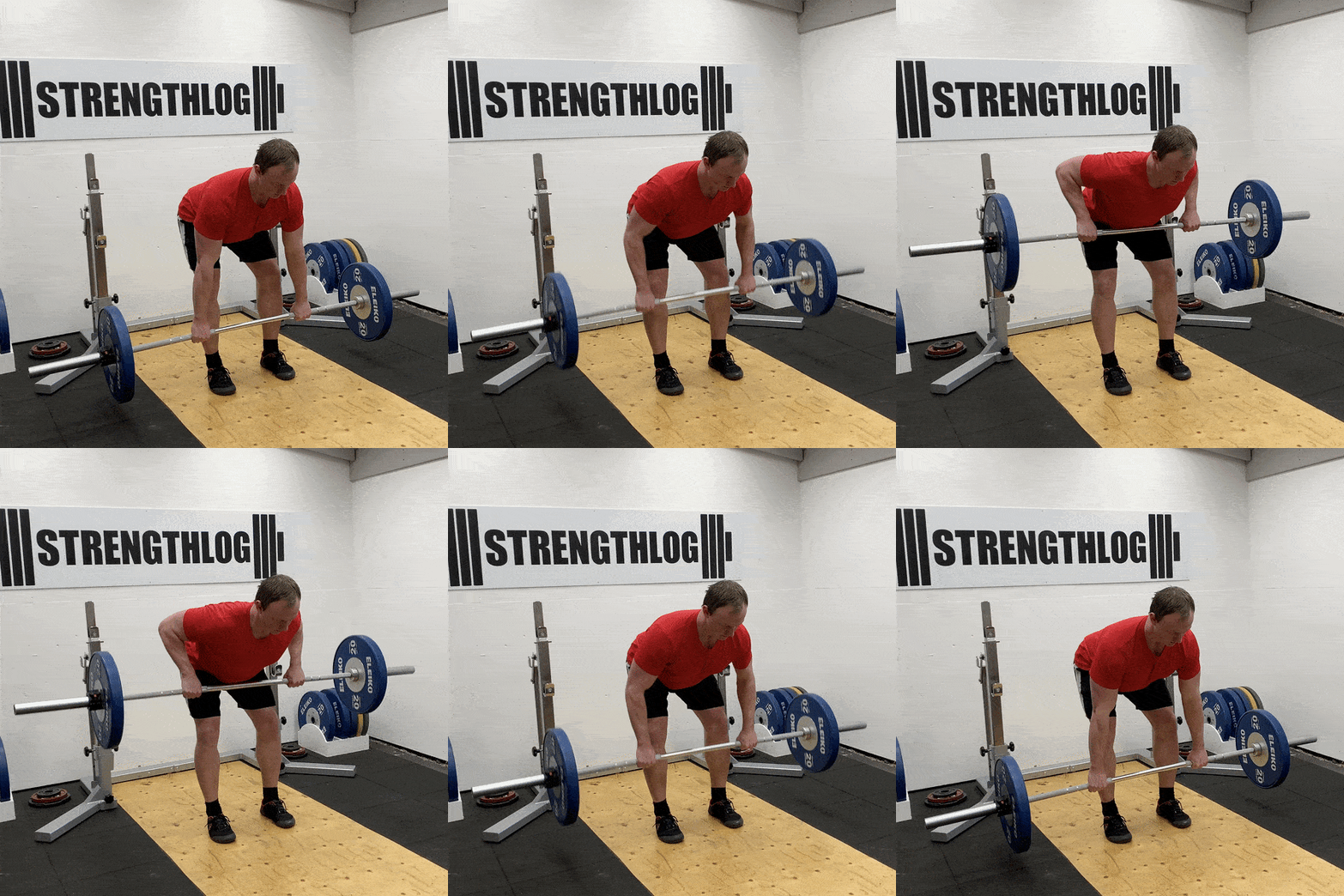
When you’re grappling, blocking, or yanking someone out of your way, it’s your lats, traps, and rhomboids doing the heavy lifting. And to train these guys, you gotta row.
- Dumbbell rows are awesome because they let you train each side independently. You even out muscle imbalances, which is a big deal in a sport where most movements are explosive and one-sided. You also get a longer range of motion and more control over your form.
- With barbell rows, you get the explosive power you need to drive defenders off the ball and make bone-jarring tackles. They load you up heavier and are great for overall mass and strength, especially if you’re trying to build a back that can carry both your team and your ego.
Smart players program both: dumbbell rows for balance and control, barbell rows for brute strength. And seeing you follow this program, you’re definitely one of those.
How to Do Dumbbell Rows
- Find a flat bench. Place a dumbbell on the floor to one side of it.
- Plant your left knee and left hand firmly on the bench. Your back should be flat and close to parallel to the floor. Your right foot should be planted firmly on the floor out to the side for stability.
- Reach down with your right hand and pick up the dumbbell. Let it hang straight down, feeling a good stretch in your back.
- Take a breath, keep your back straight, and pull the dumbbell up towards your hip/lower chest. Lead with your elbow and imagine you’re trying to stuff it into your back pocket. Squeeze your shoulder blade at the top of the movement.
- Lower the dumbbell back to the starting position, with control; don’t just let it drop. Finish all your reps on one side before switching to the other.
How to Do Barbell Rows
- Grasp the barbell with an overhand grip, slightly wider than shoulder-width apart.
- Stand with your feet slightly wider than hip-width apart, bend your knees slightly, and hinge forward at your hips, maintaining a neutral spine curve.
- Brace your core and keep your back straight. Inhale and pull the barbell towards your lower chest or upper abdomen, keeping your elbows close to your body. Squeeze your shoulder blades together at the top of the movement.
- Lower the barbell back to the starting position in a controlled manner.
- Repeat the movement for the desired number of repetitions.
Incline Dumbbell Press

The incline dumbbell press is a great exercise for football players, especially wide receivers, tight ends, linebackers, and linemen who must win upper-body strength battles.
While the barbell bench press is unsurpassed for overall pushing strength, you rarely push straight out from your chest during play. More often than not, you’re driving upwards, getting under your opponent’s pads to gain leverage.
So, by setting the incline angle (30–45 degrees), you shift the focus upwards and build that upper push power and shoulder stability. Also, using dumbbells, each arm has to make its own way in the world for more symmetry and coordination on the field.
How to Incline Dumbbell Press
- Sit on a bench, and lift a pair of dumbbells up to the starting point.
- Press the dumbbells up to straight arms, while exhaling.
- Inhale at the top, or while lowering the dumbbells with control back to your shoulders.
- Repeat the movement for the desired number of repetitions.
Reverse Dumbbell Fly

Reverse dumbbell flyes are a fantastic accessory exercise for American football players. They hit the rear delts, traps, and rhomboids, muscles that retract your shoulder blades and give you a stable base, whether you’re holding your ground on the offensive line, shrugging off defenders like they’re flies, or slinging the pigskin downfield.
Also, your rear delts (and other muscles in the upper back) act as brakes for your throwing arm. If they are weak, other parts of your shoulder, like the rotator cuff, have to pick up the slack = possible overuse injuries down the line. A regular dose of reverse flyes will help keep a quarterback’s throwing shoulder healthy.
How to Do Reverse Dumbbell Flyes
- Hold a pair of dumbbells, lean forward, and let your arms hang towards the floor.
- With almost straight arms (just a slight bend at the elbow), slowly lift the dumbbells by raising your arms out to the sides.
- Reverse the movement and lower the dumbbells back to the starting position.
- Repeat the movement for the desired number of repetitions.
Band External Shoulder Rotation

Many feel that doing external shoulder rotations is boring. And they might be right. But they are also important, especially for athletes like football players, who are throwing, pushing, tackling, or bracing for impact all through a match. That kind of ordeal puts a ton of strain on your rotator cuff muscles, especially the infraspinatus and teres minor.
The rotator cuff centers your shoulder joint and keeps it stable, reducing the risk of injuries from overuse (like a QB’s shoulder getting wrecked from too many throws) or contact. Banded external rotations keep everything running smoothly when things get intense on the field.
How to Do Band External Shoulder Rotations
- Fasten an elastic band at elbow height. Grab the band, step away, and stand sideways to it.
- Grab the band with your arm on the opposite side from its attachment point. Keep your upper arm close to your side, and bend your elbow to 90 degrees.
- Rotate your upper arm externally (outwards) against the band’s resistance, as far as possible.
- Reverse the movement, and repeat for reps.
- Repeat the movement for your desired number of repetitions.
Pallof Press

The Pallof press is all about anti-rotation. That means training your body to resist unwanted rotation, something that happens all the time on the football field.
Every position, from a lineman holding their ground against a block to a quarterback stabilizing their torso while throwing to a receiver cutting while protecting the ball, benefits hugely from being able to maintain a braced core against external forces.
A weak core is a recipe for disaster, both for power transfer from your lower body to your upper body and in terms of injury risk, and the Pallof press is a simple but effective way to build the anti-rotation component of your core stability.
How to Do the Pallof Press
- Attach a handle in a cable machine at chest height and stand with your side facing the machine.
- Grab the handle with both hands and stand with feet hip-width apart and knees slightly bent.
- Pull the handle to your chest, engage your core, and then press your arms straight out in front of you without rotating your torso.
- Hold briefly, then bring the handle back to your chest in a controlled motion.
- Repeat for the desired number of repetitions, then switch sides.
Neck Curl / Neck Extension


I believe every football player should do some form of neck training because 1) it’s a high-impact contact sport where the head is subjected to both direct and indirect shocks and 2) neck strength can protect against concussions.
In Strength Training for Football, you’re doing two simple neck exercises, neck curls and neck extensions, throughout the program.
Good form and technique are very important when it comes to neck training. It’s a sensitive area. Your movements should be slow and controlled, and it’s a good idea to start with your body (head) weight only.
How to Do Neck Curls
- Sit or lie on your back with a neutral spine.
- Tuck your chin slightly, as if making a “double chin.”
- Flex your neck by bringing your chin toward your chest, keeping the movement slow and controlled.
- Pause at the top, then slowly return to the start position.
- Repeat the movement for the desired number of repetitions.
How to Do Neck Extensions
- Sit or lie face down on a bench with your head over the edge.
- Start with your chin tucked.
- Extend your neck by lifting your head upward against gravity or resistance.
- Pause briefly, then slowly lower back to the start.
- Repeat the movement for the desired number of repetitions.
Trap Bar Deadlift

Of all deadlift variations, I like the trap bar deadlift the best for improving athletic performance. You step inside the bar, not behind it like in a regular deadlift, which instantly puts you in a more athletic position: chest up, hips down, ready to launch.
You get the leg drive and involve your quads similar to a squat, while still training the hip hinge and posterior chain like a deadlift: a super-efficient all-in-one approach that builds full-body strength that translates directly to the field.
Research shows that athletes can lift more weight and move it faster with a trap bar than with a straight bar.5 More weight moving faster equals more power, and in addition, it activates most muscles better than either sumo or conventional styles. You’ll see improvements in your sprinting speed, jumping ability, and overall power output.
How to Trap Bar Deadlift
- Step into the bar’s opening so that the handles are in line with the middle of your feet.
- Inhale, bend down and grip the handles.
- Hold your breath, brace your core slightly, and lift the bar.
- Lift the bar with a straight back, until you are standing straight.
- Lower the bar back to the ground with control.
- Take another breath, and repeat the movement for your desired number of repetitions.
Box Jump

The box jump is a semi-plyometric (it doesn’t have the forceful eccentric phase of a true plyo) where you dip down, and then explosively launch into the air.
That ability to go from zero to 100 in a split second is what we call explosive power; in football, that’s the coin of the realm, from the lineman whose explosion off the line of scrimmage can be the difference between getting a pancake block and getting pancaked yourself to the wide receiver who goes up and snatches a ball over a defender. And box jumps also help with coordination, timing, and balance: skills every position benefits from.
How to Box Jump
- Stand in front of a sturdy box with your feet shoulder-width apart.
- Slightly bend your knees and lower into a half-squat while swinging your arms back.
- Explode upward by pushing off the ground with your feet and swinging your arms forward to create momentum.
- Jump onto the box, landing softly with your knees slightly bent, feet fully on the box, and your torso upright.
- Stand up fully once you’ve landed on the box.
- Step, or carefully jump, down and repeat for the desired number of repetitions.
Bulgarian Split Squat

The Bulgarian split squat is a unilateral lower-body exercise where one foot is elevated behind you on a bench or box while the other leg does all the work.
It’s a very functional exercise for football, because how often are you perfectly balanced on two feet during a game? Pretty much never. Sprinting, cutting, tackling, blocking: you’re always driving off one leg, and the Bulgarian split squat builds that single-leg power.
It’s also a great exercise for stability, flexibility, and for exposing and correcting imbalances that could mess with your performance or get you hurt.
How to Do Bulgarian Split Squats
- Place a bar on your upper back or hold a pair of dumbbells in your hands.
- Stand with your back turned against a bench, which should be about knee height. Stand about one long step in front of the bench.
- Place your right foot on the bench behind you.
- Inhale, look forward, and squat down with control until right before your right knee touches the floor.
- Reverse the movement and extend your front leg again, while exhaling. Your back foot should only act as support.
- Repeat the movement for the desired number of repetitions, then switch sides and repeat with your right leg forward and your left foot on the bench.
Nordic Hamstring Eccentric

The number one reason Nordic hamstring eccentrics are in this program is that they are unprecedented for reducing the risk of hamstring injuries in athletes. They can halve the risk.6
Hamstring strains are the bane of many football players.7 They often happen during sprinting, cutting, or decelerating and lead to extended time away from play and rehab. The Nordic hamstring exercise strengthens the hamstrings in a lengthened position, which is when they’re most vulnerable.
Even better, more eccentric hamstring strength means better acceleration as well.
The benefits of Nordic hamstring curls come from the lowering phase, so you don’t have to pull yourself up with hamstring strength alone.
How to Do Nordic Hamstring Eccentrics
- Start off standing on your knees with a straight hip. Feet wedged under something immovable, like a heavily loaded barbell, or a strong training partner.
- Lean your torso forward by extending your knees with no hip movement. In other words, do not push your butt backward.
- Control the eccentric movement by fighting the gravitational forces with all your hamstring strength. If possible, try keeping the eccentric phase to two seconds.
- When your chest reaches the floor, push yourself up using your arms and start over.
- Repeat the movement for your desired number of repetitions.
Side Plank / Copenhagen Plank


The side plank is a bodyweight exercise for the obliques, the side core muscles that give you the rotational power you need to throw and resist twisting forces when you’re getting tackled or blocking.
It also works the deeper abdominal muscles (transverse abdominis) that act like a natural weightlifting belt that stabilizes your spine and pelvis and transfers power from your lower body to your upper body.
In the Copenhagen plank, you elevate your top leg on a bench, which strengthens your inner thigh muscles (adductors) and groin areas to a much greater degree, areas that are often in vulnerable positions in a violent sport like football.
How to Side Plank
- Lie on your side, propped on one elbow.
- Place the foot of the top leg in front of the other foot.
- Brace your core, and try to form and hold a straight line from your head to your feet.
- Hold the position for the chosen amount of time.
Copenhagen Plank
- Lie on your side with your top leg resting on a bench.
- Place your forearm on the floor directly below your shoulder for support.
- Engage your core and lift your bottom hip off the ground so your body forms a straight line.
- Keep your bottom leg off the ground, hanging under the bench or lightly touching it for balance.
- Hold the position for your desired time.
- Lower your body back down, then switch sides and repeat.
Overhead Press / Push Press


Both the overhead press and push press build upper body strength for everything from blocking, throwing, and tackling to shrugging off defenders like they’re mosquitoes.
- With the overhead press, you press a barbell straight overhead using just your upper body: shoulders, triceps, and upper chest. It’s great for building strength and stability for contact-heavy situations on the field.
- In the push press, you add a dynamic knee dip and use leg drive to explode the weight overhead. It’s less strict, but that’s the point; you’re training power: fast, coordinated movement from the legs through the core to the upper body.
Combine them, and you’re building a player who’s both strong and fast, and that’s just what you do in the Strength Training for Football, where you’ll be rotating between the two exercises on different days.
How to Do Overhead Presses
- Place a barbell in a rack at about chest height.
- Grip the bar slightly wider than shoulder-width apart and step close to it.
- Tighten your abs, unrack the bar and let it rest against your front delts while you step back from the rack. This is your starting position.
- Push the barbell up, extending your arms fully, while exhaling.
- Bring the weights back down to your shoulders, slow and controlled, while inhaling.
- Repeat the movement for the desired number of repetitions.
How to Push Press
- Clean a bar to your shoulders, or lift it out from a squat rack.
- Let the bar rest against the front of your shoulders, with your grip slightly outside your shoulders.
- Inhale and lightly brace your core.
- Bend your knees, and then forcefully push yourself and the bar upwards using your legs.
- When your legs are extended, immediately start pressing the bar with your arms, until your arms are fully extended.
- With control, lower the bar back to your shoulders.
- Repeat the movement for your desired number of repetitions.
Lat Pulldown / Pull-Up


Lat pulldowns and pull-ups are both upper-body pulling exercises that hit your back, especially the lats, the muscles on the sides of your back that look like wings. On the field, you need them for arm drive, tackles, and explosive blocks.
- Lat pulldowns are machine-based and give you more control over weight and form.
- Pull-ups build functional strength, core stability, and body control. Plus, they simulate the kind of real-world, compound effort you want when you’re fighting for position or dragging a defender with you.
Both are valuable exercises, and you’ll do both in this program.
How to Do Pull-Ups
- Stand beneath a pull-up bar and reach up to grasp it with an overhand grip (palms facing away from you), slightly wider than shoulder-width apart. Ensure your grip is secure and comfortable.
- Hang freely from the bar, fully extending your arms. Your feet should be off the ground.
- Engage your core muscles by squeezing your abs and glutes.
- Inhale and initiate the movement by pulling your body weight up towards the bar by bending your elbows and squeezing your shoulder blades together. Focus on using your back muscles rather than relying on your upper arms.
- Continue pulling yourself up until your chin reaches or clears the bar. Keep your torso upright and avoid excessive swinging or kicking with your legs.
- Slowly lower yourself back down to the starting position while maintaining control and stability, fully extending your arms.
- Repeat the movement for your desired number of repetitions.
How to Do Lat Pulldowns
- Grip the bar with a neutral grip (palms facing each other).
- Sit down with your thighs under the leg support, keep your chest up, and look up at the bar.
- Inhale and pull the bar towards you.
- Pull the bar down until it is below your chin or touches your upper chest.
- Exhale and slowly return the bar until your arms are fully extended.
- Repeat the movement for your desired number of repetitions.
Close-Grip Bench Press

Unlike the traditional bench press, the close-grip bench brings your hands closer together, which hammers the triceps more.


It also trains the arm mechanics of blocking and tackling a bit more closely than a traditional wide-grip bench press. You build strength in the exact muscles and movement patterns you use to dominate the line of scrimmage.
Grip the bar shoulder-width apart or slightly closer. Touching thumbs strains your wrists and puts pressure on your elbows, without providing any real benefits. And keep your elbows tucked close to your body to protect your shoulders and make sure you hit the right muscles.
How to Close-Grip Bench Press
- Lie on the bench, pull your shoulder blades together and down, and slightly arch your back.
- Grip the bar narrower than in a regular bench press so that your hands are directly above your shoulders or even closer.
- Take a breath and hold it, and unrack the bar.
- Lower the bar with control until it touches your chest somewhere where the ribs end.
- Push the bar up to the starting position while exhaling.
- Take another breath in the top position, and repeat the movement for the desired number of repetitions.
Face Pull

The face pull is a pulling exercise done with a rope attachment on a cable machine or with resistance bands. You pull toward your face, elbows high and wide, training the rear delts, traps, and rotator cuff muscles.
Face pulls are more than a glorified pre-hab. They pull the shoulders back where they belong and improve scapular stability, posture, shoulder health, and power transfer.
You don’t want to use too much weight or mindlessly yank the rope when doing face pulls, or you’ll hit the wrong muscles.
How to Do Face Pulls
- Fasten a rope handle in a high position on a cable pulley. Grip the ropes with an overhand grip, and take a step or two back.
- With elbows held high, pull the rope towards you by letting your upper arms move straight out towards your sides, while simultaneously rotating your forearms up.
- Return with control to the starting position, by letting your arms move forward again.
- Repeat the movement for the desired number of repetitions.
Hanging Leg Raise

The hanging leg raise is a great exercise for the entire core. It trains your abs, obliques, deep stabilizers, and hip flexors to work together like a team.
Focus on lifting your legs without swinging them up. You want to control momentum, not just create it.
Note: If hanging leg raises are too challenging, you can do hanging knee raises instead.
How to Do Hanging Leg Raises
- Grasp a pull-up bar with an overhand grip, shoulder-width apart.
- Hang from the bar with your arms fully extended and your body in a straight line from your head to your heels.
- Engage your core and keep your back straight.
- Raise your legs towards your chest, as high as you can, keeping your back straight and your core engaged.
- Slowly lower your legs back down to the starting position.
- Repeat the movement for your desired number of repetitions.
Good Morning

The good morning (the exercise, not the greeting) is fantastic for training your sprinting, tackling, and exploding-out-of-the-three-point-stance muscles. You place a barbell across your upper traps, hinge forward at the hips while keeping your back straight, and then return to standing. The movement pattern is like the loaded lean you see in blocking, cutting, and accelerating.
And, because it’s eccentric motion against resistance, it’s great for injury prevention: less chance of pulling up lame with a tweaked hamstring when you’re chasing down a QB.
Start with a light weight, perhaps just the barbell, to master the form and feeling the right muscles work.
How to Do Good Mornings
- Place the bar on your upper back. Inhale and brace your core slightly, and unrack the bar.
- Take two steps back, and place your feet slightly wider than hip-width.
- Inhale and hold your breath, and lean forward by hinging your hips. Imagine that you are trying to push your butt back as far as possible.
- Lean forward as far as you can with a straight back, without the bar rolling forward.
- Your knees will bend slightly, but most of the movement takes place in the hips.
- With control, stop and reverse the movement, extending your hips again while exhaling.
- At the top, inhale and repeat for the desired number of repetitions.
Ab-Wheel Rollout

The ab-wheel rollout hits the anterior chain: rectus abdominis, obliques, deep core stabilizers like the transverse abdominis, even the lats and hip flexors.
It teaches your body to stay stiff under tension, something every football position benefits from. Plus, it requires shoulder stability and scapular control, which means bonus points for linemen and skill players alike.
If you’re new to rollouts, start with a shorter range of motion. As you get stronger, you can roll out further. If you feel it more in your lower back than your abs, you’ve gone too far.
For more advanced athletes, you can progress to doing the rollout from your toes. Note that this is almost an entire exercise altogether, not in the muscles worked but in how challenging and face-planty it suddenly gets.
How to Do Ab Wheel Rollouts
- Start by kneeling on the floor with your hands on the ab wheel, placed directly in front of your knees.
- Engage your core and slowly roll the wheel forward until your body forms a straight line from your knees to your head.
- Be sure to keep your back straight and your core engaged throughout the entire movement.
- Reverse the movement, roll the ab wheel back towards your knees, and return to the starting position.
- Repeat the movement for the desired number of repetitions.
Wood Chop

The wood chop is a functional exercise with three main benefits for football players:
- You strengthen the muscles responsible for twisting your torso forcefully and as fast as possible.
- When you can control forceful rotational movements, you protect your spine during the violent collisions in football.
- You train your body to work as a single unit.
You can do wood chops horizontally, high-to-low, and low-to-high:
- Horizontal for rotational strength and blocking and tackling leverage.
- High-to-low for striking and tackling force and downward motion power.
- Low-to-high for throw-like power and upward acceleration.
I’ve programmed the standard horizontal variant in Strength Training for Football: it gives you the most carryover because most football power is generated in the transverse plane, from your hips and trunk rotating explosively. Feel free to switch it up now and then. Regardless of variant, remember that the power should come from your core and hips, not your arms.
Note: you can do this exercise either in a cable machine (like in the video demonstration above) or with a resistance band.
How to Do Horizontal Wood Chops
- Fasten a handle in a cable machine, as high up as possible. Grip the handle with both hands, step away, and stand sideways to the cable’s anchor point.
- With almost straight arms, make a sweeping, chopping-like movement diagonally downward.
- Return to the starting position in a controlled manner.
Horizontal and Vertical Jump

The horizontal and vertical jump (also called the broad jump to box jump) combo is a plyometric drill that develops explosive lower-body strength, fast-twitch muscle activation, and spatial awareness.
The sudden shift from horizontal to vertical power trains your ability to adapt, absorb impact, and then quickly reapply force in a different direction, which is exactly what happens in fast-paced football play.
How to Do Horizontal and Vertical Jumps
- Stand with feet hip-width apart, knees slightly bent, and arms behind you for momentum.
- Swing your arms forward and explosively jump forward as far as possible, landing softly in a squat position. Keep your knees bent and engage your core to stabilize.
- Without pausing, push through your legs and swing your arms to jump vertically onto a box or platform in front of you.
- Land with soft knees, absorbing impact in a stable squat position, then extend your legs and straighten your body on top of the box.
- Step off the box one foot at a time to reset.
- Repeat the movement for your desired number of repetitions.
Hip Thrust

The hip thrust is a glute builder with explosive hip extension, the movement that fuels sprinting, jumping, blocking, and tackling. Almost every athletic thing you see on the field starts with strong hips, with research confirming its benefits for fast sprints.8
Compared to squats and deadlifts, the hip thrust isolates the glutes without loading the spine too heavily, which is a win for recovery and injury prevention. Conversely, a stronger set of glutes will also help you move more weight in the squat and deadlift – a winning cycle of benefits.
How to Do Hip Thrusts
- Sit on the floor with your back against a sturdy bench.
- Roll the barbell up over your thighs, until it is placed over your hips.
- Place your feet on the floor, about shoulder-width apart, with bent knees.
- Place your hands on the bar to stabilize it.
- Push the bar towards the ceiling by extending your hips. Your knees should form a ~90 degree angle at the top.
- Squeeze your glutes at the top of the thrust like you’re trying to crack a walnut before lowering the weight.
- Repeat the movement for the desired number of repetitions.
Farmer’s Walk

If you want to build the kind of strength you can use on the field, you need to be picking up heavy things and moving with them, which is just what you do in the farmer’s walk/carry. It builds grip strength, core stability, traps, shoulders, and legs.
The farmers’ walk trains your body to move under load, which is what football is: a lot of weight and resistance coming at you from every direction, and you having to force your way through it.
How to Do Farmer’s Walk
- Step in between two farmers’ walk-cases, or similar implements.
- Inhale, lean forward, and grip the handles.
- Hold your breath, brace your core slightly, and lift the weights.
- Look ahead, and start moving forward in small steps. Increase the stride length as you increase the speed.
- Try to keep your body in a straight line and not lean excessively forward as you walk.
- When you are done, lower the implements back to the ground in a controlled manner.
Core Twist

The core twist trains the obliques, your side-core muscles, and builds rotational power and stability, two things every player needs. It is especially helpful for quarterbacks (for throwing), linemen (for resisting twists in the trenches), and running backs (for juking and holding onto the ball while twisting through tackles).
When done right (not flailing side-to-side nonsense), it teaches your body how to rotate with control, and, maybe more importantly, how to resist being twisted by outside forces and not getting folded in half by a linebacker.
How to Do Core Twists
- Sit on the floor with your knees bent and feet either on the ground or lifted slightly off.
- Hold a weight plate, medicine ball, or kettlebell with both hands in front of your chest.
- Lean slightly back with a straight back and engaged core.
- Twist your torso to one side and bring the weight toward your hip, keeping your hips stable.
- Return to the center and rotate to the other side.
- Repeat the movement for the desired number of repetitions.
Ball Slam

The ball slam is an explosive full-body exercise in which you hoist a weighted, non-bouncy ball (that’s key; you don’t want it rebounding into your nose) overhead and channel all your aggression into slamming it down on the ground in front of you.
Ball slams train triple extension (ankle, knee, hip), improve coordination, and build the rotational power for throwing, tackling, and breaking tackles.
If the ball bounces higher than your knees, go heavier.
How to Ball Slam
- Stand with your feet about shoulder-width apart, your knees and hips slightly bent, holding the ball in both hands at chest height. Engage your core, and keep a good posture.
- Extend your knees and drive your hips forward while simultaneously lifting the ball. Aim for being as tall as possible, the ball overhead, arms up, hips slightly forward, and on your toes from the force of your drive.
- Use your core and arms to slam the medicine ball straight down between your feet with as much force as possible. Press your hips back and bend your knees to further power the slam. Exhale as you slam the ball down.
- Squat down to pick up the ball from the floor, then immediately move into the next slam by repeating the movement.
- Repeat the movement for your desired number of repetitions.
Kettlebell Swing

The kettlebell swing hip hinge drives almost every burst of power that happens on the gridiron.
It is a ballistic movement that teaches you to create force quickly and absorb it just as fast. It gives you most of the benefits of Olympic lifts, but is much easier to learn.
Choose a weight that allows you to maintain explosive form for all repetitions.
How to Do Kettlebell Swings
- Place a kettlebell on the ground, about one or two feet in front of you.
- Take a wide stance, lean forward and grip the kettlebell.
- Brace your core slightly, and swing the kettlebell back between your legs, while inhaling.
- Swing the kettlebell forward by extending your hip, while exhaling.
- Try to swing the kettlebell to about chest height.
- Repeat for the desired number of repetitions.
Med Ball Chest Pass
The med ball chest pass is an explosive drill where you throw a weighted ball forward from your chest. It’s especially useful for players who need maximum upper body power, like linemen, tight ends, or even running backs shrugging off tacklers, but any position will benefit from doing it.
It trains the kind of forceful pushing motion you use when delivering a block or creating separation. It’s short, sharp, and gets your fast-twitch muscle fibers fired up. Do it right, and it teaches your body to be explosive, stable, and powerful, in one simple and quick movement.
If you’re just learning the movement, start with a lighter to moderate-weight ball, like 2–6 pounds (1–3 kg). Once you can maintain good form and explosive speed, go up to 8–12 lb (4–6 kg) or even heavier.
How to Do Med Ball Chest Passes
- Stand with your feet shoulder-width apart, knees slightly bent, 3 to 6 feet (1 to 2 meters) away from a wall and facing it.
- Hold a medicine ball at chest level with both hands, elbows bent.
- Engage your core and keep your back straight.
- Push the ball explosively forward from your chest, extending your arms fully.
- Release the ball toward the wall.
- Catch the ball and repeat for the desired number of repetitions.
Med Ball Rotational Throw
Med ball rotational throws build core torque, hip rotation, and power transfer, the kind of stuff that allows you to throw and hit harder and twist out of tackles on the field. It also teaches your body to decelerate safely, which is hugely important in a game where change-of-direction can make or break a play (and your ACL).
The drill is especially useful for players who rely on explosive rotational strength, like quarterbacks slinging missiles or linebackers delivering bone-rattling hits, but like the chest pass, it benefits any position.
How to Do Med Ball Rotational Throws
- Stand sideways to a wall, feet shoulder-width apart, holding the medicine ball at your chest.
- Load your hips by rotating slightly away from the wall, keeping your core braced.
- Drive through your legs and powerfully rotate your hips toward the wall.
- Let your torso and arms follow through naturally, releasing the ball explosively.
- Reset and repeat for the desired number of repetitions, then switch sides.
Hang Power Clean

You’ll be doing one Olympic-style lift in Strength Training for Football: the hang power clean. You explosively pull a barbell from a standing “hang” position (bar around mid-thigh) and catch it on your shoulders in a partial squat.
Hang power cleans are easier to learn than many other Olympic lifts, but still give you the football-relevant benefits, like explosive hip extension and power development.
How to Hang Power Clean
- Grip the bar with an overhand grip, about shoulder-width apart, and lift it up to get into the starting position.
- Hold your breath, and brace your core slightly.
- Lower the bar along your thighs, down to about knee-level, by bending your hips and knees.
- Reverse the movement, and lift the bar in a smooth but fast motion by extending your legs and knees simultaneously.
- Bend your knees slightly and receive the bar on the front of your shoulders.
- Stand up on straight legs again.
- Lower the bar in front of you, with control.
Sled Push

The sled push is a full-body movement that’s about as football-specific as it gets without actually hitting someone. It trains exactly what you’re doing on the field: driving your opponent backward with power and leg drive.
Why is it so good? Because it trains acceleration, explosive lower-body strength, and core stability all in one go. Linemen do it for trench warfare; skill players use it for developing sprint power. And there’s no cheating a sled push; you either move it, or you don’t.
Unlike heavy squats or deadlifts, the sled push is a concentric-dominant movement. You’re pushing, not lowering, the weight. That means you can train it maximally hard without worrying about getting sidelined by muscle soreness the next day.
It also improves your lactic threshold and is proven to make you faster over short distances.9
How to Sled Push
- Load the sled with an appropriate amount of weight.
- Stand behind the sled with your feet shoulder-width apart.
- Grip the sled handles at a comfortable height.
- Lean forward slightly, keeping your back flat and core engaged.
- Drive through your legs and start pushing the sled forward.
- Maintain a steady, powerful stride with knees driving forward.
- Keep your arms extended but not locked.
- Push the sled the desired distance or for the set amount of time.
- Come to a controlled stop and carefully release the sled handles.
Don’t Forget to Fuel the Machine: Nutrition Basics

You can have the best training program in the world, but if your nutrition is garbage, you’re leaving a ton of gains on the table.
- Calories: You’re a young, active athlete burning a ton of calories. You need to eat enough to fuel your workouts and build muscle. Don’t be afraid of carbohydrates like rice, potatoes, and oatmeal. They are your primary energy source. Fats are also great for energy, keep your cells healthy, and allow you to absorb vitamins.
- Protein: You want to get a good source of protein with every meal, like chicken, fish, beef, eggs, or Greek yogurt. Protein is what your body uses to repair and build muscle.
- Pre-Game and Post-Game Meals:
- Pre-Game/Pre-Workout (2–3 hours before): Eat some easily digestible carbohydrates and a moderate amount of protein. A turkey sandwich on whole-wheat bread or a bowl of oatmeal with some fruit are good options. You don’t want something heavy that stays in your stomach like a lump of cement.
- Post-Game/Post-Workout: This is your recovery window. There is no rush, but the sooner you refuel, the faster you recover. A protein shake with some carbs (like a banana) or a regular meal with lean protein and starchy carbs is ideal to start the recovery processes and build muscle.
Check out Nutrition for Strength Training – the Fun and Easy Way for a much more in-depth guide to what to eat for maximum performance and gains.
Strength Training for Football: Final Rep
Football is not a big sport where I live (Sweden), but it is growing, which is excellent. When I started coaching athletes, there was not a football player to be seen. Now, there is ample opportunity to help some of the hardest-working, most athletic sportspeople get even better at what they do.
By becoming stronger.
As a kid, American football seemed like a bizarre spectacle of giant humans in colorful armor engaging in short bursts of violence.
Now, when I understand the “chess match” between the offense and defense, the game is a fascinating mix of show, strategy, and incredible athleticism.
And, as a strength coach, I appreciate the latter. The combination of size, speed, and power on display in a match is undeniable. Almost unmatched in sports.
🏈🏈🏈
The iron in your hands today becomes the force you deliver on the field tomorrow.
So, stop reading and start lifting. The other team already is.
To follow this program, download our workout log app and start tracking your workouts today.
Track Your Training. See Real Progress.
Log your workouts in one place and watch your numbers climb, week after week.
- Free to get started
- Fast workout logging
- Cardio and strength training
- Sport-specific strength plans, including football
- Progress over time, personal bests
- Free and premium training programs and workouts for every fitness goal
Download StrengthLog free:
Last reviewed: 2025-09-08
References
- Int J Sports Physiol Perform. 2017 Nov 1;12(10):1396-1403. Updated Review of the Applied Physiology of American College Football: Physical Demands, Strength and Conditioning, Nutrition, and Injury Characteristics of America’s Favorite Game.
- Journal of Strength and Conditioning Research 34(5):p 1249-1253, May 2020. Barbell Squat Relative Strength as an Identifier for Lower Extremity Injury in Collegiate Athletes.
- Med Sci Sports Exerc. 2020 Oct 1. Online ahead of print. Greater Hamstrings Muscle Hypertrophy but Similar Damage Protection after Training at Long versus Short Muscle Lengths.
- Front Physiol. 2023 Dec 13:14:1272106. Triceps surae muscle hypertrophy is greater after standing versus seated calf-raise training.
- International Journal of Strength and Conditioning, Vol. 5 No. 1 (2025). Differences in Muscle Activation and Joint Kinematics Between Deadlift Styles When Performed at High-Intensity Training Loads.
- Br J Sports Med. 2019 Nov;53(21):1362-1370. Including the Nordic hamstring exercise in injury prevention programmes halves the rate of hamstring injuries: a systematic review and meta-analysis of 8459 athletes.
- Orthop J Sports Med. 2024 Dec 6;12(12):23259671241298622. Risk and Prognosis of Hamstring Injuries in the National Football League: A 12-Year Review.
- J Sports Sci Med. 2019 Jun; 18(2): 198–206. Barbell Hip Thrust, Muscular Activation and Performance: A Systematic Review.
- Scand J Med Sci Sports. 2020 Mar;30(3):442-449. Influence of resisted sled-push training on the sprint force-velocity profile of male high school athletes.
