
The barbell hip thrust and its variations are some of the best exercises you can do to build stronger glutes and a bigger butt.
But just throwing a heavy barbell over your hips and flailing around like a fish out of water isn’t going to get you anywhere, except maybe to the chiropractor.
In this article, I’ll break down seven top hip thrust variations for strength, muscle, stability, and turning flat butts into peaches.
Want to jump straight to them?
Yes, take me to the hip thrust variations!
Table of Contents
Hip Thrust 101: What Are They?
At its core, the hip thrust is a loaded glute bridge. You rest your upper back on a bench, roll a barbell over your hips, and drive your hips upward until your body forms a flat bridge.
It’s a compound exercise, meaning it involves several joints (hip and knee) and muscles, but it feels like an isolation exercise for the glutes.
Learn more about training your glutes with The 15 Best Glute Exercises for Muscle & Strength.
And while the barbell hip thrust might be the most common in gyms and the most well-researched, there are many variations to spice up your thrusting. All of them work these muscles, in this order (most activated first):1
Believe it or not, the hip thrust hasn’t been around since the dawn of iron. It was popularized (and arguably invented) by Bret Contreras, “The Glute Guy,” in 2006.2
Before that, people just did squats and deadlifts and hoped for the best when it came to butt-building. Bret realized that standing exercises don’t maximally load the glutes at full contraction (the “squeeze” at the top).
He literally started experimenting in his garage, realizing that thrusting your hips against gravity creates the highest tension on your glutes when they are fully shortened (at the very top of the rep).
That’s unlike, for example, squats, where your glutes work most when stretched or mid-length. At the top of a squat, you’re standing straight up with very little direct tension on the glutes. You could stand there for a very long time holding even a fairly heavy bar.
But in the hip thrust, your body is horizontal, but the weight is still moving vertically, and your glutes have to contract maximally to keep your hips up. And that’s why you get that cramping sensation or pump in your butt that even squats can’t give you.
Why Should You Hip Thrust? (The Benefits)
Hip thrusts are, believe it or not, not just for aesthetics (though building a bigger butt is probably why 90% of hip thrust aficionados do them).
Here is why they deserve a spot in your routine:
Glute Growth
Hip thrusts are as effective as barbell squats for building bigger glutes.3 Enough said, basically. It doesn’t get better than that. Squats build way more muscles in the rest of the lower body, but for pure booty-building, hip thrust variations are elite tier.
Lockout Strength
Struggling to finish your deadlift at the top? Hip thrusts build end-range hip extension strength that carries over to your big lifts. The same study that looked at glute growth above also found that hip thrusts and squats transfer similarly to deadlifts.
Back Friendly
Since the bar is on your hips, not your spine, there is usually less axial loading (spinal compression) compared to heavy squats. So, if your back prevents you from squatting but you don’t want to compromise your glute gains, hip thrusts can save the day.
Athletic Performance and Sprint Speed
Power comes from the hips. Stronger glutes equal more explosive power, and the muscles you train when hip thrusting match the muscle actions when you sprint and jump.
Which means hip thrusts should translate well to those things: sprinting and jumping.
Notice the “should”? That’s because while one or two studies have found benefits, several other and later trials have found that even though hip thrust strength improved after weeks or months of training, sprint times did not.4 5 6
Until we have more evidence, I’d say that yes, hip thrusts can improve the things you need (lean mass, hip extension strength, force development) for athletic performance, but you should use them as part of a broader training program, not rely on them alone.
Seven Hip Thrust Variations for Bigger and Stronger Glutes
There are about a zillion ways to thrust your way to glory, but these are my top picks for the best hip thrust variations, starting with the bread-and-butter ones.
All these exercises are detailed in our workout log app, StrengthLog, so you always have proper form at a glance when you’re training.
Download StrengthLog free and start tracking your workouts today:


Let’s uncork this baby, starting with the classic:
1. Barbell Hip Thrust

The good old barbell hip thrust is the classic variant that has been building better glutes for almost two decades (as of writing this). It can still be considered the gold standard, mainly because you can load it up with a lot of weight, and all you need is a barbell and a bench.
However, it has one big drawback. If there were an Olympic sport for “Most Annoying Exercise to Set Up,” the barbell hip thrust would have a good shot at snagging a medal.
Once you’re in a stable position, the exercise is great, but getting that heavy barbell over your legs and onto your hips can be a pain in the rear.
I remember the first time I tried hip thrusts with a barbell. It felt like I had to deadlift the bar, sit down on the floor with it in my lap while trying not to fall backward, and then wiggle into position against the bench. I was out of oomph before I even started the set.
You get the hang of getting into position soon enough, but the logistics are a big reason some people skip them. But if your gym doesn’t have a machine to do them in, the gains are worth the awkward setup.
Also, you definitely want a barbell pad or a folded yoga mat. Without one, you’re grinding a heavy metal bar into your hip bones, which is as painful as it sounds.
How to Do Barbell Hip Thrusts
- Sit on the floor with your back against a sturdy bench.
- Roll the barbell up over your thighs until it is placed over your hips.
- Place your feet on the floor, about shoulder-width apart, with bent knees.
- Place your hands on the bar to stabilize it.
- Push the bar towards the ceiling by extending your hips. Your knees should form a ~90-degree angle at the top.
- Lower the weight and repeat for reps.
2. Smith Machine Hip Thrust

The Smith machine hip thrust is essentially the same as above, but with the bar on a fixed rail that eliminates the balance component of the movement.
I think it’s an even better exercise for muscle growth because 1) the stability allows you to push closer to failure, and 2) you can put all your focus on squeezing your glutes without worrying about the bar sliding toward your face.
It’s also much easier to set up than the barbell version. You drag a bench over, set the bar height, and you’re in business.
Pro Tip: Place your feet slightly further forward than you would with a barbell. Since the bar goes straight up, you must move your body to line up with it. Feet forward puts more load on your glutes.
| Feature | Smith Machine Hip Thrust | Barbell Hip Thrust |
| Setup Speed | Fast and easy | Slow and fairly annoying |
| Stability | Very high | Medium-high |
| Glute Focus | Very high | High + stabilizers |
| Comfort | Medium-high (easier to unrack/rack) | Low |
| Path of Motion | Fixed vertical | Natural arc |
| Overload | Easier to load heavy | Harder to balance heavy loads |
How to Do Smith Machine Hip Thrusts
- Sit on the floor beneath the bar in the Smith machine, with a bench positioned behind you at the height of your shoulder blades.
- Position the bar over your hips. Use a bar pad if needed to protect your hip area.
- Place your shoulder blades against the bench, bend your knees, and position your feet firmly on the floor, hip-width apart.
- Lift the bar off the safety locks, keep your core engaged, and begin the movement.
- Press through your heels and lift your hips upward by engaging your glutes until your body forms a straight line from shoulders to knees.
- Briefly pause at the top, then lower your hips back down to the starting position in a controlled manner.
- Repeat for reps.
3. Machine Hip Thrust

The machine hip thrust is one of those cases where machines might be better than free weights, at least if your goal is to build muscle.
With a hip thrust machine, instead of balancing a long metal bar on your hip bones, you strap a padded belt across your lap, which distributes the load across your entire hip region.
Barbell and machine hip thrusts activate the glutes similarly.7 But compared to a free bar, the movement is extremely stable in the machine, so you can focus all energy on squeezing your glutes instead of balancing.
And, unlike a Smith machine, the dedicated machine creates a curve that matches how your hips actually move, like the natural arc of a hip extension. That’s why I prefer a (well-designed) hip thrust machine over a Smith machine: your hips move in that curved arc, but the Smith bar moves in a fixed vertical line. When those two fight against each other, it can feel weird or limit your range of motion at the top.
Some claim that barbell hip thrusts are superior to machine hip thrusts for athletic performance, but that is currently pure speculation. There are no training studies that compare barbell vs. machine hip thrusts on athletic performance like, say, sprinting, jumping, or change-of-direction. And I see no strong mechanistic reason to expect dramatically different results, to be honest, as long as you can load the exercises similarly and progress over time.
| Feature | Dedicated Machine | Standard Barbell | Smith Machine |
| Setup Hassle | Lowest (buckle up and go) | High (bench + bar + plates) | Low (bench + bar height) |
| Comfort | High | Low | Medium-high |
| Glute Isolation | Very high | High (but involves stabilizers) | Very high |
| Range of Motion | Fixed but natural arc | Full and free | Fixed vertical line |
How to Do Machine Hip Thrusts
- Adjust the machine and get in position.
- Push the pad towards the ceiling by extending your hips.
- Lower the weight and repeat for reps.
4. Hip Thrust With Band
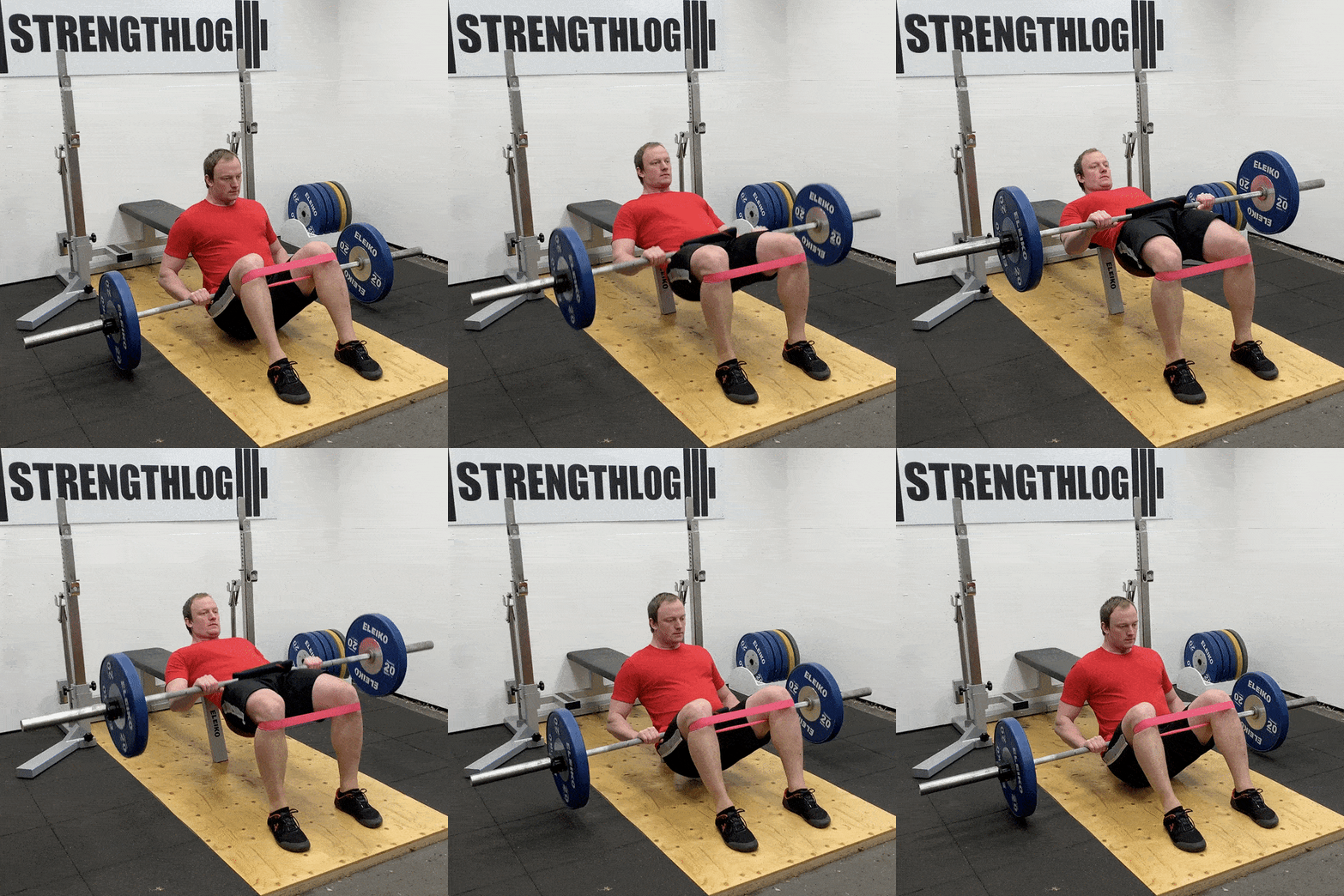
The hip thrust with a band is when you add a heavy elastic loop around your knees (you can put it right below or above the knees) while doing a standard barbell hip thrust. The difference is, as you drive up, you actively push your knees out against the band to “break” it. You can expect to drop your working weight slightly (by about ~10%) compared to your standard thrust.
The science shows that adding the band creates significantly higher activity in the upper gluteus maximus compared to a standard thrust.8 However, the same research suggests that adding the band does not significantly increase gluteus medius firing, contrary to popular belief and logic.
The theory is that your adductors (inner thighs) have to work so hard to stabilize against the band that they essentially shut down the glute medius, forcing your upper gluteus maximus to take over the slack.
In other words: looking for an exercise to build the upper glutes? This is it. Gluteus medius? Perhaps not, at least not more than regular hip thrusts.
How to Do Hip Thrusts With a Band Around Knees
- Sit on the floor with your back against a sturdy bench.
- Place an elastic band around your knees, just below or above them.
- Roll the barbell up over your thighs until it is placed over your hips.
- Place your feet on the floor, about shoulder-width apart, with bent knees.
- Place your hands on the bar to stabilize it.
- Push the bar towards the ceiling by extending your hips. Your knees should form a ~90-degree angle at the top.
- Lower the weight and repeat for reps.
5. Single-Leg Hip Thrust

Do you have one cheek that’s stronger than the other? The single-leg hip thrust will let you know and probably fix the issue.
Regular barbell hip thrusts, even though they require a bit of balancing to keep the bar steady, are still a pretty stable exercise because you have both feet firmly on the floor. Remove one point of contact, and suddenly your body has to fight rotation, making the thrust much more challenging.
If you’re doing bodyweight training/calisthenics or don’t have access to your usual gym equipment, the single-leg hip thrust is awesome.
Interested in bodyweight training? Check out the Ultimate Guide to Bodyweight Exercises for all the moves you need to get fit without a gym.
You can’t load it nearly as heavy, but you don’t need to, because it activates your glutes as well or better with only a fraction of the weight.
| Goal | Winner | Why? |
| Max Glute Size | Barbell/machine | You can overload the muscle with much more weight. |
| Warm-Up / Rehab | Single-leg | Great for waking up the glutes before you squat or deadlift. |
| Ego Lifting | Barbell | It looks cooler to hip thrust three plates than to struggle with bodyweight on one leg. |
How to Do Single-Leg Hip Thrusts
- Lean your back against a chair, sofa, bench, or whatever furniture you have at hand.
- Place one foot on the floor and lift the other leg.
- Push your hips towards the ceiling, using your glute muscle in the leg that touches the floor. The working leg should form a ~90-degree angle at the top position.
- Lower your hips and repeat for reps.
6. Glute Bridge

The glute bridge is often confused with hip thrusts, which is perfectly understandable. They train (mostly) the same muscles, they are both hip extension movements, and the way you look when you do them is very similar.
But there are differences, mainly range of motion and loadability.
When you’re doing glute bridges, you are lying completely on the floor, and you get a shorter range of motion because your hips can only go down so far before your butt hits the floor.
While you can add weight to your glute bridges, hip thrusts are superior here. You’re in a stronger hip extension position with your shoulders up on a bench, and you get a longer moment arm with better leverage at the hip.
According to recent research (and probably contrary to popular belief), glute bridges activate the glutes even better than hip thrusts.9 Now, that doesn’t automatically mean they are a better exercise for strength and muscle growth. In fact, I’d say hip thrusts come out on top because of the range of motion and because they make progressive overload more manageable. And for sports performance, hip thrusts are likely your go-to of the two.10
Feature Glute Bridge Hip Thrust Difficulty Beginner/rehab friendly Beginner/intermediate/advanced Equipment None Bench + barbell or machine Range of Motion Short and sweet Long and deep Best For Activation, warm-ups Strength, size, power
How to Do Glute Bridges
- Lie down with your feet on the floor.
- Tuck the pelvis in to properly activate the glutes.
- Push your hips towards the ceiling by using your glutes until your body forms a straight line from head to knees.
- Squeeze your glutes at the top.
- Reverse the movement, and repeat for reps.
Note: You can do glute bridges with one leg at a time to make the exercise much harder.
7. Frog Pump
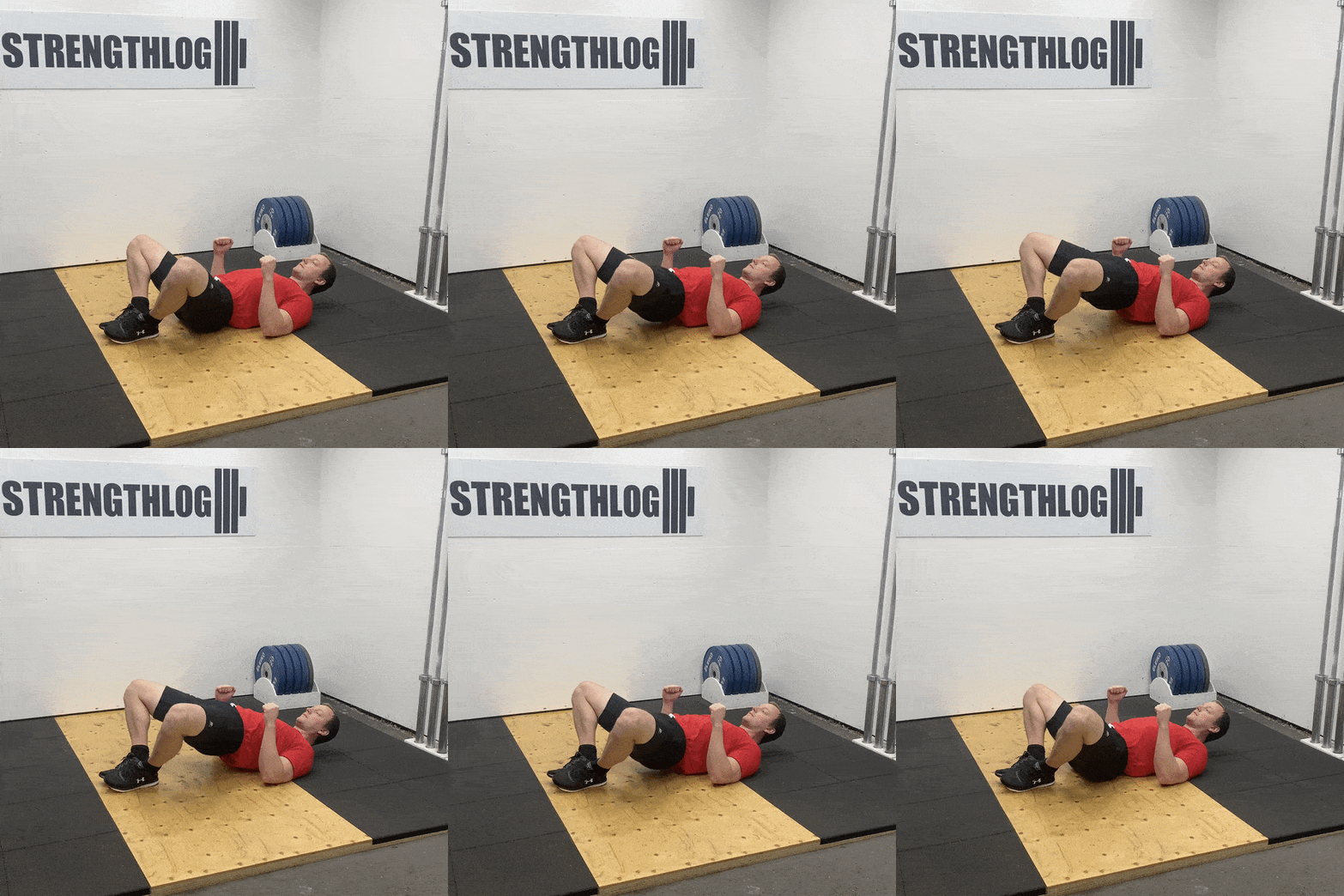
Invented by strength coach Smitty Diesel, also called the Frog Father, frog pumps are great if you have trouble feeling your glutes working during compound lower body exercises (including hip thrusts).
By putting your feet together and knees out (abduction and external rotation), you pretty much “turn off” your hamstrings and quads. They become very disadvantaged in this position, and you force your glutes to do almost 100% of the work.
Frog pumps are awkward to load heavy, so you probably want to go more for the pump and squeeze here. Most people do them with just body weight or a light dumbbell on their lap. If you try to balance a 300 lb barbell while in a butterfly stretch position, you’re going to have a bad time.
As I mentioned, frog pumps are great before heavy glute work to wake your cheeks up, but I also like to program froggies at the end of a workout as a finisher. Since you won’t be going heavy, go for high reps (we’re talking 20, 30, even 50+ reps). Doing it this way will give you a massive glute pump. In fact, a Wichita State University study found that “gluteal girth” increased significantly in university students who did 200 of these every day for seven weeks.11 And who doesn’t want more gluteal girth?
| Feature | Hip Thrust | Frog Pump |
| Position | Shoulders on bench, feet flat | Shoulders on floor, feet touching, knees out |
| Primary Goal | Strength and muscle mass | Pump, burn |
| Heavy Weight? | Yes, load it up | No, high reps are better |
| Muscles | Glutes (plus a bit of quads/hams) | Pure glute isolation |
| Awkwardness | 6/10 | 10/10 |
How to Do Frog Pumps
- Lie on your back and bring the soles of your feet together into the frog position. Try to bring your feet as close to your butt as possible.
- Make sure to keep your core activated, and the lower back and shoulders pressed down on the floor before starting the movement.
- Press your feet down into the floor and squeeze your glutes to thrust your hips upwards.
- Pause at the top and then reverse the movement. Make sure to do the entire movement slowly and controlled.
- Repeat for reps.
Getting Started With Hip Thrusts
Hip thrusts are very beginner-friendly when you start reasonably light and focus on learning how to do them correctly. They are almost like an “on” switch for your glutes, and once you learn the setup, they’re simple and super effective, and one of the easiest ways to really feel your glutes working.
But if you’ve never done them before, you want to take a few sessions to build tolerance to having weight on your hips.
If you jump straight to a heavy barbell, even if your glutes could theoretically handle it, your quads and lower back might take over because your glutes don’t know their job yet.
A good starting point is three sets of 8–12 reps, 2–3 times per week. You want volume to practice the movement, and doing an exercise several times a week is a good way to teach your muscles, brain, and nervous system to work together and really learn how to do it. If you only do it once per week, your body tends to forget between sessions, and it takes longer to get into the groove.
You could also start with glute bridges (but the hip thrust itself works great for beginners).
Once you start moving some heavy iron, remember that hip thrusts are a compound lift that involves some of the biggest and strongest muscles in your body. It’s generally a good idea to do them pretty early on in your workout when you have the most energy.
If you’re doing squats or deadlifts in the same session, do those first, but placing hip thrusts right after works well in my experience. I wouldn’t save them for the end unless you are specifically doing a high-rep finisher with lighter weight.
Glute Workouts and Training Programs Featuring Hip Thrust Variations
Hip thrusts are easy to program yourself. You just slot them in as your main glute exercise or a secondary lift and adjust your training volume (sets and reps) and frequency to your experience level.
Here are my recommendations and suggestions for how you can program the hip thrust and its variations. They are just that, recommendations, not set in stone.
Simple Plug-And-Play Formula:
Pick one role for hip thrusts in your training week:
As a Main Lift (Glute Focus)
- 2–3 days per week
- 3–5 sets of 5–10 reps
- Load heavy, increase the weight as you get stronger.
As an Accessory Exercise
- 1–2 days per week
- 3–4 sets of 10–15 reps
- Moderate load, feel the burn
As a Finisher
- 2–3 lighter sets of 10–20 reps
If you can answer yes to these questions, you’re good to self-program:
- “Do I track my weights and workouts?”
- “Do I know when I should add load or reps?”
- “Can I tell fatigue from laziness so I know when to go hard or focus on recovery?”
If you answered yes, yes, and yes, start hip thrust-focused workouts and routines.
If you want to, that is. But what if you don’t want to design your own?
Then follow one of ours!
We’ve got great workouts and training programs ready-made for your glute gains in our workout log app, StrengthLog. Below, I’d like to present four of them.
BootyBuilding: StrengthLog’s Glute Training Program
BootyBuilding is a two-day-per-week workout plan to build a stronger lower body with a big focus on the glutes. It’s for anyone, from beginners and up, who wants to build a better butt.
You’ll rotate two lower-body workouts per week, built around heavy barbell exercises, plus high-rep band finishers that hit your glutes from every angle. Both workouts include hip thrust variations.
Workout 1
Warm-up: Three rounds of 10–20 glute bridges and clamshells.
| Exercise | Sets | Reps |
|---|---|---|
| Squat | 3 | 6 |
| Hip Thrust | 3 | 8 |
| Romanian Deadlift | 3 | 10 |
| Hip Abduction Against Band | 3 | 10 |
Workout 2
Warm-up: Three rounds of 30 banded side kicks, frog pumps, and glute bridges.
| Exercise | Sets | Reps |
|---|---|---|
| Deadlift | 3 | 6 |
| Bulgarian Split Squats | 3 | 10 |
| Hip Thrust with Band Around Knees | 3 | 10 |
| Lateral Walk with Band | 3 | 20 |
The barbell hip thrust is the default hip thrust variation, but you can substitute for your favorite. StrengthLog makes it easy to make changes to any program.
Grab BootyBuilding free in StrengthLog and start building that butt.
Thicc Beginner Lower Body Specialization
Thicc: Beginner Lower Body Specialization is a free, 3‑day‑per‑week full-body strength program designed with a focus on the lower body.
It is a “workout plan for women,” but don’t let that stop you if you’re a man and want to work on your lower body and glutes. It’s based on data from 500,000 users of our workout log app, which shows that women prefer training legs and glutes, but it works equally well regardless of sex.
Thicc: Beginner features full-body workouts each week, and each session includes five exercises. You start with heavy compound movements, then finish with upper-body and isolation movements. You do hip thrusts once weekly, which is plenty because of all the other glute-focused lifts.
Workout 1
| Exercise | Sets | Reps |
|---|---|---|
| Squat | 3 | 6–10 |
| Romanian Deadlift | 2 | 8 |
| Hip Thrust | 3 | 8 |
| Dumbbell Lateral Raise | 3 | 10 |
| Lat Pulldown | 3 | 10 |
Workout 2
| Exercise | Sets | Reps |
|---|---|---|
| Leg Press | 3 | 10 |
| Seated Leg Curl | 2 | 10 |
| Dumbbell Lunge | 3 | 10 |
| Barbell Row | 3 | 10 |
| Dumbbell Standing Triceps Extension | 3 | 10 |
Workout 3
| Exercise | Sets | Reps |
|---|---|---|
| Deadlift | 3 | 10 |
| Leg Extension | 2 | 10 |
| Bench Press | 3 | 10 |
| Dumbbell Lateral Raise | 3 | 10 |
| Dumbbell Curl | 3 | 10 |
The full program, including sets, reps, exercise instructions, and video demos, is available for free in StrengthLog.
The app keeps tabs on your progress, and offers a 14‑day premium trial if you want to explore the intermediate/advanced version of Thicc (see below).
Get started with Thicc: Beginner Lower Body Specialization for free.
Thicc: Advanced Lower Body Specialization
Thicc: Advanced Lower Body Specialization is a six‑week, five‑day-per-week glute-heavy training split for intermediates and above.
It is one of our premium programs that offers built-in app progression for continuous gains. You train five days each week based on your preferences and schedule:
| Day | Focus | Rep Scheme | Coverage Highlights |
|---|---|---|---|
| Workout 1 | Lower Body (Heavy) | Low reps w/ heavy load | Squat, Deadlift, Hip Thrust, Leg Curl |
| Workout 2 | Upper Body (Maintenance) | Standard upper-body | Chest, back, shoulders, arms, abs |
| Workout 3 | Lower Body (Moderate) | Medium reps | Leg Press Squat, Bulgarian Split Squat, Hip Abduction, Romanian Deadlift |
| Workout 4 | Upper Body (Varied Angles) | Standard upper-body | Different exercises to balance volume |
| Workout 5 | Lower Body (Pump) | High reps, high pump | Goblet Squat, Lunges, Step-Up, Leg Curl, Romanian Deadlift |
You can see details like the number of sets and reps, and the % of 1RM, where applicable, in your StrengthLog app.
This structure hits your glutes, quads, and hamstrings from every angle, cycling through heavy strength work, hypertrophy, and pump training within each week.
By default, you’re doing hip thrusts once a week, on the first (heavy) training day, but you could switch out another glute-focused exercise from workouts 3 or 5 for one of the other hip thrust variations if you prefer.
Thicc: Advanced Lower Body Specialization is a premium program, meaning it requires a subscription to follow in-app.
Access Thicc: Advanced Lower Body Specialization in StrengthLog (premium; 14-day trial available).
StrengthLog’s Glute Workout
If you want a stand-alone glute workout, StrengthLog’s Glute Workout gives you both strength and muscle growth with a combination of exercises and reps ranging from low to high, leaving no glute muscle fiber unstimulated.
It’s not a workout for absolute beginners; you want some training experience before you take it on, or you might find yourself walking funny for the rest of the week.
| Exercise | Sets | Reps |
| Squat | 3 | 5 |
| Hip Thrust | 3 | 8 |
| Romanian Deadlift | 3 | 12 |
| Bulgarian Split Squat | 3 | 15 |
| Banded Side Kick | 3 | 20 |
Do this glute workout once a week, perhaps in combination with a more quadriceps- and hamstring-focused session on another day. Try to increase the weight or do one more rep when you can, and your butt will have no choice but to get bigger and better.
Get started: StrengthLog’s Glute Workout is free in our workout tracker.
Follow These Programs in StrengthLog
These programs and many more are in the StrengthLog workout tracker app. The app is free to use, forever, with no ads.
- BootyBuilding, Thicc: Beginner, and our glute workout are also 100% free to follow in the app.
- Thicc: Advanced is a premium program with built-in progression and advanced periodization, which means it requires a subscription to follow in-app.
We offer all new users a free 14-day premium trial. You can activate it in the app without any strings attached.
Download it and start tracking your gains today!
Track Your Training. See Real Progress.
Log your workouts in one place and watch your numbers climb, week after week.
- Free to get started
- Fast workout logging
- Cardio and strength training
- Free weights and machines
- Progress over time, personal bests
- Beginner-friendly training programs and workouts for every fitness goal
Download StrengthLog free:
Final Rep
Done and dusted! That’s seven of the best hip thrust variations to help your glutes adapt and flourish.
No single exercise builds great glutes on its own, but hip thrusts come impressively close. And if your glutes could talk, I’m sure they would agree.
Use them in your own workouts, follow one of our thrusty training programs, or switch things around to keep it fresh so you don’t get bored and skip leg day (again).
See you in the gym!
Want more?
Subscribe to our weekly newsletter to get notified of new articles, and get weekly training tips!
Or, you can view our full list of strength training exercises here.
Last reviewed: 2025-12-10
References
- Journal of Sports Science and Medicine (2019) 18, 198–206. Barbell Hip Thrust, Muscular Activation and Performance: A Systematic Review.
- Bret Contreras: The Evolution of the Hip Thrust.
- Front. Physiol., 09 October 2023. Hip thrust and back squat training elicit similar gluteus muscle hypertrophy and transfer similarly to the deadlift.
- Sports (Basel). 2019 Apr 3;7(4):80. Effects of 7-Week Hip Thrust Versus Back Squat Resistance Training on Performance in Adolescent Female Soccer Players.
- J Strength Cond Res. 2019 Jul:33 Suppl 1:S78-S84. Heavy Barbell Hip Thrusts Do Not Effect Sprint Performance: An 8-Week Randomized Controlled Study.
- Sports Biomech. 2025 Sep 23:1-20. Comparing the impact of hip thrust versus squat training on lower limb performance in sub-elite athletes: a systematic review and meta-analysis.
- Machine Vs. Barbell Hip Thrust: Electromyographic, Biomechanical, And “Ease Of Use” Comparison. Medicine and Science in Sports and Exercise, Vol.55(9S), pp.749-749, 09/2023.
- International Journal of Strength and Conditioning 3(1):1-11, September 2023. Effects of Band-Resisted Abduction on Muscle Activity between the Barbell Hip Thrust and Barbell Glute Bridge.
- Sports Biomechanics, 23(12), 2935–2949 (2024). Electromyographic differences of the gluteus maximus, gluteus medius, biceps femoris, and vastus lateralis between the barbell hip thrust and barbell glute bridge.
- Cultura, Ciencia y Deporte 19(59), February 2024. Biomechanical differences between hip thrust and glute bridge for hip extensors.
- 17th Annual Symposium on Graduate Research and Scholarly Projects, Wichita State University, 2021. The Effects of Sumo Gluteal Squeezes versus Frog Pumps on Broad Jump Distance and Gluteal Girth.
