
It used to be frowned upon as something that made you slow and bulky, but strength training—when done correctly—can add to your boxing game with explosive power that drives through every punch and the stability to hold your ground.
It gives you functional muscle that works as hard as you do.
In this article, we’ll break down the importance of strength training for boxing, from developing knockout power to improving balance and stability to injury prevention. We’ll also provide a complete 14-week training program that puts theory into practice without sacrificing agility or endurance.
Whether you’re a seasoned fighter or just lacing up your gloves, it’s time to hit the weights—your opponents won’t know what hit them!
***
Want to jump right into the training program?
Click here for the Strength Training for Boxing program.
Benefits of Strength Training for Boxing
Back in the day, strength training for boxing was about as welcome as a vegan at a steakhouse cook-off. For much of the 20th century, the conventional wisdom was that lifting weights makes boxers “muscle-bound,” slows them down, makes them lose flexibility, and kills the snap in their punches. Coaches worried that bulking up would lead to sluggishness, so boxers stuck to calisthenics, bodyweight exercises, and traditional conditioning like roadwork (long-distance running).
The “no weights” mindset was deeply entrenched, especially among the old-school crowd. Legends like Muhammad Ali and Rocky Marciano avoided heavy lifting, relying on speed, agility, and endurance work instead.
Boxing was seen as a skill sport where too much muscle could get in the way of fluid movement and quick reactions. Boxing is a skill sport, but we now know that gaining muscle improves pretty much everything that makes you a good fighter, not the other way around.
It wasn’t until the latter half of the 20th century that strength training started to shake off its bad boxing rep. Fighters like Evander Holyfield and Mike Tyson incorporated weights into their routines, gaining both explosive power and size. Over time, sports science eventually busted the muscle-bound myth, showing that with the right program (and more muscle!), you can hit harder, last longer, and still float like a butterfly.
So yeah, strength training had to fight its way into the boxing world. But now, it’s a staple for most fighters, and it does not mean you sacrifice speed or agility for size. Pretty much the only reason a boxer might not want to gain too much mass is that they have to make weight, but weight gainesd the form of uscle mass doesn’t make you slow.
These are the top benefits of strength training for boxing.
Body Composition and Strength-Related Performance
The power of your punches starts with your legs, goes through your core, and finishes in your fists. Strength training reinforces that entire chain, from the starting point in your feet to your hands, making your punches more impactful in the ring.

Strength training also adds lean muscle to your frame, which means more strength and power. You won’t (and shouldn’t) end up with the muscle mass of a bodybuilder, but the more muscle you’ve got, the stronger you’ll be. You can only get so much stronger from improving your lifting technique and from neuromuscular improvements—after that, the main driver of becoming stronger and stronger is gaining muscle.
Plus, having the right balance of muscle to fat (your body composition) helps you keep up high-intensity efforts longer, whether you’re sparring or going all out in the boxing ring. Muscle is active tissue that allows you to move your body and limbs faster and with more force, while body fat (too much of it, anyway) is ballast that weigh you down. As a bonus, lifting weights trains your body to get better at flushing out lactic acid so you don’t gas out as fast.1
On top of that, you’ll improve your Rate of Force Development (RFD)—basically, how fast you can unleash your strength—and power production. In other words: how much force you can generate and how quickly you can do it. The result? Quicker and harder punches.2
Balance, Coordination, and Stability
With good balance and coordination, you can have a steady stance and dodge your opponent’s attacks while you stay quick on your feet. In addition, the better your stability, the more effectively you can use your strength to guard (defense) and punch (offense) instead of wasting energy and focus on correcting your posture or regaining your footing.
Strength training is a big part of building all three of these essential skills, and your workouts should include both unilateral exercises (working one side of your body at a time) and bilateral exercises (using both sides of your body together), along with exercises that make your core stronger.3
- Unilateral exercises, like Bulgarian split squats, are great for improving your balance and control when you’re moving asymmetrically—like when you’re throwing a punch or shifting to dodge a jab.
- Bilateral exercises (barbell squats or bench presses, for example) are ideal for training your body to generate power from both sides of the body and for increasing your maximum strength.
As a boxer, you need to be strong in both kinds of movements—sometimes you’re balanced and moving powerfully with both sides of your body in unison, other times you’re shifting and striking from one side, and your weight training routine should reflect that.
Read more: Unilateral vs. Bilateral Strength Training for Strength & Muscle Growth
Finally, your core helps you maintain balance, absorbs shock when you take hits, and generates power for your punches and slips. Strengthening your abs, obliques, and lower back—using weights and low- to moderate reps as with exercises for any other muscle, not just doing endless reps—boosts your performance in the ring on many levels and might even directly improve your skill.4
Injury Prevention
Injury risk in boxing is not very high, lower than in sports like basketball, hockey, soccer, or other contact sports like kickboxing.5 However, they do happen, especially during competitions where intensity is super high, and preventing injuries is always better than treating them after the fact.
There isn’t a ton of research that zooms in specifically on how strength training affects injury rates in boxers. However, while big studies on boxing are scarce, basic exercise physiology principles strongly suggest that weight training is essential in keeping boxers injury-free.
For example, several scientific reviews and meta-analyses show that strength training effectively cuts the risk of sports injuries by up to about a third.6 7 Boxing wasn’t singled out, but the takeaway is that strong muscles, tendons, bone, and connective tissues shield you from injury, and there is no better way to build all four of those up than resistance training.
For example, building stronger muscles in the neck stabilizes your head if someone punches you in the nose, potentially lowering the risk of whiplash and concussion. While boxing-specific evidence is thin, studies in rugby and football suggest neck training is a smart move if you’re regularly taking hits to the head (the most common place where boxing injuries happen).8
So, while most research doesn’t zero in on boxing, the message is clear: resistance training is a heavyweight champ when it comes to injury prevention.
How Should Boxers Strength Train?
Boxers are a special breed of athletes who need a balance of power, speed, endurance, and explosive strength.
Your boxing workouts should make you stronger, faster, and more explosive, and they should do so without taking up too much of the time and energy you need to spend on technical skills and aerobic conditioning.
That might sound complicated, but it doesn’t have to be. And you don’t need to live in the gym to own the ring.
The key is finding the right balance between training styles and giving your body enough recovery to adapt and come back stronger.
Strength and Power
To become a better boxer, your strength training needs to focus on two areas: maximum strength and maximum power.
Max Strength Training
Raw strength allows you to hit harder and control your opponent. Heavy lifts with low reps (2–6 reps) at 80–95% of your maximum weight is the way to go. Stick with these and other similar big, bang-for-your-buck exercises:
- Squats and deadlifts give you explosive power for footwork and driving punches.
- Bench presses and overhead presses amp up the force behind your strikes.
- Pull-ups and rows give you the upper-body strength and grip to dominate close-range situations.
And adding lean muscle will not slow you down. That’s an old myth. Instead, it’ll give you the power to throw faster, heavier punches.
Power Training
Once you’ve built a foundation of strength, it’s time to turn that strength into speed and explosiveness.
Power training is the phase where you funnel your strength into knockout punches and quick footwork. It uses moderate weights (up to 75% of your max) and focuses on moving fast. Aim for 3–5 reps per set, performing each as fast and with as much explosiveness as you can.
- Plyometrics (box jumps, medicine ball slams)
- Olympic lifts (power cleans, snatches)
- Speed-focused barbell work
You don’t go to muscular failure; your set ends once the weight slows down. If you use 70–75% of your 1RM, that happens pretty fast, usually after only 3–5 reps.
Training Cycles
Think of your off-season training as having two main phases, one where you build raw strength and one where you turn that strength into power, speed, and fight-ready explosiveness.
Rotate between these blocks for maximum results. After a period of light training or after a competition phase, it’s also a good idea to start off with general strength and hypertrophy training, where you lay the groundwork for maximum progress during the two main phases.
- Macrocycle: The big picture (e.g., 3–6 months or a full fight camp).
- Mesocycles: Smaller blocks focusing on specific qualities (like the strength and power cycles lasting 4–6 weeks each).
- Microcycles: Weekly or bi-weekly progressions within each mesocycle.
Each phase should build upon the previous one, moving from foundational strength to max strength to explosive fight-ready power training.
Unilateral and Rotational Strength
Movements and actions in the boxing ring are rarely symmetrical—you’re pivoting, punching, and reacting dynamically to what happens, as well as taking initiative for those things based on opportunities that present themselves and what your opponent does. That’s why you need exercises that train one side at a time and improve rotational strength. For example:
- Unilateral Exercises: Lunges, step-ups, and split squats build balance and stability for quick footwork.
- Rotational Strength: Rotational exercises like core twists and wood chops and anti-rotational exercises like the Pallof press give your core the twisting power to land hooks and counterpunches with as much force as your body can muster, as well as to resist the same treatment from your opponent.
- Upper-Body Stability: Dumbbell rows and other unilateral upper-body exercises boost the cross-body power transfer you use with every punch.
Don’t Overthink “Sport-Specific” Workouts
“Functional training” is a buzzword, often interpreted as strength exercises that mimic what you do in your sport. But not every exercise needs to look like a boxing move to improve your functional strength. Squats, deadlifts, presses, and rows are functional in and of themselves and build a foundation that improves all your kickboxing skills.
Strength Training Frequency for Boxing
A good guideline that suits most boxers is to do two to three strength sessions per week to build lean muscle and develop strength and power.
However, the exact frequency will depend on several factors, including your training experience, the intensity of your boxing workouts, and where you are in your fight schedule.
An experienced boxer accustomed to weight training can probably handle 2–3 sessions per week year-round with slight modifications depending on the season. If you are a beginner to either strength training or boxing itself (or both!), you might need more time to adapt and could start with fewer sessions.
You need to balance your strength training with skills training, conditioning, and sparring, so it’s important not to overdo it and compromise recovery and the numerous other factors that make an effective boxing workout plan.
Off-Season (or General Preparatory Phase)
During the off-season and pre-season (early fight camp), 2–3 strength training sessions work great for most boxers. You have time to build a base of strength and muscle mass, improve your maximum strength, and transition from strength & hypertrophy toward explosive power, all within the same macrocycle.
You can afford to do more strength work and focus on heavier lifts without worrying about peak fight performance.
Pre-Season (or Early Fight Camp)
Once you start inching closer to a fight, maintaining or slightly increasing strength while improving power and speed becomes the priority, not going for maximum gains. Three sessions can still work for some, but two are a safer bet to allow for the higher volume and intensity of your training outside of the weight room.
In-Season (Peak Fight Camp)
As the fight approaches, your main focus turns to sparring, strategy, and maintaining weight. Too much strength training at this point can leave you tired and sore, compromising your boxing performance. One or a maximum of two lifting sessions allow you to maintain the strength and power you’ve gained without building up fatigue that interferes with your boxing-specific training and sparring. Your intensity should still be high, but reduce the duration and frequency of your workouts.
Post-Fight (Recovery or Transition Phase)
Post-fight, taking it easy for a few weeks can be a good idea, doing 1–2 low-intensity sessions per week for both physical and mental recovery. A short break from lifting won’t hurt, either. Jumping straight into heavy strength training risks burnout.
It can be hard to take it easy both if you’ve won (you’re on a roll and eager to improve even more) and if you’ve lost (you want to start your road to victory right away), but giving your body a chance to recover from the past few months of hard work is a very good idea.
Tips to Get Your Training Frequency Right
- Pair lifting with light training days – Skip the gym on heavy sparring or high-intensity bag work days. Your body needs to be fresh to lift and recover and to adapt to each strength and boxing session.
- Rest between sets – Rest for 2–4 minutes between heavy compound lifts to maintain explosiveness and handle higher loads. Isolation exercises don’t require as much rest. You can also mix in lighter, active recovery exercises during rest (e.g., core work) if you need to save time.
- Avoid training to failure all the time – Your primary strength training goal isn’t to get tired. Train smart so you can recover and perform both in the weight room and in the ring.
Here’s an example of a weekly training schedule for a boxer who lifts three times per week, balancing skill work, strength development, conditioning, and recovery, with one full day for rest or active recovery to optimize performance and prevent burnout.
| Day | Training Focus |
|---|---|
| Monday | Boxing Skills & Technique |
| Tuesday | Strength Training |
| Wednesday | Boxing Conditioning & Drills |
| Thursday | Strength Training |
| Friday | Boxing Skills & Sparring |
| Saturday | Strength Training |
| Sunday | Rest or Active Recovery |
Strength Training Program for Boxing
This is a training program for boxers who want to develop maximum strength, power, balance, and stability while strengthening the body to withstand the rigors of the ring and prevent injuries. It’s suitable for the off-season and early preparation parts of your training.
This program works best if you already have some strength training experience. It features many different, relatively complex exercises, and if you have never lifted weights before, it might be too much for you to jump right into.
If you’re new to the gym, start with one of our beginner programs, like the Beginner Barbell Training Program. You train three times per week, alternating between workouts A and B.
Workout A
| Exercise | Sets | Reps |
|---|---|---|
| Squat | 3 | 8–10 |
| Bench Press | 3 | 8–10 |
| Barbell Row | 3 | 8–10 |
Workout B
| Exercise | Sets | Reps |
|---|---|---|
| Deadlift | 3 | 6–8 |
| Lat Pulldown (or Pull-Ups) | 3 | 8–10 |
| Overhead Press | 3 | 8–10 |
In other words, you’ll train workouts A B A week one and B A B week two, then go back to week one and keep alternating between the two.
This beginner program (any many more) are available for free in our workout log app, StrengthLog.
You can use the strength you gain in your boxing, be it skills training, conditioning, sparring or in the ring. You teach your muscles, brain, and nervous system to play together, allowing you to move on to more complex programs.
If you do have some weight training experience, you’re ready for Strength Training for Boxing.
14-Week Strength Training Program for Boxing
This program will run for 14 weeks, split into three parts, separated by deload weeks.
- Weeks 1–4: Base Strength & Hypertrophy Phase
Build lean mass a create a foundation of strength. - Weeks 6–9: Maximal Strength Phase
Improve maximum strength with low reps and heavy weights. - Weeks 11–14: Explosive Power Phase
Translate the gains from the first two phases into power output and speed.
It features a combination of multi-joint exercises that strengthen your entire body and specific exercises that replicate movement patterns used in boxing. Often, those two things overlap in a major way.
Click here to open the program in StrengthLog.
Program Structure
- Duration: 14 weeks.
- Frequency: 3 workouts with either full-body or upper/lower-body focus per week.
- Structure: Three 4-week progressive blocks with deload weeks in between.
- Focus: Strength, power, and athletic performance for boxing.
- Sets and Reps: 3–4 sets per exercise, 3–10 reps per set for compound exercises, higher reps (10+) for isolation exercises.
- Rest Between Sets: 2–4 minutes for compound movements , 1–2 minutes for isolation work.
- Progression: Gradual increase in intensity or volume each week.
You can pick which days you hit the weights to fit your schedule, but take at least one rest day between strength training sessions. With three relatively short weekly workouts, you should be able to work your strength training into your regular boxing training and everyday life without too much hassle.
Try to add weight or do one more rep each workout. When you can do the designated number of reps for each set, increase the load the next time you hit the gym.
Follow This Training Program in StrengthLog
This program and many more are in the StrengthLog workout tracker app. The app is free to use, forever, with no ads. This program, however, is a premium program (it offers built-in progression and advanced periodization), which means it requires a premium subscription.
We offer all new users a free 14-day premium trial. You can activate it in the app without any strings attached.
Download StrengthLog and start tracking your workouts today:


The exact set and rep details (the tables below are snapshots of a single week) along with the planned intensity and volume progression route, are available in your StrengthLog app.
Block 1: General Strength & Hypertrophy (Weeks 1–4)
- Goal: Build strength, muscle mass, stability, and technique.
- Frequency: 3 days/week
- Sets/Reps: 5 exercises/workout, ~8–15 reps, 3–4 sets/exercise.
Workout 1 – Upper Body + Core
| Exercise | Sets | Reps |
|---|---|---|
| Bench Press | 4 | 8–10 |
| Pull-Up | 3 | Max reps |
| Overhead Press | 3 | 8–10 |
| Barbell Row | 3 | 8–10 |
| Circuit: Hanging Leg Raise + Plank With Leg Raise | 2–3 rounds | 15 reps, 60 seconds |
Workout 2 – Lower Body + Core
| Exercise | Sets | Reps |
|---|---|---|
| Squat | 4 | 8–10 |
| Romanian Deadlift | 4 | 8–10 |
| Bulgarian Split Squat | 3 | 8–10 |
| Hip Thrust | 3 | 10–12 |
| Circuit: Ab Wheel Rollout + Pallof Press | 2–3 rounds | 20–30 seconds, 10–12 reps |
Workout 3 – Full Body
| Exercise | Sets | Reps |
|---|---|---|
| Power Clean * | 3 | 5 |
| Incline Dumbbell Press | 3 | 8–10 |
| Front Squat | 3 | 8–10 |
| Dumbbell Row | 3 | 8–10 |
| Circuit: Ab Wheel Rollout + Core Twist | 2–3 rounds | Max reps, 10–12 reps |
* Use light-to-moderate loads in the power clean, focusing on learning the movement (unless you are already familiar with Olympic lifts, in which case: load up the bar so that five reps is the limit).
Deload (Week 5)
- Objective: Allow recovery and adaptation while maintaining movement patterns.
- Frequency: 2 days of light training.
- Sets/Reps: 50–60% of regular weight, ~10 reps, 2 sets/exercise.
Workout 1
| Exercise | Sets | Reps |
|---|---|---|
| Front Squat | 2 | 10 |
| Pull-Up | 2 | 10 |
| Box Jump | 2 | 10 |
| Hanging Leg Raise | 2 | 12 |
Workout 2
| Exercise | Sets | Reps |
|---|---|---|
| Bench Press | 2 | 10 |
| Bulgarian Split Squat | 2 | 10/leg |
| Dumbbell Row | 2 | 10 |
| Plank | 2 | 60 seconds |
Block 2: Max Strength (Weeks 6–9)
- Goal: Increase maximal strength.
- Frequency: 3 days/week
- Sets/Reps: 5 exercises/workout, ~3–6 reps with heavier loads (roughly 80–90% 1RM), 3–4 sets/exercise.
Workout 1 – Upper Body + Core
| Exercise | Sets | Reps |
|---|---|---|
| Bench Press | 4 | 3–5 |
| Pull-Up | 3 | 5–6 |
| Overhead Press | 3 | 5 |
| Barbell Row | 3 | 5–6 |
| Ab Wheel Rollout | 3 | Max reps |
Workout 2 – Lower Body + Core
| Exercise | Sets | Reps |
|---|---|---|
| Squat | 4 | 3–5 |
| Trap Bar Deadlift | 3 | 3–5 |
| Bulgarian Split Squat | 3 | 6–8 |
| Leg Curl | 3 | 8–10 |
| Wood Chop | 3 | 15 |
Workout 3 – Full Body
| Exercise | Sets | Reps |
|---|---|---|
| Power Clean | 4 | 3 |
| Incline Dumbbell Press | 3 | 6 |
| Front Squat | 3 | 5 |
| Dumbbell Row | 3 | 6 |
| Circuit: Hanging Leg Raise + Core Twist | 2–3 rounds | 15 reps (both exercises) |
Deload (Week 10)
- Same as Week 5.
Block 3: Speed & Power (Weeks 11–14)
- Goal: Speed and power.
- Frequency: 3 days/week.
- Sets/Reps: 5 exercises/workout, ~3–10 explosive reps with moderate loads (up to 70–75% 1RM) moved as fast as possible, 3–4 sets/exercise.
Use up to 60–70% of your 1RM and perform each exercise with as much explosiveness as you can muster (resist it during the eccentric phase). The focus is on speed and exploding the weight, not grinding slow reps to failure. Your sets end when you can’t move the weight as fast, not when you fail to complete a rep.
Workout 1 – Upper Body + Core (Explosive)
| Exercise | Sets | Reps |
|---|---|---|
| Bench Press | 4 | 3–4 |
| Pull-Up | 3 | 6 |
| Clap Push-Up | 3 | 8–10 |
| Inverted Row | 3 | 8–10 |
| Circuit: Ab Wheel Rollout + Plank | 2–3 rounds | Max reps, 60 seconds |
Workout 2 – Lower Body + Core (Explosive)
| Exercise | Sets | Reps |
|---|---|---|
| Squat | 4 | 3–4 |
| Box Jump | 3 | 10 |
| Trap Bar Deadlift | 3 | 3–4 |
| Hip Thrust | 3 | 5–6 |
| Wood Chop | 3 | 15 |
Workout 3 – Full Body (Explosive)
| Exercise | Sets | Reps |
|---|---|---|
| Power Clean | 4 | 3 |
| Overhead Press | 3 | 3–4 |
| Jump Squat | 3 | 6 |
| Kettlebell Swing | 3 | 12 |
| Circuit: Hanging Leg Raise + Core Twist | 2–3 rounds | 15 reps (both exercises) |
Strength Training Exercises for Boxing
Here are detailed descriptions of all the exercises in the Strength Training for Boxing program in the order they appear.
Bench Press

The bench press builds your chest, shoulders, and triceps, key muscles in the kinetic chain that provides power to your punches. Your chest and shoulder girdle also allow you to maintain form and guard as you start to tire during a fight and absorb force from your opponent’s strikes.
The bench press is fantastic for building maximal strength in the upper body, but it can also contribute to explosive movement if you use a faster tempo (lighter weights and focusing on power and speed on the upward push). You’ll be doing both during the Strength Training for Boxing program.
How to Bench Press
- Lie on the bench, pull your shoulder blades together and down, and slightly arch your back.
- Grip the bar slightly wider than shoulder-width apart.
- Inhale, hold your breath, and unrack the bar.
- Lower the bar with control, until it touches your chest somewhere close to your sternum.
- Push the bar up to the starting position while exhaling.
- Take another breath while in the top position, and repeat the movement for your desired number of repetitions.
Pull-Up

When you throw a punch, you use more than your arms—you use your entire body, including the muscles you hit with pull-ups: lats traps, rhomboids, and rear delts. These guys add torque to your punches, help you stay in control of your defensive movements, and stabilize your shoulders to maintain technique as you start to tire.
Do full, controlled pull-ups. If your body starts to swing, you’re stealing gains. If you don’t have the strength to hit your target rep range yet, loop a band over the bar and place your feet or knees in it to reduce your body weight and help you clear the bar. Conversely, use a weight belt, hold a dumbbell between your feet, or wear a weighted vest to make them harder.
How to Do Pull-Ups
- Stand beneath a pull-up bar and reach up to grasp it with an overhand grip (palms facing away from you), slightly wider than shoulder-width apart. Ensure your grip is secure and comfortable.
- Hang freely from the bar, fully extending your arms. Your feet should be off the ground.
- Engage your core muscles by squeezing your abs and glutes.
- Inhale and initiate the movement by pulling your body weight up towards the bar by bending your elbows and squeezing your shoulder blades together. Focus on using your back muscles rather than relying on your upper arms.
- Continue pulling yourself up until your chin reaches or clears the bar. Keep your torso upright and avoid excessive swinging or kicking with your legs.
- Slowly lower yourself back down to the starting position while maintaining control and stability, fully extending your arms.
- Repeat the movement for your desired number of repetitions.
Overhead Press

The overhead press is a classic compound exercise for the shoulders (primarily the front delts), upper chest, triceps, and stabilizing muscles all over the body.
Overhead pressing builds both your offensive capabilities (strong shoulders improve your punching power, especially when it comes to straight punches like jabs and crosses) and the muscle endurance to keep your arms up for extended periods when you need to defend.
Lower the bar below chin level and press fully overhead to develop strength across the entire shoulder joint. Boxers often have tight shoulders and a “fighter’s posture”—rounded shoulders and a forward-leaning stance. Adapt the weight you use so you can press with a full range of motion while you work on any mobility issues before you pile on as many plates as possible. Heavy weights are important, but heavy weights and good form are importanter. Or something like that.
How to Overhead Press
- Place a barbell in a rack at about chest height.
- Grip the bar slightly wider than shoulder-width apart and step close to it.
- Tighten your abdominal muscles, unrack the bar and let it rest against your front delts while you step back from the rack with your feet shoulder-width apart. This is your starting position.
- Push the barbell up, extending your arms fully, while exhaling.
- Bring the weights back down to your shoulders, slow and controlled, while inhaling.
- Repeat the movement for the desired number of repetitions.
Barbell Row
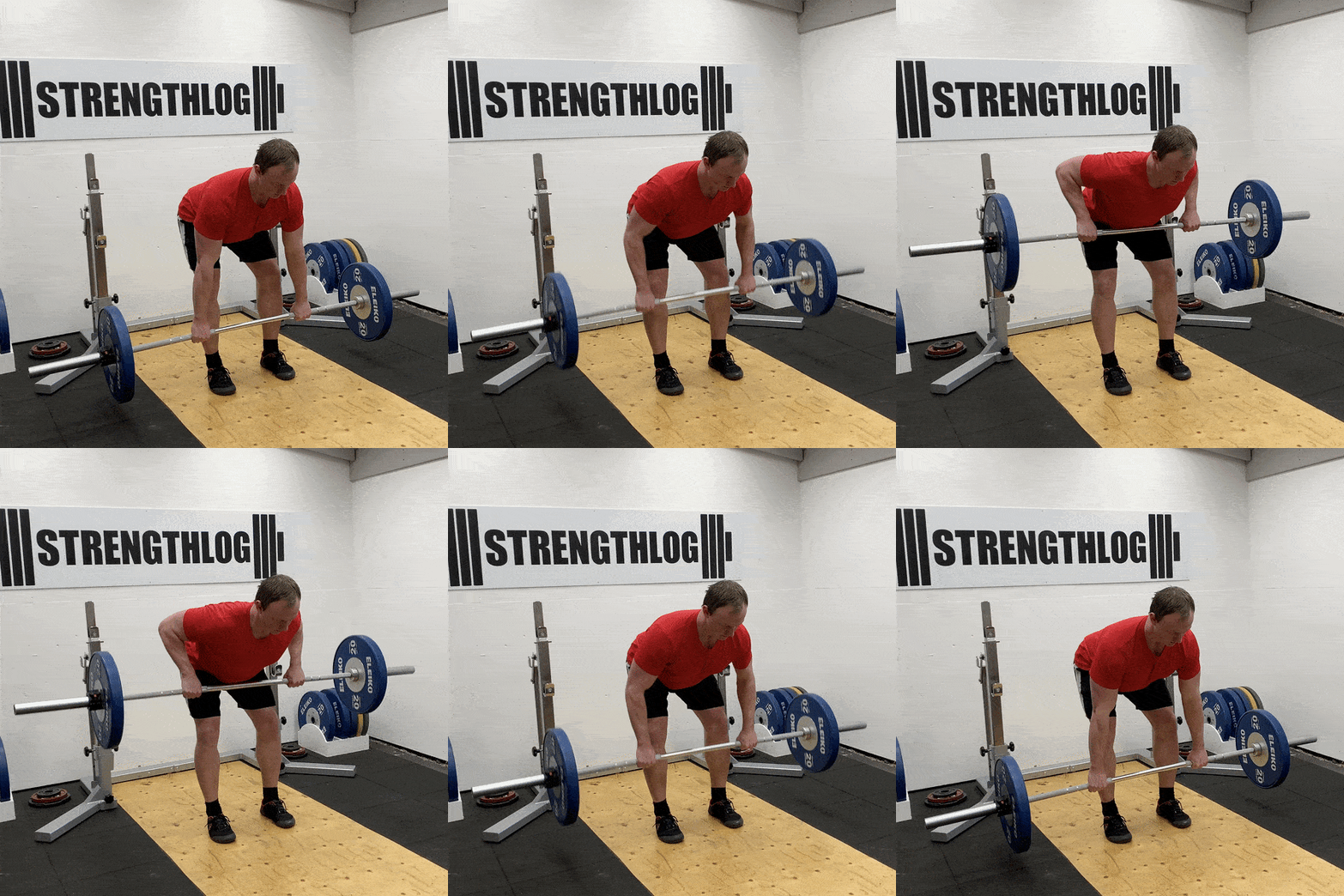
The barbell row is an old-school pulling exercise for your back that strengthens your retraction muscles (rhomboids, rear delts, and traps), making your punches harder and faster.
Your upper back works as a foundation for your punches as they stabilize your shoulders and transfer force from your legs to your fists. For every punch you throw, you need to pull it back first.
Another benefit of rowing is balance: punching is very anterior-dominant (front-heavy), and barbell rows are a countermeasure to keep your posture in check and your shoulders healthy.
How to Do Barbell Rows
- Grasp the barbell with an overhand grip, slightly wider than shoulder-width apart.
- Stand with your feet slightly wider than feet hip-width apart, bend your knees slightly, and hinge forward at your hips, maintaining a straight line from your head to your hips.
- Brace your core and keep your back straight. Pull the barbell towards your lower chest or upper core, keeping your elbows close to your body. Squeeze your shoulder blades together at the top of the movement.
- Lower the barbell back to the starting position in a controlled manner.
- Repeat the movement for the desired number of repetitions.
Hanging Leg Raise

In boxing, a weak core is like a car with a flat tire—you’re just not going anywhere. Every punch starts from the ground and travels through your core, transferring force into your fists. Fortunately, the hanging leg raise fixes your flat core tire. You hang from a pull-up bar and lift your legs, working your abs, obliques, hip flexors, and many stabilizing muscles in your upper body.
A strong core also means you can maintain a better control of your entire body. Whether you’re slipping punches or throwing combos, you can do it faster and be harder to knock off balance.
Can’t do full raises yet? Tuck your knees and do hanging knee raises instead. Progress to straight-leg raises over time. Conversely, add ankle weights or hold a dumbbell between your feet if and when your feet don’t provide enough resistance anymore.
How to Do Hanging Knee/Leg Raises
- Grasp a pull-up bar with an overhand grip, shoulder-width apart.
- Hang from the bar with your arms fully extended and your body in a straight line from your head to your heels.
- Engage your core and keep your back straight.
- Raise your knees or legs towards your chest, as high as you can, keeping your back straight and your core engaged.
- Slowly lower your legs back down to the starting position.
- Repeat the movement for your desired number of repetitions.
Plank With Leg Raise

The plank is one of the most popular core exercises. It hits your abs, obliques, and inner core stabilizers that keep you stable in your boxing stance and let you transfer power effectively from your lower to upper body during punches.
The single-leg element in this variant adds an element of unilateral (one-sided) control and works more stabilizer muscles around your hips and core to further improve your ability to stay steady when shifting weight during footwork or punching combos.
How to Do Plank with Leg Lifts
- Begin by getting into a standard plank position. Place your elbows directly under your shoulders, legs extended straight behind you, and toes pressing into the ground. Your body should form a straight line from your head to your heels.
- Brace your core, keep your back flat, and avoid letting your hips sink down or lift too high.
- Slowly lift one leg off the ground to about hip height without bending the knee. Keep your leg straight during the movement.
- Hold the lifted position for a moment, then gently lower your leg back to the starting position.
- Repeat the lift with the opposite leg, ensuring you maintain a strong plank position throughout the movement.
- Continue to alternate legs for the chosen amount of time.
Squat

The barbell squat is one of the most valuable exercises for boxers (and athletes in general). It directly improves your overall athletic capacity as well as your power, stability, and endurance in the ring.
Squats strengthen most of your body, but the primary muscle groups are your quads, adductors, glutes, and the muscles around your core for stability. There is a strong association between lower-body power (things like jump height) and punching impact—strong legs and glutes create the base that transfers energy into punches that can knock any opponent out.9 And there is nothing more effective for improving strength and power in the lower body than squats.
Go as deep as you can without losing form; deep squats hit your glutes and adductors more, which means better hip drive, a significant factor for the power behind your punches.
How to Squat
- Place the bar on your upper back with your shoulders blades squeezed together. Inhale and brace your core slightly, and unrack the bar.
- Take two steps back, and adjust your foot position.
- Squat as deep as possible with proper form.
- With control, stop and reverse the movement, extending your hips and legs again.
- Exhale on the way up or exchange air in the top position.
- Repeat the movement for the desired number of repetitions.
Romanian Deadlift

The Romanian deadlift (RDL) is one of the best strength exercises for boxers because it works many muscle groups that generate boxing power from the ground up: the posterior chain—hamstrings, glutes, lower back, and spinal erectors. It also teaches hip hinge mechanics for explosive movements like punches, slips, and footwork.
In addition, RDLs are fantastic for flexibility and are just as effective, if not more so, as stretching for combating tight hamstrings.
How to Do Romanian Deadlifts
- Get into the starting position by deadlifting a barbell off the floor or by unracking it from a barbell rack. Stand feet hip-width, inhale, and brace your core slightly.
- Lean forward by hinging in your hips. Keep your knees almost completely extended.
- Lean forward as far as possible with good form (no rounding your back). You don’t have to touch the barbell to the floor, although it is OK if you do.
- Reverse the movement and return to the standing position. Exhale on the way up.
- Repeat the movement for the desired number of repetitions.
Note: The dumbbell Romanian deadlift is a viable alternative to the barbell variant.
Bulgarian Split Squat

The Bulgarian split squat (BSS) is a single-leg exercise that boxers should love (because it is tremendously effective) or love to hate (because it challenges both your strength, stamina, and balance).
The BSS is a squat variation where you elevate one foot behind you (usually on a bench or box) while the other leg does the work. It’s a unilateral leg blaster focusing on the quads, glutes, adductors, plus stabilizing muscles all over your lower body and core.
Split squats build that lower-body power to help you generate knockout punches, challenge your balance (which you need to shift weight during footwork), and can even fix muscle imbalances between your legs. As a bonus, it is great for flexibility, keeps your hips loose, and gives you the strength to use within a more extended range of motion.
How to Do Bulgarian Split Squats
- Place a bar on your upper back or hold a pair of dumbbells in your hands.
- Stand with your back turned against a bench, which should be about knee height. Stand about one long step in front of the bench.
- Place your right foot on the bench behind you.
- Inhale, look forward, and squat down with control until right before your right knee touches the floor.
- Reverse the movement and extend your front leg again, while exhaling. Your back foot should only act as support.
- Repeat the movement for the desired number of repetitions, then switch side and repeat with your right leg forward and your left foot on the bench.
Hip Thrust

The hip thrust, a super popular glute and hip builder, might not seem like an obvious choice for powerful punches or fast footwork, but it’s an excellent exercise for boxers.
As you’ve read several times in this article, the power in your punches starts from the ground before traveling through your hips and core, then reaching your fists. The hip thrust is one of the top exercises for building the glute and hip strength that underpins that explosive force.
It also gives you better control, balance, and coordination for defense and counterattacks. And your hip thrust-boosted glutes may even prevent overuse of your lower back in rotational or forward movements, with a lower risk of injury during training and matches as a result.
You can do this exercise in a hip thrust machine if you have access to one.
How to Do Hip Thrusts
- Sit on the floor with your back against a sturdy bench.
- Roll the barbell up over your thighs, until it is placed over your hips.
- Place your feet on the floor, about shoulder-width apart, with bent knees.
- Place your hands on the bar to stabilize it.
- Push the bar towards the ceiling by extending your hips. Your knees should form a ~90 degree angle at the top.
- Squeeze your glutes at the top of the thrust like you’re trying to crack a walnut before lowering the weight.
- Repeat the movement for the desired number of repetitions.
Ab Wheel Rollout

The ab wheel rollout is a tiny wheel of doom that torches your core and gives you both anti-rotation and anti-flexion core strength. A boxer needs both because they stabilize the torso against the forces you generate when you punch. They also prevent energy leaks in your movements and improve your defensive reactions.
If you’re new to rollouts, don’t extend fully—only go as far as you can maintain proper form. Even partial rollouts build strength. Gradually increase your range of motion as you build core strength.
How to Do Ab Wheel Rollouts
- Start by kneeling on the floor with your hands on the ab wheel, placed directly in front of your knees.
- Engage your core and slowly roll the wheel forward until your body forms a straight line from your knees to your head.
- Be sure to keep your back straight and your core engaged throughout the entire movement.
- Reverse the movement, roll the ab wheel back towards your knees, and return to the starting position.
- Repeat the movement for the desired number of repetitions.
Pallof Press

The Pallof press is a straightforward but effective anti-rotation exercise that was originally called the belly press but got its more recognizable name from John Pallof, the physical therapist who popularized it.
Unlike crunches or sit-ups that involve flexion, Pallof presses train your core to hold steady against outside resistance. Think of it like making your body act like a steel cable for more efficient power delivery. You also build strength to brace for impact when an opponent’s punch lands.
How to Pallof Press
- Attach a handle in a cable machine at chest height and stand with your side facing the machine.
- Grab the handle with both hands and stand with feet hip-width apart and knees slightly bent.
- Pull the handle to your chest, engage your core, and then press your arms straight out in front of you without rotating your torso.
- Hold briefly, then bring the handle back to your chest in a controlled motion.
- Repeat for the desired number of repetitions, then switch sides.
Power Clean

The power clean is an explosive weightlifting exercise that trains almost your entire body—legs, hips, back, shoulders, and core— that offers several great benefits for boxers and improves explosive power, speed, and athletic performance.
The power clean trains the body to generate force quickly through fast-twitch muscle fibers, and that’s what boxing is all about—quick, powerful movements—whether you’re throwing a punch or dodging an attack. In addition, regular power cleaning improves your neuromuscular coordination and helps you move more fluidly in the ring.
Consider working with a coach if you’re new to Olympic lifts—they’re technical but very rewarding and some of the best exercises you can do for athletic performance.
How to Power Clean
- Step up close to the bar, so that it is about over the middle of your foot.
- Lean forward and grip the bar with an overhand grip, about shoulder-width apart.
- Hold your breath, and brace your core slightly.
- Lift the bar in a smooth but fast motion. Bend your knees slightly and receive the bar on the front of your shoulders.
- Stand up on straight legs again.
- Lower the bar in front of you, with control.
- Repeat the movement for your desired number of repetitions.
Incline Dumbbell Press

The incline dumbbell chest press works the same muscles as the regular bench press, but the angle of the bench shifts the focus more to the upper part of the chest, and using a pair of dumbbells instead of a barbell involves stabilizer muscles and allows for a more extended range of motion. Both barbell and dumbbells have their advantages, and in the Strength Training for Boxing program, you get to benefit from both.
A stronger chest helps you transfer force from your lower body through your arm, adding more “oomph” to your punches, and, togerher wih your shoulder girdle, allows you to hold your own during clinches, push-offs, and escapes.
How to Do the Incline Dumbbell Press
- Sit on a bench, and lift a pair of dumbbells up to the starting position.
- Press the dumbbells up to straight arms, while exhaling.
- Inhale at the top, or while lowering the dumbbells with control back to your shoulders.
- Repeat the movement for your desired number of repetitions.
Front Squat

Want to know a secret? It’s called the front squat, and it’s really, really good for improving athletic performance, including boxing. It is a variation of the regular squat, but you place the barbell in front of your body, on your shoulders just above your collarbone. Doing squats this way emphasizes your quads, mobility, and posture more than the good old back squat.
The primary muscles that get to work when you sink deep into a front squat are your quads, glutes, and adductors, but it also makes your core work harder because you’ve got to fight to stay upright under the load.
The above means a stronger lower body for more explosive punches, better footwork, and the ability to generate power from the ground up. Your legs are the foundation of every strike, and the front squat fortifies that foundation like a brick house.
How to Front Squat
- Grip the bar slightly wider than shoulder-width. Step forward and place the bar on the front of your shoulders: on top of your clavicles, and tight against your throat.
- Inhale and brace your core slightly, and unrack the bar.
- Take two steps back, and adjust your foot position.
- Squat as deep as possible with good technique.
- With control, stop and reverse the movement, extending your hips and legs again.
- Repeat the movement for the desired number of repetitions.
Dumbbell Row

The dumbbell row is a back exercise that hits the lats, traps, and rhomboids, with the rear delts and biceps providing a helping hand. Gaining strength and lean muscle in these muscles helps you punch harder, maintain your posture while you punch, improve your balance, and prevent overextension.
In Strength Training for Boxing, you do both barbell and dumbbell rows. Barbell rows are better for lifting heavier loads and building back strength, while dumbbell rows are superior for muscle imbalances (working one side at a time is perfect for finding and eliminating muscular imbalances, which is important for boxers who often favor one side) and range of motion. Including both means you’ll develop both maximal raw power (barbell rows) and rotational stability (dumbbell rows) for a fight-ready back (both are about equally good for building muscle).
You can do dumbbell rows in different ways:
- The first is like in the video above, supporting your body with a hand and a knee on a bench.
- The second is standing with both feet on the floor, feet shoulder-width apart, with your upper body hinged forward at the hip and your free hand on a bench or a dumbbell rack for support.
Both ways are equally effective, so go with what feels best to you.
How to Do Dumbbell Rows
- Place a dumbbell on the floor beside a bench or some other sturdy object. Stand facing the bench and place your left hand and left knee on top of it.
- Grip the dumbbell with your right hand. Bend your knees slightly and hinge forward at the hips, keeping your back flat and your torso roughly parallel to the floor.
- Engage your core muscles to stabilize your torso throughout the movement.
- While maintaining the position of your upper body and keeping your elbow close to your side, inhale and pull the dumbbell up towards your torso by retracting your shoulder blade. Focus on squeezing your back muscles as you lift.
- Continue pulling the dumbbell until it reaches the side of your torso. Row it closer to your hips to target your lower lats. Squeeze your lats at the top of the movement, ensuring a strong contraction in your back muscles.
- Lower the dumbbell back to the starting position while exhaling, maintaining control and good form throughout the descent.
- Repeat the movement for your desired number of repetitions, switch sides, and perform the above steps rowing with your left arm.
Core Twist

The Core twist is a rotational exercise for your obliques (the side muscles of your abs), rectus abdominis (six-pack), and transversus abdominis (deep core stabilizers). If done with correct form and range of motion, it also works your lower back and hip flexors as stabilizing muscles.
Core twists build the rotational strength you need to throw punches and hooks because that power comes from your hips and core, not just your arms and legs. The twisting motion translates to the torque you generate and improves power transfer from your feet to your fists.
How to Do Core Twist
- Sit on the floor with your knees bent and feet either on the ground or lifted slightly off.
- Hold a weight plate, medicine ball, or kettlebell with both hands in front of your chest.
- Lean slightly back with a straight back and engaged core.
- Twist your torso to one side and bring the weight toward your hip, keeping your hips stable.
- Return to the center and rotate to the other side.
- Repeat for the desired number of repetitions.
Box Jump

The box jump is an almost-plyometric exercise (while it’s often grouped as a plyo, it’s more plyometric-adjacent—the quirky cousin in the plyo family if you will—because it doesn’t have a really forceful eccentric phase) where you leapfrog onto a box, step, or platform.
Box jumps are a killer addition to your boxing game. You might not be leaping onto boxes in the ring but the benefits directly translate to the fast-twitch muscle fibers in your hips, glutes, quads, and calves that drive movement and build the explosive power and agility you need in the ring.
How to Do Box Jumps
- Select a box that is appropriate for your fitness level and jumping ability.
- Stand with your feet shoulder-width apart, a few inches away from the box. Your knees should be slightly bent, and your hips pushed back in an athletic stance, like a mini squat.
- Engage your core and swing your arms back to generate momentum. Keep your chest up, and your weight balanced evenly across your feet.
- Push through the balls of your feet, extending your hips, knees, and ankles as you jump up. Swing your arms forward and upward to help propel yourself onto the box. Jump with both feet leaving the ground at the same time.
- As you land on the box, aim to have both feet hit the surface at the same time. Bend your knees slightly to absorb the impact, keeping your chest up and back straight.
- Once you’ve landed on the box, stand up tall, extending your hips completely to finish the jump.
- Step off the box one foot at a time, and reset your stance before attempting the next jump.
- Repeat the movement for your desired number of jumps.
Trap Bar Deadlift

Boxing requires strong legs for footwork, a powerful core for torque, and an upper body with enough stability to deliver punches that hit as hard and accurately as possible. The trap bar deadlift strengthens all three, along with hitting numerous muscles all over the body.
The trap bar puts you in a more upright posture than regular deadlifts, making it easier to lift heavy and move the bar as fast as possible (as you’ll be doing during the Strength Training for Boxing program’s power/speed phase) without compromising form.
If you have mobility, turn the bar so that you grip the low handles for a more extended range of motion to emphasize hip-hinge mechanisms. If that doesn’t feel good, start with high handles and work on your mobility over time. The best way to do so is to gradually introduce long ranges of motion without loading up the bar to where your form breaks down.
How to Do Trap Bar Deadlifts
- Step into the bar’s opening so that the handles are in line with the middle of your feet.
- Inhale, bend down and grip the handles.
- Hold your breath, brace your core slightly, and lift the bar.
- Lift the bar with a straight back, until you are standing straight.
- Lower the bar back to the ground with control.
- Take another breath, and repeat the movement for your desired number of repetitions.
Leg Curl

The leg curl is the only isolation exercise for the hamstrings and a great addition to your workout routine, even though you’re already doing another hamstring exercise, the Romanian deadlift. The latter emphasizes the hip-extension function of the hamstrings, while leg curls work the knee-flexion function of the muscle group and hit the lower parts better.10 Together, RDLs and leg curls work the hamstrings through their full range of motion and across both the hip and knee joints.
As a boxer, you can’t have too much hamstring strength. They generate power in your punches through hip extension and stabilization, support quick changes in direction, and stabilize the knee joint, which helps prevent injuries.
You can do leg curls seated or lying down, depending on the machines you have access to. The seated variant is the better option (because you train at a longer muscle length) if you have one in your gym.11
How to Perform Leg Curls
- Adjust the machine so that you are correctly positioned. Your knees should be in line with the machine’s joint.
- Lift or push the weight down (depending on whether you chose the lying or seated leg curl) by bending your knees as far as possible.
- Slowly lower or let the weight back again.
- Repeat the movement for the desired number of repetitions.
Wood Chop

The wood chop mimics the motion of swinging an axe to chop wood (hence the name) and targets your core and stabilizes you during rotational movements.
A good punch is more than arm strength—it’s a full-body rotation. Wood chops train your obliques and transverse abdominis, increase the muscle coordination between your upper body, core, and lower body, and amplify the force of your punches. In addition, they help you absorb punches without losing balance.
Note: You can do this exercise with either a resistance band (like in the video demonstration above) or a cable pulley system.
How to Do Horizontal Wood Chops
- Fasten an elastic band at shoulder height. Grip the band with both hands, step away, and stand sideways to the band’s anchor point.
- With almost straight arms, make a sweeping, horizontal movement to your other side.
- Return to the starting position in a controlled manner.
- Repeat the movement for your desired number of repetitions.
Clap Push-Up

The clap push-up is a show-off sibling in the push-up family—an explosive variation of the classic push-up, more about power and speed. It is a plyometric exercise where you push yourself off the ground with enough force to leave the floor, clap your hands together while you’re airborne, and then land back in a push-up position before going in the next rep.
Clap push-ups train the chest, shoulders, and triceps, plus stabilizing muscles all over the body with the kind of explosive movements you use in your punches. The quick clap forces your arms and hands to move rapidly—a very handy ability to have in both offense and defense.
How to Do Clap Push-Ups
- Begin in a regular push-up position—hands slightly wider than shoulder-width apart, body in a straight line from head to heels.
- Lower yourself towards the ground by bending your elbows until your chest is just above the floor.
- Push up explosively through your hands, launching your upper body off the ground.
- While airborne, quickly clap your hands together beneath your chest.
- Return your hands to the ground, cushioning your landing by bending your elbows slightly, and go straight into the next rep.
- Repeat the movement for your desired number of repetitions.
Inverted Row

The inverted row is a bodyweight exercise that targets your back, biceps, shoulders, and core (if done correctly, with your body straight as a steel rod). It’s like a reverse push-up, but you pull your body toward a fixed bar instead of pushing it away from the floor.
Inverted rows strengthen the muscles you need to retract your punches quickly, keeping you ready for defense. Remember, you’re not just punching out—you’ve got to pull back just as fast.
Also, by working your rear delts and rotator cuff, they make your shoulders more stable and might even reduce your risk of overuse injuries from all that jab-cross-hook action.
How to Do Inverted Rows
- Place a barbell in a rack, high enough for you to be able to hang below it in straight arms, with your heels on the floor. It you don’t have a bar, anything sturdy like a heavy table than won’t flip over will do.
- Grip the bar with an overhand grip, slightly wider than shoulder-width apart.
- Inhale, and pull yourself up as high as you can, or until your chest touches the bar.
- Exhale, while lowering yourself back to the starting position with control.
- Repeat the movement for the desired number of repetitions.
Jump Squat

The jump squat is a footwork enhancer, power booster, and endurance multiplier all in one explosive package and a great complement to back and front squats. The regular barbell squats give you a solid strength base, and you can then build upon that base for maximum Rate of Force Development (RFT)—basically how fast you can develop force—with jump squats.
Lower body RFD is behind almost every movement in the ring, from the leg power that translates to explosive push-off from your feet and more “pop” in your punches to pivots to footwork and everything else in between that requires quick and powerful maneuvers.
How to Jump Squat
- Stand with your feet shoulder-width apart. Keep your chest lifted, shoulders back, and core engaged. Position your arms at your sides or in front of you for balance.
- Bend at your hips and knees, pushing your hips back as if you are sitting in a chair. Lower your body until your thighs are parallel to the floor or as low as comfortable.
- Extend your hips, knees, and ankles, and jump into the air by explosively pushing off the ground.
- Swing your arms up to help propel your body upward for more height.
- Land on the balls of your feet, absorb the impact by bending your knees and hips and return to the squat position.
- Once you’ve landed and regained your balance, immediately go into the next squat and repeat the movement for the desired number of repetitions.
Kettlebell Swing

If you want more punching power, you should do the kettlebell swing. And, if you follow the Strength Training for Boxing workout routine, that’s precisely what you’ll be doing during phase 3, the power phase.
Kettlebell swings are almost a full-body exercise that hammers your hips and posterior chain, areas that power your punches by transferring force from your lower body to your fists. If you can involve serious hip action in your blows, they will hit so much harder. You also get better at resisting unwanted rotation to absorb body blows and maintain balance during combos.
How to Do Kettlebell Swings
- Place a kettlebell on the ground, about one or two feet in front of you.
- Take a wide stance, lean forward, and grip the kettlebell.
- Brace your core slightly, and swing the kettlebell back between your legs while inhaling.
- Swing the kettlebell forward by extending your hip while exhaling.
- Try to swing the kettlebell to about chest height.
- Repeat for the desired number of reps and put the kettlebell back on the ground when you’re finished.
Strength Training for Boxing: Final Words
You have reached the end of this guide to strength training for boxing. 🥊
Thank you for reading! I hope you have enjoyed it and learned things that take your fighting to the next level.
To follow the training routine in this article, download our workout log app and start tracking your workouts today:
Click here to open the program in StrengthLog.
Strength training for boxing can transform you into a more powerful fighter. You’ll be capable of delivering more explosive punches, quicker footwork, and tougher defense. And it makes you look good in a pair of boxing shorts as well.
The power you build outside the ring fuels your performance inside it. Strength training might not give you the technical prowess you need to dominate your opponent, but it will provide you with the muscle to back your boxing skill up.
The ring doesn’t lie, and the bell’s about to ring—are you ready?
References
- Med Sci Sports Exerc. 1991 Jun;23(6):739-43. Effects of strength training on lactate threshold and endurance performance.
- Appl. Sci. 2024, 14(21), 970. Acute and Chronic Effects of Muscle Strength Training on Physical Fitness in Boxers: A Scoping Review.
- Front. Physiol., 13 April 2023. Effect of unilateral training and bilateral training on physical performance: A meta-analysis.
- Front Physiol. 2022 Jun 6:13:915259. Effect of Core Training on Skill Performance Among Athletes: A Systematic Review.
- Br J Sports Med. 2006 Jun 28;40(8):670–674. A prospective cohort study of injury in amateur and professional boxing.
- Br J Sports Med. 2014 Jun;48(11):871-7. The effectiveness of exercise interventions to prevent sports injuries: a systematic review and meta-analysis of randomised controlled trials.
- Br J Sports Med. 2018 Dec;52(24):1557-1563. Strength training as superior, dose-dependent and safe prevention of acute and overuse sports injuries: a systematic review, qualitative analysis and meta-analysis.
- Sports Med. 2016 Aug;46(8):1111-24. Neck Muscular Strength, Training, Performance and Sport Injury Risk: A Review.
- J Strength Cond Res. 2016 Jan;30(1):109-16. Strength and Power Qualities Are Highly Associated With Punching Impact in Elite Amateur Boxers.
- J Strength Cond Res. 2015 Jan;29(1):159-64. Regional differences in muscle activation during hamstrings exercise.
- Med Sci Sports Exerc. 2020 Oct 1. Online ahead of print. Greater Hamstrings Muscle Hypertrophy but Similar Damage Protection after Training at Long versus Short Muscle Lengths.
