
Lacrosse is fast, physical, and unforgiving, and if you want to be your best, skill alone won’t cut it. Strength training gives you the edge to hit harder, sprint faster, and last longer on the field.
In this article, I’ll break down how hitting the weights can boost your performance, prevent injuries, and turn you into a force to be reckoned with on the field, with a 12-week training program and a selection of the best exercises you can do.
Time to lift and lax like your stick check depends on it.
Click here to go directly to the program in StrengthLog.
🥍🥍🥍
Table of Contents
Benefits of Strength Training for Lacrosse
Lacrosse is one of the oldest team sports in North America—played by Native American tribes—with origins that go back many hundreds of years, although it was heavily modified in the 19th century.1
Strength training was not always an accepted part of lacrosse. Like in many other sports during the early to mid-20th century, there was skepticism about athletes lifting weights, with coaches and players believing that it made you “muscle-bound”, inflexible, and slow.
Fortunately, sports science has long since disproven that tired old myth. We now know that the opposite is true: weight training improves speed, power, injury prevention, and athletic performance.
Nowadays, almost every sport, including lacrosse, has made strength training pretty much essential at all levels, from high school to professional. If you’re not lifting, you’re falling behind.
Here are the top benefits of strength training for lacrosse.
More Powerful Shots and Passes
Stronger muscles help you throw the ball faster and harder.
And it’s very important to train your entire body, not just the upper body “shooter” muscles. Core and rotational strength and leg power are even more important.
For example, one study found that shot speed correlated strongly with medicine-ball throw distance, vertical jump height, grip strength, and knee extension torque—wildly different but all important.2
Better Defense and Checking
It’s strength that lets you hold your ground and handle opponents, making you tougher on defense. You’ll be able resist being bulldozed by attackers and deliver harder and more controlled stick checks without getting knocked off balance.
Reduced Injury Risk
Stronger muscles, bones, and joints protect you from getting hurt easily.
Many studies have shown that strength training cuts the risk of sports injuries by up to about a third.3 4 That’s better than anything else you can do to protect your body.
Speed and Agility
Strong legs help you run faster, change direction quickly, and outmaneuver opponents.
For example, the stronger you are in the squat, the faster you sprint, and the higher you jump.5 That alone makes heavy weight training indispensable for lacrosse, which relies on short and fast rushes.
Balance and Stability
Good strength helps you stay balanced, so you don’t fall or lose your footing easily during play.
Whether you’re sprinting downfield or posting up in front of the goal, balance keeps you on your feet even when some defenseman is trying to knock you into next Tuesday.
Anaerobic Endurance
Strength training raises your lactate threshold—when lactic acid begins to build up in the blood faster than it can be cleared, causing the “burning” feeling—so you recover faster between sprints and can keep high work-rates through fourth-quarter rides and clears.6
Stick Control and Checks
Forearm, grip, and upper-back strength steady your stick and improve shot accuracy and defensive control for a more reliable hold in physical play.
Recovery
Strength training helps you recover faster. It might sound weird, but lifting weights actually helps your body bounce back quicker—between shifts, between games, and over the long haul of a tough season.
How? Strength training makes your body more efficient: it builds more energy-making machines (mitochondria), refills your fuel (glycogen) faster, and boosts helpful hormones. For a contact sport like lacrosse, where you’re constantly sprinting, hitting, and going full tilt, that kind of recovery power makes a big difference.
How Should Lacrosse Players Strength Train?
A strength training program for lacrosse players helps them become stronger, faster, and more powerful so they can play better and stay safe from injuries.
How Often Should Lacrosse Players Lift Weights?
Lacrosse players usually get the most out of strength training two to four times per week, depending on the time of year.
- The off-season (3–4 sessions/week) is the best time to get stronger, build muscle, and improve your power. You can train more often and lift heavier weights because you don’t have practices or games getting in the way of recovery.
- Pre-season (2–3 sessions/week) is when your focus shifts to getting faster and more explosive. You still lift heavy, but your workouts are a bit shorter and more focused on power and speed work to help you perform better on the field.
- During the in-season (1–2 sessions/week), your goal is to maintain the strength and power you built earlier. Practices and games take up a lot of energy, so you lift less often. But skipping strength training entirely is a mistake—it will cause you to lose strength, slow down, and increase your risk of injury, so keep hitting the weights at least one or two times every week.
Also, your experience level matters.
- A beginner lacrosse player benefits most from strength training 2–3 times per week to build strength and technique with plenty of recovery.
- An intermediate or elite player can train 3–4 times per week, with sessions adapted to in-season or off-season demands. They focus more on power, speed, and sport-specific conditioning while managing fatigue.
Designing a Strength Training Program for Lacrosse
Lacrosse is a very physically demanding and complex sport, and your strength training program should reflect that.
- It combines speed, strength, agility, and endurance.
- You need to run long distances at high speed, often while dodging, checking, or getting hit.
- It involves quick direction changes, core control, and dynamic movements that require a lot of power, like shooting and checking.
What does that mean? It means that a well-rounded strength training program for lacrosse shouldn’t just be about lifting heavy weights. It should:
- Build full-body strength, from the legs to the core and the upper body.
- Include sprints and plyometrics (like jumping and explosive movements).
- Improve balance, joint stability, coordination, and reaction time.
- Help prevent injuries, particularly the most common ones to the shoulders, knees, and ankles.
- Prepare your body for high-speed impacts and fast recovery between plays.
In short, because lacrosse is so fast, physical, and multi-skilled, a strength training program should cover all the above bases.
That being said, I think the words “sport-specific” and “functional” are overrated.
Some of your strength training should include movements that specifically replicate the biomechanics of lacrosse. However, thinking that all your weight training should be “functional,” meaning sport-specific movements, is a mistake. Strength and muscle are functional, and most of your lifting should consist of exercises and movements that build muscle and make you stronger in general, because a stronger body is also a more athletic one.
Choosing the Right Strength Training Exercises for Lacrosse
| Performance Attribute | Primary Strength Qualities | Specific Muscle Groups Involved | Example Exercises |
|---|---|---|---|
| Shot Power & Velocity | Rotational Power, Lower Body Explosiveness, Core Strength | Core (Obliques, Abdominals), Glutes, Quads, Hamstrings, Shoulders, Triceps, Forearms/Wrists | Medicine Ball Rotational Throws, Squats, Deadlifts, Overhead Press, Wrist Curls |
| Speed Training & Acceleration | Lower Body Strength & Power, Rate of Force Development | Glutes, Quads, Hamstrings, Calves, Hip Flexors | Squats , Deadlifts , Lunges , Plyometrics (Box Jump, Horizontal and Vertical Jumps), Resisted Sprints |
| Agility & Change of Direction | Lower Body Strength, Eccentric Strength, Core Stability | Glutes, Quads, Hamstrings, Adductors, Abductors, Core | Squats (including single-leg variations like Bulgarian Split Squats) , Lunges (multi-directional) , Plyometrics (Lateral Bounds) , Cone Drills , Ladder Drills (Note: drills are more effective if you have built underlying strength) |
| Checking Power | Upper Body Pushing Strength, Core Strength, Total Body Power | Shoulders, Chest, Triceps, Core, Legs (for base) | Bench Press, Incline Dumbbell Press, Push-Ups, Medicine Ball Throws , Pull-Up (for antagonistic balance) |
| Ground Ball Domination | Lower Body Strength, Core Stability, Grip Strength | Legs, Glutes, Core, Back, Forearms | Deadlifts, Squats , Farmer’s Carries, Rows |
In addition to the exercises listed above, Olympic lifts and variations of those are beneficial for several of the performance attributes:
| Quality | Benefit from Olympic Lifts |
|---|---|
| Shot Power & Velocity | ✅ Very High |
| Speed & Acceleration | ✅ Very High |
| Agility & Change of Direction | ✅ High |
| Checking Power | ⚠️ Moderate |
| Ground Ball Domination | 🚫 Low |
Sample Week of Strength Training for a Lacrosse Player
Here is what a sample week of training could look like for an intermediate-level lacrosse player:
| Day | TrainingType |
|---|---|
| Monday | Strength: Lower Body + Core + Agility |
| Tuesday | On-Field Skills & Conditioning |
| Wednesday | Strength: Upper Body + Core |
| Thursday | On-Field Tactical & Conditioning |
| Friday | Strength:Full Body |
| Saturday | Aerobic Base & Stick Work |
| Sunday | Rest |
Strength Training Program for Lacrosse
This is a training program for lacrosse athletes who want to develop maximum strength, power, balance, and stability while strengthening the body for peak performance on the field and prevent injuries. It’s suitable for the off-season and the pre-season transition parts of your training.
This program works best if you already have some strength training experience. It features many different, relatively complex exercises, and if you have never lifted weights before, it might be too much for you to jump right into.
If you’re new to the gym, start with one of our beginner programs, like the Beginner Barbell Training Program. You train three times per week, alternating between workouts A and B.
Workout A
| Exercise | Sets | Reps |
|---|---|---|
| Squat | 3 | 8–10 |
| Bench Press | 3 | 8–10 |
| Barbell Row | 3 | 8–10 |
Workout B
| Exercise | Sets | Reps |
|---|---|---|
| Deadlift | 3 | 6–8 |
| Lat Pulldown (or Pull-Ups) | 3 | 8–10 |
| Overhead Press | 3 | 8–10 |
In other words, you’ll train workouts A B A week one and B A B week two, then go back to week one and keep alternating between the two.
This beginner program (any many more) are available for free in our workout log app, StrengthLog.
You can use the strength you gain to your advantage in lacrosse. It’s a great way to teach your muscles, brain, and nervous system to play together, allowing you to move on to more complex programs.
If you do have some weight training experience, you’re ready for Strength Training for Lacrosse.
12-Week Offseason Strength Training Program for Lacrosse
This is a 12-week off-season strength training program for lacrosse players, designed with periodization to build strength, hypertrophy, and power.
The duration of lacrosse seasons can vary depending on the level of play (youth, high school, college, professional), the region, and the league, so feel free to run multiple rounds of the program. Once you’ve completed a 12-week round, you can start over and use heavier weights because you will have gained plenty of strength during those three months.
The program follows a 3-phase progression:
- Weeks 1–4: Hypertrophy & Work Capacity
- Weeks 5–8: Strength Development
- Weeks 9–12: Power & Speed
The first two phases include three sessions per week:
- Day 1: Lower Body
- Day 2: Upper Body
- Day 3: Full Body / Athletic Strength & Power
Then, during the power phase, you switch to four weekly workouts:
- Day 1: Explosive Lower (Squat-based)
- Day 2: Upper Power (Push Focus)
- Day 3: Explosive Lower (Hinge Focus)
- Day 4: Upper Power (Pull Focus)
You can pick which days you hit the weights to fit your schedule, but training on Monday, Wednesday, and Friday/Saturday during phases 1 and 2 and on Monday, Tuesday, Thursday, and Friday/Saturday during phase 2 is optimal for recovery.
- Warm-Up: Warm up before each training session with a dynamic warm-up routine that addresses hip mobility, shoulder mobility, and core activation (e.g., leg swings, pogo hops, lateral shuffles, open-/close-gates, inchworms, hip circles, light band work for shoulders, etc.).
- Progression: This program is divided into three phases (Weeks 1–4, 5–8, 9–11). Within each phase, try to increase weight slightly (2.5–5 lb increments for upper body lifts, 5–10 lb increments for lower body) when you can complete all prescribed reps without breaking form. During the power phase, focus on bar speed and intent. and keep the weights submaximal but fast.
- Rest: Rest 90–120 seconds between heavier lifts (strength-focused sets of 5–6 reps) and around 60 seconds for accessory or higher-rep work. Power exercises often need slightly longer rest (2–3 minutes) to maintain explosiveness.
Below is an example of a week from the program with the exercises you’ll do during each phase. The exact number of sets and the rep scheme, details of all three phases, including % of 1RM recommendations along with the planned intensity and volume progression route, are available in your StrengthLog workout tracker app.
Weeks 1–4: Hypertrophy & Work Capacity
Goal: Build muscle mass, gain general strength and muscular endurance, improve structural balance.
Workout 1: Lower Body
| Exercise | Sets |
|---|---|
| Squat | 4 |
| Romanian Deadlift | 3 |
| Bulgarian Split Squat | 3 |
| Single Leg Glute Bridge | 3 |
| Standing Calf Raise | 3 |
Workout 2: Upper Body
| Exercise | Sets |
|---|---|
| Incline Dumbbell Press | 4 |
| Pull-Up | 4 |
| Dumbbell Shoulder Press | 3 |
| Dumbbell Row | 3 |
| Face Pull | 2 |
| Core circuit: Ab Wheel Roll-Out + Core Twist + Plank | 3 |
Workout 3: Full Body (Intro to Power)
| Exercise | Sets |
|---|---|
| Hang Power Clean | 4 |
| Front Squat | 4 |
| Push Press | 3 |
| Farmers Carry | 4 |
| Pallof Press | 3 |
Weeks 5–8: Maximum Strength Phase
Goal: Develop maximal strength. Lower reps, heavier loads, slower tempo.
Workout 1: Lower Body
| Exercise | Sets |
|---|---|
| Squat | 5 |
| Trap Bar Deadlift | 4 |
| Bulgarian Split Squat | 3 |
| Nordic Hamstring Eccentric | 3 |
| Standing Calf Raise | 3 |
Workout 2: Upper Body
| Exercise | Sets |
|---|---|
| Bench Press | 5 |
| Weighted Pull-Up | 4 |
| Overhead Press | 4 |
| Barbell Row | 3 |
| Hanging Leg Raise + Cable Woodchop | 3 |
Workout 3: Full Body (Strength-Power Blend)
| Exercise | Sets |
|---|---|
| Hang Power Clean | 5 |
| Complex: Front Squat + Push Press | 4 |
| Single Leg Romanian Deadlift | 3 |
| Dumbbell/Kettlebell Snatch | 3 |
| Core circuit: Ab Wheel Roll-Out + Core Twist + Plank | 3 |
Weeks 9–12: Power & Speed
Goal: Translate strength to speed and explosive sport-specific movement. Focus on moving the weight explosively during the concentric (lifting) phase of the strength exercises. For power exercises, focus on maximizing speed and jump height/distance.
Workout 1: Explosive Lower (Squat-based)
| Exercise | Sets |
|---|---|
| Hang Clean | 5 |
| Jump Squat | 4 |
| Bulgarian Split Squat | 3 |
| Horizontal and Vertical Jump | 3 |
| Hanging Leg Raise | 3 |
Workout 2: Upper Power (Push Focus)
| Exercise | Sets |
|---|---|
| Push Press | 5 |
| Med Ball Chest Pass | 4 |
| Plyo Push-Up | 3 |
| Landmine Press | 3 |
| Ab Wheel Roll-Out | 3 |
Workout 3: Explosive Lower (Hinge Focus)
| Exercise | Sets |
|---|---|
| Trap Bar Deadlift | 5 |
| Sled Push | 4 |
| Sprint Bounding | 3 |
| Complex: Romanian Deadlift + High Pull | 3 |
| Weighted Plank | 3 |
Workout 4: Upper Power (Pull Focus)
| Exercise | Sets |
|---|---|
| Pull-Up | 4 |
| Ball Slams | 3 |
| Kettlebell Swing | 3 |
| Towel Pull-Up | 3 |
| Core Twist | 3 |
Follow the Strength Training for Lacrosse Program in StrengthLog
This and many more training programs are in the StrengthLog workout log app. The app is free to use, forever, with no ads. This program, however, is a premium program (it offers advanced percentage-based progression and periodization), which means it requires a premium subscription.
We offer all new users a free 14-day premium trial. You can activate it in the app without any strings attached.
Download StrengthLog and start tracking your workouts today:


Click here to go directly to the program in StrengthLog.
Strength Training for Lacrosse: Exercises
Here are detailed descriptions of all the exercises in the Strength Training for Lacrosse program in the order they appear.
Squat (Back Squats & Front Squats)


I think that the squat, both the regular back squat and the front squat, is the single most important movement you can do for athletic performance, and that includes lacrosse.
Squats train most of your lower body (legs, hips, glutes), build muscle and strength, and develop power, speed, and explosiveness. They make you better at generating force for sprinting down the field, exploding out of a dodge, and maintaining a low center of gravity during defensive play.
In Strength Training for Lacrosse, you’re doing both—the back squat to build brute strength and posterior chain power, and the front squat for more focus on your quads, hip mobility, and athletic posture. You’ll even do a “complex”—a two-exercise combo where you move directly from front squats into push presses on power training days.
How to Squat
- Set the barbell at upper chest height in a squat rack.
- Step under the bar and place it across your upper traps or rear delts.
- Grip the bar just outside your shoulders and pull your elbows down and back.
- Lift the bar off the rack by standing up straight.
- Take a step or two back and set your feet shoulder-width apart.
- Brace your core and keep your chest up.
- Squat down as deep as you can with good technique by bending your hips and knees.
- Extend your hips and legs to stand back up.
- Repeat the movement for the desired number of repetitions.
How to Front Squat
- Set the barbell at upper chest height in a squat rack.
- Step up and place the bar across the front of your shoulders.
- Cross your arms over the bar or use a clean grip, keeping elbows high.
- Lift the bar off the rack by standing up straight.
- Take a step or two back and set your feet shoulder-width apart.
- Brace your core and keep your chest lifted and elbows up.
- Squat down as deep as you can with good technique by bending your hips and knees., staying upright.
- Extend your hips and legs to stand back up.
- Repeat the movement for the desired number of repetitions.
Romanian Deadlift

The Romanian deadlift (RDL) is one of the best exercises for the posterior chain (glutes, hamstrings, and lower back), the engine behind your sprinting speed and jumping ability. It teaches your body the hip hinge movement pattern that allows you to generate power from your hips with a stable spine.
A huge benefit for a dynamic sport like lacrosse is the fact that the eccentric load on the hamstrings during the RDL protects against hamstring strain and tears, which are pretty common and can set you back significantly. Studies show that eccentric training reduces hamstring injuries by up to 70%.7
In addition to regular RDLs, Strength Training for Lacrosse includes the more advanced single leg RDL, which is excellent for balance, unilateral strength (strength on one leg at a time), and stability—ideal for the sport’s dynamic nature.
How to Do Romanian Deadlifts
- Get into the starting position by deadlifting a barbell off the floor or by unracking it from a barbell rack. Stand feet hip-width, inhale, and brace your core slightly. If you’re doing single-leg RDLs, lift one leg off the ground.
- Lean forward by hinging in your hips. Keep your knees almost completely extended.
- Lean forward as far as possible with good form (no rounding your back). You don’t have to touch the barbell to the floor, although it is OK if you do.
- Reverse the movement and return to the standing position. Exhale on the way up.
- Repeat the movement for the desired number of repetitions.
Note: The dumbbell Romanian deadlift is a viable alternative to the barbell variant.
Bulgarian Split Squat

The Bulgarian split squat is a lower-body exercise in which you elevate one foot behind you on a bench while you squat with the other leg. It develops unilateral (single-leg) strength, stability, and explosive power—basically the leg-day equivalent of a double-overtime ground ball scrum.
Because you train each leg individually, you can iron out imbalances (which almost everyone has, whether they know it or not) that can make you vulnerable to injury or cause you to lose power in a sprint. And lacrosse is a unilateral sport—you’re pushing off one leg all the time, from changing direction to absorbing a check and firing off a shot.
How to Do Bulgarian Split Squats
- Place a bar on your upper back or hold a pair of dumbbells in your hands.
- Stand with your back turned against a bench, which should be about knee height. Stand about one long step in front of the bench.
- Place your right foot on the bench behind you.
- Inhale, look forward, and squat down with control until right before your right knee touches the floor.
- Reverse the movement and extend your front leg again, while exhaling. Your back foot should only act as support.
- Repeat the movement for the desired number of repetitions, then switch side and repeat with your right leg forward and your left foot on the bench.
Single Leg Glute Bridge

The single-leg glute bridge is a more challenging variation of the regular glute bridge, with a few more benefits. You’re on your back, one leg raised in the air, and the other leg is doing the lifting. It’s a swell exercise for butt power and hip stability.
Besides the obvious benefits of a more powerful hip extension (faster sprints, higher jumps, more shooting power), unilateral strength and stability around your hips is extra important in a sport like lacrosse that involves many single-leg actions, like when you plant a leg to shoot, cut, or dodge.
Bend your knees and move your feet close to your butt to maximize glute activation.8
How to Do Single-Leg Glute Bridges
- Lie down with one foot on the floor, one leg extended.
- Tuck the pelvis in to properly activate the glutes.
- Push your hips towards the ceiling by using the glute muscle in the bent leg, until your body forms a straight line from head to foot.
- Squeeze your glutes at the top.
- Reverse the movement, and repeat for the desired number of reps.
- Switch legs and do the above over again.
Calf Raise

The calf raise is the number one exercise (even though you can do it in several ways) to build the push-off strength you need for sprinting, jumping, and quick lateral movements—pretty much the bread and butter of lacrosse. A strong calf can be the difference between bursting past a defender and an awkward shuffle that ends in grass in your mouth.
And bonus: stronger calves also mean a lower risk of ankle injuries, which are common among players who constantly cut, jump, and change directions at top speed.
You want to do your calf raises with only a slight bend in your knees—much more effective for building the entire calf than seated calf raises.9
How to Do Standing Calf Raises
- Place your toes and the ball of your feet on the foot support. Place the shoulder pads against your shoulders and stand upright in the starting position.
- Lower yourself down by bending your ankles in a controlled movement.
- Push yourself up by extending your ankles.
- Repeat the movement for the desired number of repetitions.
Chest Press (Bench Press / Incline Dumbbell Press)


Lacrosse is a contact-heavy, fast-paced, upper-body-demanding sport, and the chest press builds upper-body pushing strength, specifically in the chest, shoulders, and triceps.
This trio of muscles is essential for checking, dislodging your opponents from the ball, holding off defenders, and providing shoulder stability when you’re swinging a stick around at full tilt. That’s where the chest press comes in like your beefy best friend at a bar fight.
In Strength Training for Lacrosse, you’ll do the incline dumbbell press and the barbell bench press during different phases of the program. The bench press is awesome for maximum strength, while the incline dumbbell press allows for a greater range of motion, requires more stabilization from the shoulder muscles, and is a bit more specific to the angles used in lacrosse movements.
How to Bench Press
- Lie on the bench, pull your shoulder blades together and down, and slightly arch your back.
- Grip the bar slightly wider than shoulder-width apart.
- Inhale, hold your breath, and unrack the bar.
- Lower the bar with control, until it touches your chest somewhere close to your sternum.
- Push the bar up to the starting position while exhaling.
- Take another breath while in the top position, and repeat the movement for the desired number of repetitions.
How to Incline Dumbbell Press
- Adjust the incline of a bench to be around 30-45 degrees.
- Sit down and lift a pair of dumbbells to the starting position.
- Press the dumbbells up to straight arms while exhaling.
- Inhale at the top or while lowering the dumbbells with control back to your shoulders.
- Repeat the movement for the desired number of repetitions.
Pull-Up

Pull-ups are a bodyweight exercise where you grip a bar overhead and pull yourself up until your chin clears the bar. It trains your lats, upper back, rear delts, biceps, forearms, and grip strength (if you don’t use lifting straps)—the same muscles that control your stick, hold position, and finish on a cage with power.
If you struggle to do full pull-ups, you can take a resistance band, wrap it around the bar, stand on the other end, and use it to give you a helping hand. Or do lat pulldowns, which work the same muscles but in a machine that makes it easier to adjust the load.
How to Do Pull-Ups
- Grip the bar with palms facing away from you, slightly wider than shoulder-width.
- Keep your chest up, and look up at the bar.
- Inhale and pull yourself up until your chin is over the bar or the bar touches your upper chest.
- Exhale and lower yourself with control until your arms are fully extended.
- Repeat the movement for the desired number of repetitions.
Shoulder Press (Barbell Overhead Press, Dumbbell Shoulder Press & Push Press)


The overhead press is a fundamental upper body exercise with several neat-o benefits for lacrosse players. You can perform it with either a barbell or dumbbells, and both build muscle mass, strength, and stability in the shoulders, triceps, and upper chest for improved shooting velocity, passing accuracy, and injury protection against the physical demands of the game.
In Strength Training for Lacrosse, you’re doing three different variants of the overhead press: the dumbbell shoulder press during the foundational strength and hypertrophy phase, the barbell overhead press during the maximum strength phase, and the push press when the program calls for power and explosiveness.
Barbell presses allow you to use heavier loads for greater maximal strength gains, while dumbbells can give you a more natural arc of movement and train each side independently for greater stabilization from the smaller muscles around the shoulder joint. Both have their place in a balanced lacrosse conditioning program. As does the push press, where you use a bit of leg drive to propel the barbell overhead, bridging strength and explosiveness.
How to Overhead Press
- First, place a barbell in a rack at about chest height.
- Grip the bar slightly wider than shoulder-width apart, and step close to it.
- Inhale, lightly brace your core, and unrack the bar.
- Let the bar rest against your front delts while you step back from the rack.
- Press the bar up to straight arms while exhaling.
- Inhale at the top or while lowering the bar with control back to your shoulders.
- Repeat the movement for the desired number of repetitions.
How to Dumbbell Shoulder Press
- Grab a pair of dumbbells, and lift them up to the starting position at your shoulders.
- Inhale and lightly brace your core.
- Press the dumbbells up to straight arms, while exhaling.
- Inhale at the top, or while lowering the dumbbells with control back to your shoulders.
- Repeat the movement for the desired number of repetitions.
Rows (Barbell & Dumbbell)
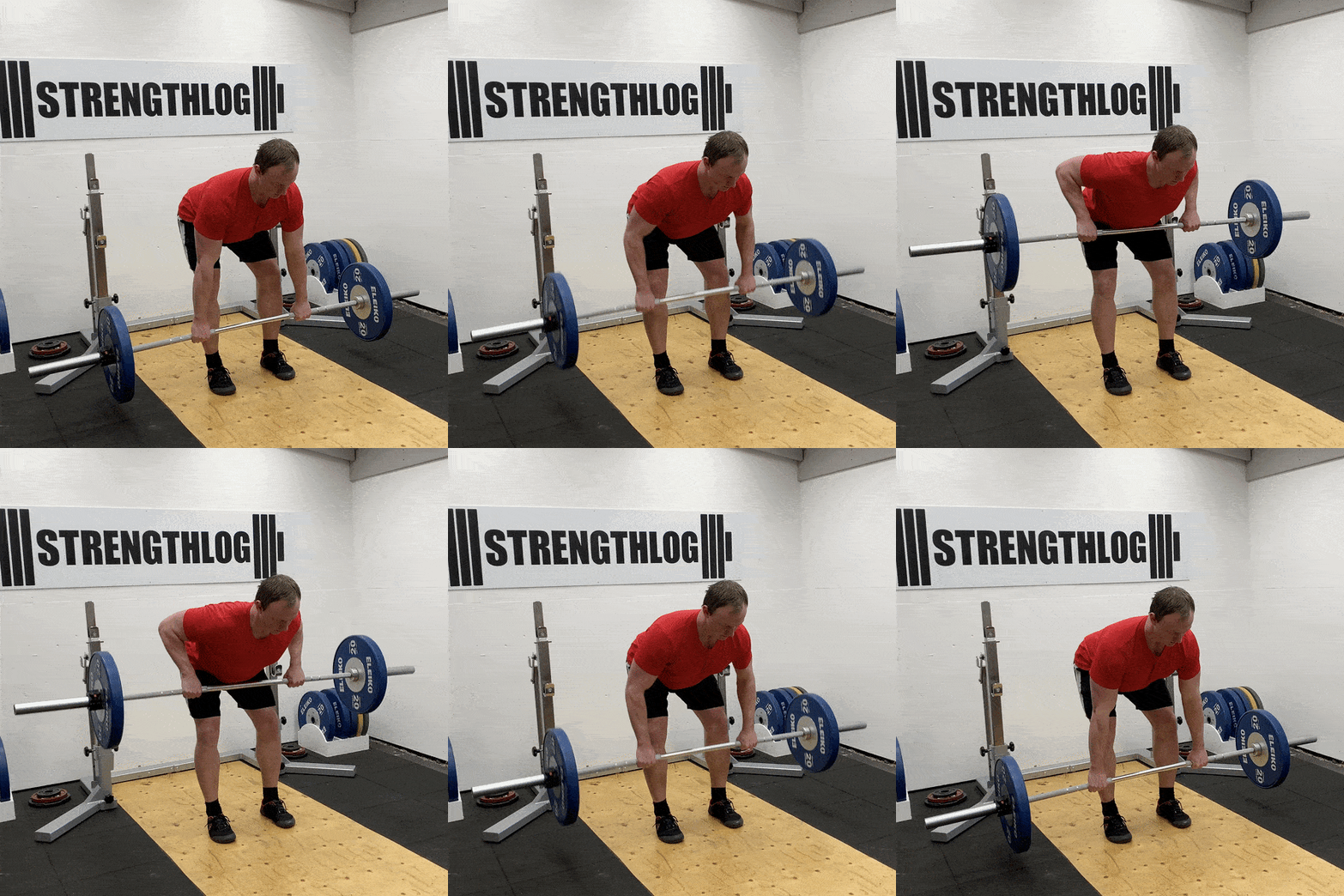

Rows are fantastic for overall upper body pulling power and stability. The primary muscles you use when you’re doing rows are the ones that transfer force from your lats, rhomboids, trapezius, and posterior deltoids.
Barbell rows allow you to use as much weight as possible to pack on the strength and muscle, while dumbbell rows offer a greater range of motion, train anti-rotation, and require more stabilization because you row with each arm independently.
Both are great exercises for lacrosse, and the Strength Training for Lacrosse workout plan utilizes them both at different phases of the program.
How to Do Barbell Rows
- Grip the bar with an overhand grip.
- Lean forward with the bar hanging from straight arms.
- Inhale and pull the bar towards you.
- Pull the bar as high as you can so that it touches your abs or chest, if possible.
- With control, lower the bar back to the starting position.
- Repeat for the desired number of repetitions.
How to Do Dumbbell Rows
- Place your left knee and left hand on a bench for support.
- Hold a dumbbell in your right hand with your arm extended straight down.
- Keep your back flat and core engaged.
- Pull the dumbbell up toward your waist, keeping your elbow close to your body.
- Squeeze your shoulder blade at the top of the movement.
- Lower the dumbbell back to the starting position with control.
- Repeat for the desired number of repetitions, then switch sides, and repeat.
Face Pull

The face pull is a pulling exercise, usually done with a resistance band or cable machine, where you pull the weight toward your face (hence the poetic name), elbows high, rotating the shoulders back as you do it. It works your posterior delts, upper traps, and the rotator cuff.
Face pulls are not meant to directly build a ton of muscle or strength. Instead, it’s a corrective and strengthening exercise that reduces injury risk and improves upper body stability, shoulder health, and throwing mechanics by strengthening the muscles that retract and externally rotate your shoulders. Those are all critical components for success and longevity in a demanding sport like lacrosse.
You don’t want to use too much weight when doing face pulls. Keep it relatively light, focus on higher rep ranges, and maintain good form throughout, for best results.
How to Do Face Pulls
- Fasten a rope handle in a high position on a cable pulley. Grip the ropes with an overhand grip, and take a step or two back.
- With elbows held high, pull the rope towards you by letting your upper arms move straight out towards your sides, while simultaneously rotating your forearms up.
- Return with control to the starting position, by letting your arms move forward again.
- Repeat the movement for the desired number of repetitions.
Core Circuit: Ab Wheel + Core Twist + Plank


You’ll finish off several workouts in the Strength Training for Lacrosse program with a grueling core circuit: ab wheel rollouts, hanging leg raises, and core twists.
This circuit trains all your abdominal muscles and improves both rotational and anti-rotational performance. Take as little rest as possible between exercises within a circuit, but rest normally between circuits.
How to Do Kneeling Ab Wheel Roll-Outs
- Sit with your knees on a soft pad, and place the ab wheel on the floor in front of you.
- Roll out as far as you can, and maintain a straight back throughout the movement.
- Reverse the movement with control, and return to the starting position.
- Repeat for the desired number of repetitions.
How to Do Core Twists
- Sit on the floor with your knees bent and feet either on the ground or lifted slightly off.
- Hold a weight plate, medicine ball, or kettlebell with both hands in front of your chest.
- Lean slightly back with a straight back and engaged core.
- Twist your torso to one side and bring the weight toward your hip, keeping your hips stable.
- Return to the center and rotate to the other side.
- Repeat for the desired number of repetitions.
How to Do the Plank
- Stand on your elbows and feet.
- Brace your abs and try to form and hold a straight line from your head to feet.
Hang Power Clean / Hang Clean

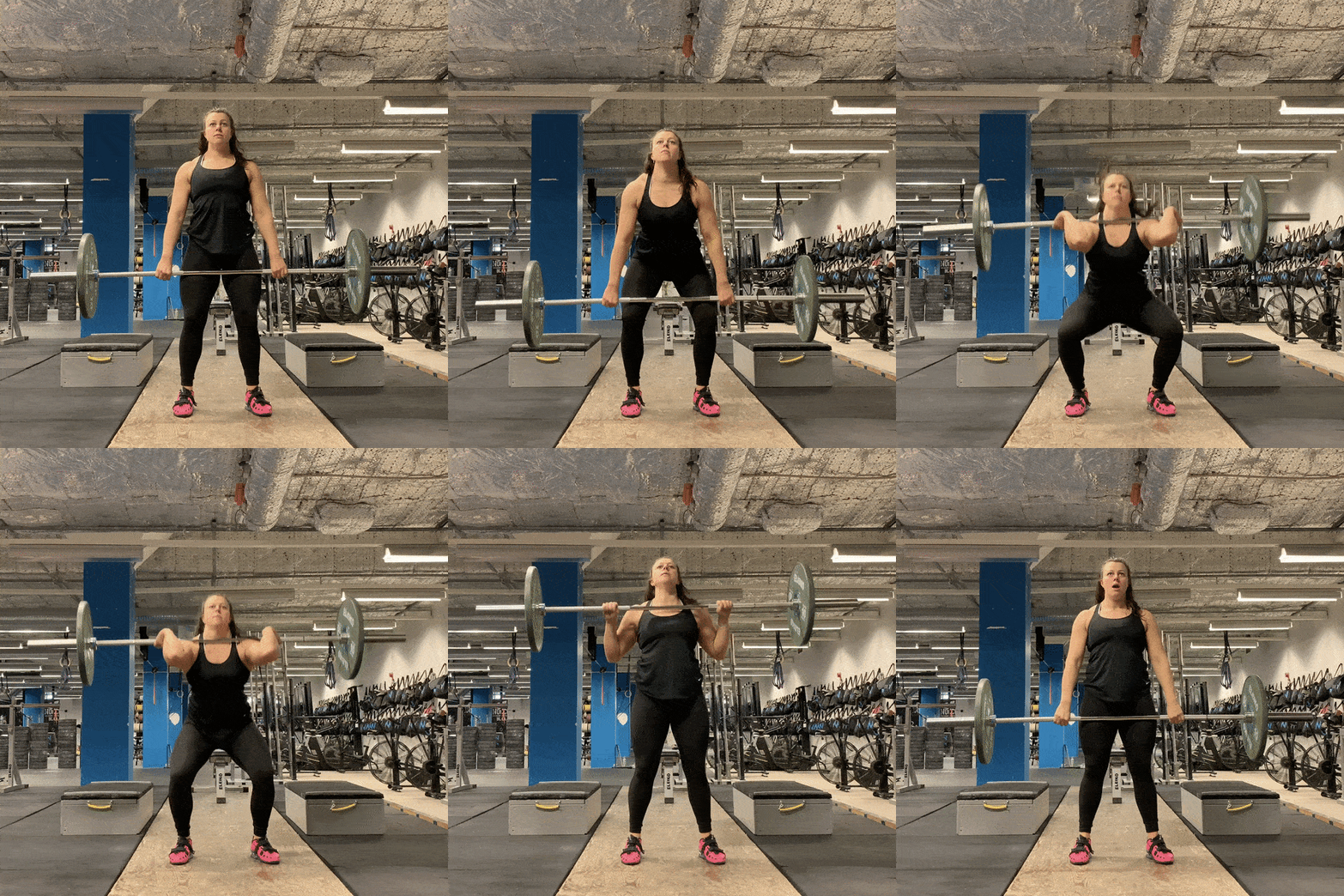
The hang power clean and the hang clean are dynamic and explosive exercises that improve your performance in the quick sprints, rapid changes in direction, physical contact, and sudden bursts of power that are all parts of every lacrosse game.
Hang power cleans involve pulling a barbell from the ground and catching it at shoulder level in a front squat position. That movement chain—hip drive, triple extension (ankles, knees, hips), shrug, pull under, and catch—forces many muscle groups to fire in precise timing to build explosive power, full-body strength, and coordination like few other exercises.
The main difference between the hang power clean and the hang clean lies in the height at which you catch the barbell. Instead of catching the bar in a partial squat, the hang clean has you going down into a full squat to receive it. You’ll do hang cleans during the third and last phase of Strength Training for Lacrosse.
Note: these are not lifts you just muscle through. Consider working with a coach if you’re new to Olympic lifts—they’re technical but very rewarding and some of the best exercises you can do for athletic performance.
How to Hang Power Clean
- Grip the bar with an overhand grip, about shoulder-width apart, and lift it up to get into the starting position.
- Hold your breath, and brace your core slightly.
- Lower the bar along your thighs, down to about knee-level, by bending your hips and knees.
- Reverse the movement, and lift the bar in a smooth but fast motion by extending your legs and knees simultaneously.
- Bend your knees slightly and receive the bar on the front of your shoulders.
- Stand up on straight legs again.
- Lower the bar in front of you, with control.
How to Hang Clean
- Grip the bar with an overhand grip, about shoulder-width apart, and lift it up to get into the starting position.
- Hold your breath, and brace your core slightly.
- Lower the bar along your thighs, down to about knee-level, by bending your hips and knees.
- Reverse the movement, and lift the bar in a smooth but fast motion by extending your legs and knees simultaneously. Then squat down again to receive the bar on the front of your shoulders.
- Stand up on straight legs again.
- Lower the bar in front of you, with control.
Farmer’s Carry

The farmer’s carry, also known as the farmer’s walk, involves picking up heavy weights (like dumbbells, kettlebells, or specialized farmer’s walk handles) in each hand and walking for a set distance or time.
Farmer’s walks train your body to stabilize under load, strengthening your traps, shoulders, forearms, core, and legs all at once, and teach you to breathe and brace under tension. In addition, they are superb for grip strength and endurance, which means better control during cradling, dodging, passing, and shooting as well as fewer yard sales.
How to Do Farmers Walks
- Step in between two farmers walk-cases, or similar implements.
- Inhale, lean forward and grip the handles.
- Hold your breath, brace your core slightly, and lift the weights.
- Look ahead, and start moving forward in small steps. Increase the stride length as you increase the speed.
- Try to keep your body in a straight line and not lean excessively forward as you walk.
- When you are done, lower the implements back to the ground in a controlled manner.
Pallof Press

The Pallof press is a core stabilization exercise that focuses on anti-rotation—your ability to resist rotational forces, which is very relevant to lacrosse, where stability, control, and force transfer are the trifecta of game performance. It hits your deep core stabilizers, especially the obliques and transverse abdominis, which work like your body’s built-in corset, keeping your spine in check while you’re whipping shots at the cage.
Pallof presses teach your body to create a stable base while your limbs move independently, a concept known as “proximal stability for distal mobility.” Whether you’re absorbing contact, maintaining balance as you change direction, or delivering a shot on the run, that stability through the core translates to more powerful movements.
How to Pallof Press
- Attach a handle in a cable machine at chest height and stand with your side facing the machine.
- Grab the handle with both hands and stand with feet hip-width apart and knees slightly bent.
- Pull the handle to your chest, engage your core, and then press your arms straight out in front of you without rotating your torso.
- Hold briefly, then bring the handle back to your chest in a controlled motion.
- Repeat for the desired number of repetitions, then switch sides.
Trap Bar Deadlift

To keep up with the chaos that is lacrosse—sprinting, cutting, checking, dodging—you need strong hips, explosive power, and a body that doesn’t fall apart mid-season. Enter the trap bar deadlift.
Unlike the traditional straight bar deadlift, the trap bar (that big hexagon-shaped one) lets you stand inside it. Why does that matter? Because it shifts the lift from a more hip-dominant move to a hybrid of a squat and a deadlift.
Studies have shown that athletes can produce higher peak power and velocity with the trap bar deadlift compared to conventional deadlifts.10 That means faster sprints, higher jumps, and more powerful shots and passes. Also, the movement pattern of a trap bar deadlift, with its upright torso, is very like the athletic stance in lacrosse, and building strength in this position directly carries over to on-field performance.
If you have the mobility, I suggest you use the low handles. While high handles allow for greater loads, I favor low handles for better posterior chain development when possible.
How to Do Trap Bar Deadlifts
- Step into the bar’s opening and position yourself so that the handles are in line with the middle of your feet.
- Inhale, bend down and grip the handles.
- Hold your breath, brace your core slightly, and lift the bar.
- Lift the bar with a straight back, until you are standing straight.
- Lower the bar back to the ground with control.
- Take another breath, and repeat for the desired number of repetitions.
Nordic Hamstring Eccentric

The Nordic hamstring curl is renowned for its ability to build eccentric strength in the posterior chain and injury prevention, making it a double-whammy top exercise for lacrosse players.
Doing Nordics regularly—especially in the off-season and pre-season phases—has been shown in many studies to significantly reduce the risk of hamstring strain, up to a 51% reduction.11 It is is one of the few exercises with strong evidence supporting its preventative power.
In Strength Training for Lacrosse, you only have to do the eccentric (lowering) phase. of the exercise. It’s the most important phase, and full Nordic hamstring curls require so much eccentric strength that it is not uncommon for athletes to crash down after a few seconds when they first try it. Now, if you can pull yourself back up concentrically using your hamstrings, hats off. Go right ahead.
How to Do Nordic Hamstring Eccentric
- Start off standing on your knees with a straight hip. Feet wedged under something immovable, like a heavily loaded barbell, or a strong training partner.
- Lean your torso forward by extending your knees with no hip movement. In other words, do not push your butt backward.
- Control the eccentric movement by fighting the gravitational forces with all your hamstring strength. If possible, try keeping the eccentric phase to two seconds.
- When your chest reaches the floor, push yourself up using your arms and start over.
Core Superset (Hanging Leg Raise + Cable Wood chop)

During phase two of Strength Training for Lacrosse, you’ll perform a superset for your core consisting of the hanging leg raise and cable wood chops without rest between exercises.
This combo of exercises builds strength in your abs, obliques, and hip flexors, and gives you both stability and rotational power for shots and passes where the movements originate from the ground up, transferring force through your legs, hips, core, and finally to your upper body and the stick.
You can do wood chops high-to-low, low-to-high, or horizontal, but I’ve programmed the low-to-high variant as the default exercise because it better captures the generation of rotational power from the ground up through the core. Feel free to change it up and do some high-to-lows now and then.
How to Do Hanging Leg Raises
- Jump up and grab a bar, placed high enough that you can hang from it with straight legs.
- Without swinging, lift your legs as high as you can in front of you.
- Lower your legs with control and repeat the movement for the desired number of repetitions.
How to Do Low-to-High Woodchops
- Fasten a handle in cable machine, as low as possible.
- Grip the handle with both hands, step away, and stand sideways to the cable’s anchor point.
With almost straight arms, make a sweeping, chopping-like movement diagonally upward - Return to the starting position in a controlled manner.
- Repeat the movement for the desired number of repetitions.
Dumbell or Kettlebell Snatch

The dumbbell/kettlebell snatch is one of the most dynamic full-body movements you can do. You take the weight from the ground (or hang position) and yeet it overhead in one smooth, powerful motion.
For lacrosse players, this is underappreciated but very valuable. You build explosive hip power, shoulder stability, grip strength, and core control—all wrapped in one rep. Every lacrosse face-off, shot, sprint, or direction change is powered by that kind of quick, explosive strength. You’re training your body to generate force fast, then stabilize and control it, which is like every lacrosse game ever.
How to Do Dumbbell/Kettlebell Snatches
- Stand with your feet fairly wide apart, with a kettlebell about 20 inches in front of you.
- Grab the handle with one hand and tilt the kettlebell towards you, then powerfully swing the kettlebell back between your legs.
- Stand up in a strong and explosive movement. The kettlebell will start to move forward.
- Pull on the kettlebell with your arm, as if you’re starting a lawnmower, to force the kettlebell into a path closer to your body.
- As the kettlebell reaches your head height, let it fly upwards while you sneak your hand underneath it.
- Catch the kettlebell at arm’s length above your head.
- When reversing the movement, begin by pushing the kettlebell forward. As it starts to fall, ease your grip to avoid forming unnecessary bulges as the handle rotates.
- Remain upright as the ball falls downward. Just as your hand approaches your groin, let your hips move backward. Guide the ball so it travels far back, not downward.
- Either perform more reps or let the ball swing forward and set it down.
Jump Squat

The jump squat is a plyometric variant of the squat that combines a deep squat with a vertical jump. It hits your quads (knee extension), glutes (hip extension), hip adductors and abductors, and calves, building explosive power in your legs by training fast-twitch muscle fibers and improving your body’s capacity for generating maximal force rapidly.
You can do your jump squats using your body weight alone or with external resistance, like a weighted vest, holding a pair of dumbbells at your sides, or with a barbell on the back. Because you do them for explosive power in the Strength Training for Lacrosse routine, I suggest you pick a lighter load (approximately 10–20% of your body weight) or stick to bodyweight jumps. Heavier loads shift the focus toward strength rather than explosive power (which isn’t a bad thing, but not what we’re going for here).
How to Do Squat Jumps
- Stand with your feet shoulder-width apart with your core engaged and your chest up.
- Lower into a squat by bending your knees and pushing your hips back.Keep your weight on your heels and lower until your thighs are parallel to the ground or below.
- Explosively jump upward, extending your legs and pushing through your feet.Swing your arms for momentum as you jump.
- Land softly with bent knees to absorb impact.
- Immediately go into the next squat and repeat the movement for the desired number of repetitions.
Horizontal and Vertical Jump

The horizontal and vertical jump (also called the broad jump to box jump) is a plyometric exercise and a combination of two different power movements:
- Broad jump (horizontal) – You explode forward using max hip, knee, and ankle extension, testing your lower-body power and coordination.
- Box jump (vertical) – Right after landing, you reload and fire upward onto a box, training reactivity, vertical explosiveness, and balance.
Horizontal and vertical jumps build explosiveness both horizontally and vertically, training your body to absorb force and immediately convert it to vertical power, basically becoming a human spring. They also develop athletic coordination and train your body to handle rapid transitions, like when you cut direction during a fast break or jump for a pass right after sprinting.
How to Do Horizontal and Vertical Jumps
- Stand with feet hip-width apart, knees slightly bent, and arms behind you for momentum.
- Swing your arms forward and explosively jump forward as far as possible, landing softly in a squat position. Keep your knees bent and engage your core to stabilize.
- Without pausing, push through your legs and swing your arms to jump vertically onto a box or platform in front of you.
- Land with soft knees, absorbing impact in a stable squat position, then extend your legs and straighten your body on top of the box.
- Step off the box one foot at a time to reset.
- Repeat the movement for your desired number of repetitions.
Med Ball Chest Pass
The medicine ball chest pass is an explosive upper-body power exercise that mimics the upper-body mechanics of a lacrosse pass—rapid contraction, coordinated force, and fast release. And because you’re using a medicine ball (and not a lacrosse ball, unless you’re really into pain), you’re also developing the fast-twitch muscles that give you that snappy, powerful shot or pass.
Make sure you’re far enough that the ball rebounds cleanly but not so far that you lose control or compromise form.
How to Do Med Ball Chest Passes
- Stand with your feet shoulder-width apart, knees slightly bent, 3 to 6 feet (1 to 2 meters) away from a wall and facing it.
- Hold a medicine ball at chest level with both hands, elbows bent.
- Engage your core and keep your back straight.
- Push the ball explosively forward from your chest, extending your arms fully.
- Release the ball toward the wall.
- Catch the ball and repeat for the desired number of repetitions.
Plyometric Push-Up
The plyometric push-up, often called plyo push-ups, is an advanced, explosive upper-body exercise, the cousin of the regular push-up who drinks too much pre-workout and shows up to the field ready to throw down. It involves dropping into a push-up and then blasting off the ground so that your hands leave it momentarily.
The ability to quickly contract and exert maximum force with your upper body translates well to faster shots and passes and to the pushing capacity to dislodge the ball or impede an opponent.
How to Do Plyo Push-Ups
- Start in a standard push-up position with hands slightly wider than shoulder-width apart.
- Lower your chest toward the ground by bending your elbows.
- Explosively push through your hands to lift your body off the ground.
- Land softly with bent elbows and immediately go into the next rep.
- Repeat the movement for the desired number of repetitions.
Landmine Press

The landmine press is a shoulder-friendly exercise for building balanced upper body pushing strength—mainly hitting your delts, triceps, and upper chest. In Strength Training for Lacrosse, you’re doing the unilateral, one-arm variant.
When you do landmine presses with one arm, you train each side of your body separately, thus building equal strength on both sides. Doing so reinforces the cross-body coordination you need in lacrosse: shoulder-to-opposite-hip power transfer, locked in by core strength and guided by scapular stability.
How to Do Landmine Presses
- Stand with your core activated and the feet about shoulder-width apart.
- Place the barbell in one hand, and rest it on your shoulder.
- Press to lockout by extending the elbow and flexing the shoulder.
- Slowly lower the barbell back to the starting position on your shoulder.
- Repeat for the desired number of repetitions.
Sled Push
The sled push is a fantastic exercise for improving acceleration and sprint speed, particularly the initial leg drive and forward body lean you need for bursting past opponents or chasing down loose balls.
Sled pushes are particularly effective if you use a relatively heavy sled, and in Strength Training for Lacrosse, you’re going to load it with more weight than many sprint coaches prescibe.12 13
How to Sled Push
- Load the sled with the desired weight.
- Stand behind the sled and grab the handles with both hands.
- Lean slightly forward, keeping your back flat and core tight.
- Drive through your legs and push the sled forward.
- Keep a steady pace and controlled steps until you reach the end of the track or until the desired distance.
Bounding
Bounding involves taking long, powerful strides (after a few easy running steps to build momentum) with an exaggerated knee lift, high hip position, and forceful ground contact, aiming for significant air time before landing and immediately pushing off again.
It is like a form of loaded sprinting, where the “load” is internal—your own muscular tension and movement control—rather than an external resistance like the sled push we just talked about. It trains you to produce, transfer, and coordinate horizontal force, similar to what occurs in your acceleration phase during a sprint, but with a more exaggerated range of motion. I’ve programmed it into the third and final phase of Strength Training for Lacrosse, for when your main goal is explosive power and speed.
How to Do Sprint Bounds
1. Stand tall with feet hip-width apart.
2. Begin jogging forward to build momentum.
3. Push off forcefully with one leg, driving the opposite knee high and swinging the
opposite arm forward.
4. Land on the midfoot of the opposite leg and immediately bound forward with the other leg.
5. Continue bounding forward for the desired distance with powerful, exaggerated stridesand coordinated arm swings while maintaining an upright posture and focusing on covering distance with each bound.
High Pull
The high pull is a variation of the Olympic weightlifting clean or snatch, but it focuses on the powerful upward propulsion of the bar without the complexity of catching it. It trains the posterior chain (glutes, hamstrings, lower back), as well as the upper back, shoulders, and traps, while also recruiting the core for stability and power transfer—close to a full-body exercise and great for power, strength, and speed on the lacrosse field.
The explosive hip and leg drive (triple extension) directly translates to more power in lacrosse shots, and because it is so fast and powerful, high pulls train your muscles to contract quickly, which can improve things like first-step quickness and sprinting speed.
In Strength Training for Lacrosse, you’re doing them as part of a superset, moving from the Romanian deadlift straight into high pulls.
How to High Pull
- Stand with feet shoulder-width apart, holding a barbell in front of your thighs with an overhand grip.
- Bend your hips and knees slightly, keeping your back straight and chest up.
- Engage your core and start the movement by explosively extending your hips and knees.
- As you extend, shrug your shoulders upward and pull the weight up close to your body.
- Lead with your elbows, keeping them higher than your hands at the top of the pull (around chest or chin height).
- Lower the weight back down in a controlled motion to the starting position.
- Repeat for the desired number of repetitions.
Medicine Ball Slam

The med ball slam is a simple but effective dynamic movement that involves a rapid hip hinge, full-body extension, and then a ballistic downward movement—all in one swoop. Sound familiar? It should. Lacrosse also requires the same kind of rotational power and dynamic core engagement, whether you’re shooting, checking, or sprinting like your stick is on fire.
Ball slams train the explosive power from your lower body up through your core and out through your arms. They build coordination between your upper and lower body for control during high-speed, multidirectional play and reinforce proper mechanics for deceleration and reacceleration. And they’re fun to boot. Just remember to use a non-bouncy ball, or your nose might think otherwise.
How to Ball Slam
- Stand with your feet about shoulder-width apart, your knees and hips slightly bent, holding the ball in both hands at chest height. Engage your core, and keep a good posture.
- Extend your knees and drive your hips forward while simultaneously lifting the ball. Aim for being as tall as possible, the ball overhead, arms up, hips slightly forward, and on your toes from the force of your drive.
- Use your core and arms to slam the medicine ball straight down between your feet with as much force as possible. Press your hips back and bend your knees to further power the slam. Exhale as you slam the ball down.
- Squat down to pick up the ball from the floor, then immediately move into the next slam by repeating the movement.
- Repeat the movement for your desired number of repetitions.
Kettlebell Swing

The kettlebell swing builds explosive strength in your entire backside, from your feet to your neck, and develops a strong, stable core, and it does so while being gentle on your body.
The primary benefit for lacrosse is that swings teach you to generate force from the hips—the same place where the power for your running, jumping, and maintaining an athletic stance is born. In lacrosse, almost every key move starts there.
They also teach you to decouple the hips and the spine, so you can keep your core braced with less effort while your lower body generates power.
How to Do Kettlebell Swings
- Place a kettlebell on the ground, about one or two feet in front of you.
- Take a wide stance, lean forward and grip the kettlebell.
- Brace your core slightly, and swing the kettlebell back between your legs, while inhaling.
- Swing the kettlebell forward by extending your hip, while exhaling.
- Try to swing the kettlebell to about chest height.
- Repeat the movement for your desired number of repetitions.
Towel Pull-Up

The towel pull-up is an advanced variation of the traditional pull-up where you drape one or two towels over a pull-up bar and grip the ends of the towel(s) instead of the bar itself. The towel is soft and moves, so it robs you of stability, which gives your forearms, hands, and wrists a tremendous and dynamic workout and the strength you need for stick handling, shooting, passing, and checking.
A too thin towel might not provide enough of a grip challenge, while a very thick or slippery one can be too difficult. Experiment to find the towel thickness that works best for you. If you haven’t used towels as handles before, you might be surprised at how much more they demand from your grip.
How to Do Towel Pull-Ups
- Lay a pair of towels over a pull-up bar. Grab one in each hand.
- Inhale and pull yourself up as high as you can.
- Exhale and lower yourself with control until your arms are fully extended.
- Repeat the movement for your desired number of repetitions.
Strength Training for Lacrosse: Final Rep
Lacrosse demands more than skill. It demands strength, power, and a body that can back it all up.
But knowing is half the battle, doing is the other, much more important half. So, follow this program for 12 weeks, and watch yourself gain muscle, strength, and confidence.
To follow Strength Training for Lacrosse, download our workout log app and start tracking your workouts today:
Click here to go directly to the program in StrengthLog.
Last reviewed: 2026-03-06
References
- Smithsonian Magazine: Little Brother of War.
- The Journal of sports medicine and physical fitness 59(9), October 2019. The relationship between shot velocity and physical characteristics of lacrosse players.
- Br J Sports Med. 2014 Jun;48(11):871-7. The effectiveness of exercise interventions to prevent sports injuries: a systematic review and meta-analysis of randomised controlled trials.
- Br J Sports Med. 2018 Dec;52(24):1557-1563. Strength training as superior, dose-dependent and safe prevention of acute and overuse sports injuries: a systematic review, qualitative analysis and meta-analysis.
- British Journal of Sports Medicine 38(3):285-8., July 2004. Strong Correlation of Maximal Squat Strength With Sprint Performance and Vertical Jump Height in Elite Soccer Players.
- Med Sci Sports Exerc. 1991 Jun;23(6):739-43. Effects of strength training on lactate threshold and endurance performance.
- Arthroscopy, Sports Medicine, and Rehabilitation, 10 October 2024. Prevention and Rehabilitation of the Athletic Hamstring Injury.
- Int J Sports Phys Ther. 2017 Aug;12(4):543–549. BUILDING A BETTER GLUTEAL BRIDGE: ELECTROMYOGRAPHIC ANALYSIS OF HIP MUSCLE ACTIVITY DURING MODIFIED SINGLE-LEG BRIDGES.
- Front Physiol. 2023 Dec 13:14:1272106. Triceps surae muscle hypertrophy is greater after standing versus seated calf-raise training.
- Journal of Strength and Conditioning Research 30(5):p 1183-1188, May 2016. An Examination of Muscle Activation and Power Characteristics While Performing the Deadlift Exercise With Straight and Hexagonal Barbells.
- Br J Sports Med. 2019 Nov;53(21):1362-1370. Including the Nordic hamstring exercise in injury prevention programmes halves the rate of hamstring injuries: a systematic review and meta-analysis of 8459 athletes.
- J Strength Cond Res. 2020 Oct;34(10):2751-2759. Influence of Resisted Sled-Pull Training on the Sprint Force-Velocity Profile of Male High-School Athletes.
- J Strength Cond Res. 2014 Oct;28(10):2738-45. Effects of weighted sled towing with heavy versus light load on sprint acceleration ability.
