
Weight training for golf often gets overlooked, but it’s one of the best ways to improve your game and hit your drives with more power and precision. Greater core, leg, and upper body strength will improve your swing mechanics and stability.
The benefits of strength training go beyond increasing power and distance, however. It also helps prevent injuries that are all too common among golfers, including lower back pain, shoulder strains, and hip issues.
In this article, you’ll learn why every golfer should spend some time in the gym, and you get a complete golf weight training program that will make you a stronger and better golfer, from the backswing to the follow-through.
Table of Contents
Why Weight Training Matters for Golf
You might think golf is all about finesse, but surprise: hitting the weights in addition to the ball can be a game changer.
A powerful and consistent swing comes from a full-body effort, and weight training gives you the core stability, leg strength, and rotational power to be your best on the green.
In addition, while golf is a low-impact sport, repetitive, explosive motions like swinging a club take a toll on your muscles and joints, especially your lower back and shoulders. Many people think that golf is a low-injury sport, but a recent meta-analysis found that certain injuries is rather common and that half of all golfers are at risk of injuring themselves at some point.1 Fortunately, strength training is fantastic for injury prevention, as it can reduce sports injuries to one-third and overuse injuries by almost half.2 3
So, if you take your golf performance seriously, including weight training in your game plan is a good idea. It will give you more power, control, and endurance on the course.
Even if you don’t take it seriously and just play for fun and recreation, a couple of weekly weight training sessions will allow you to enjoy your golfing with a lower risk of injury and the muscle endurance to maintain stamina throughout 18.
You’ll soon see improvements in your swing power, consistency, and overall performance—and your golf buddies will be wondering what kind of secret magic you’ve been practicing.
Benefits of Weight Training for Golf
Lifting weights was once frowned upon in many sports. Coaches thought it made you big, bulky, slow, and “muscle-bound.”

Fortunately, those days are long gone, and resistance training is now an essential part of most physically demanding sports.4
Muscular strength, stability, flexibility, and balance all make you a better golfer, and resistance training is a great addition to your golf training program.
Here are seven benefits that’ll make you want to hit the gym before hitting the green:
- Weight training can help you increase your clubhead speed. A faster swing means that your shot has greater force. The ball travels further, and you reach the green with fewer shots.
- An efficient golf swing requires coordination and balance, and weight training is fantastic for improving both of those things. You boost your body control and reduce the chance of errant shots.
- Strength training exercises that involve movements similar to the golf swing (cable rotations (wood chops) or medicine ball slams, for example) increase your rotational power for a strong and accurate golf swing.
- Lifting weights is the number one way to increase the strength and power in big muscles like the chest, back, and legs, which are critical for generating force during the swing.
- Golf is not a high-risk sport, but the repetitive and rotational movements through a long range of motion can lead to injury. If you strengthen the involved muscles, you 1) reduce the risk of injury from swinging a golf club over and over and 2) increase your flexibility, further protecting against muscle and joint strains.
- Golf rounds can be long. Strength training builds muscle endurance to stay focused and maintain the strong, upright posture you need for accurate shots through all 18 holes without feeling tired and like you’ve been hit by a golf cart.
- A strong body recovers more quickly from the physical demands of exercise, including golf, which means you can play more often without feeling sore and wearing your body down.
Key Components of Weight Training for Golf
For most golfers, especially at the recreational level, boosting general strength, stability, and mobility through strength training automatically means better performance, even without focusing on golf-specific movements.
For a strength training newbie, it might even be better to ditch the golf-specific movements entirely to begin with, instead focusing on fundamental weight training exercises like squats, deadlifts, and bench presses. You build a fantastic foundation of strength and muscle mass and learn how to activate your muscles properly without having to learn advanced, sport-specific movements at the same time.
All movement patterns and key areas that influence your golf performance—core strength, rotational power, hip mobility, and shoulder stability—can be developed with basic strength exercises like squats, deadlifts, presses, and rows.
Yes, golf-specific exercises can offer extra benefits for fine-tuning movements or improving coordination, especially for advanced golfers, and are a valuable part of a strength training program for golf for intermediate-level trainees (and above). However, general strength gains in your major muscle groups and a well-rounded strength program will deliver meaningful improvements at any level.
That being said, let’s go through the muscle groups, movement patterns, and exercises that are directly involved in the golf swing.
Core Strength and Stability
As a golfer, you rely heavily on the core for balance, power transfer, and control to stabilize your body during the swing, which involves a powerful and rapid rotation.
Anti-rotation exercises (Pallof press), rotational exercises (core twists, cable woodchoppers), planks, and dead bugs help build the necessary core strength.
Lower Body Strength
Your legs generate power from the ground up during a golf swing, and a stronger lower body gives you stability and explosiveness.
Squats (back squats, front squats, goblet squats), lunges, deadlifts, and split squats develop leg strength, while exercises like box jumps or kettlebell swings build lower-body power.
Upper Body Strength
Your upper body, especially the shoulders, arms, and back is heavily involved in applying force to the club and maintaining control throughout the swing.
Push-ups, bench presses, rows, pull-ups, and shoulder presses build balanced upper-body strength and help you maintain posture and control.
Rotational Power
Golf is a rotational sport, so developing the ability to generate force while rotating improves almost every part of the swing.
Medicine ball rotational throws, wood chops, and banded rotational movements focus on training power in a rotational plane.
Balance and Stability
Golf requires balance in both static (address position) and dynamic (during the swing) postures.
Unilateral (single-side) exercises (single-leg deadlifts, Bulgarian split squats) are beneficial for training the stability you need to maintain good form throughout the swing. Balance boards and stability ball drills might also be helpful, although little research supports their use in improving golf performance.
Power Development
While strength provides the foundation, power improves driving distance and shot performance. Power training focuses on fast, explosive movements that mimic the demands of the golf swing.
Olympic lifts (e.g., power cleans), plyometric movements (e.g., box jumps, medicine ball slams), and speed-focused weightlifting develop this explosiveness. Olympic lifts do require a great deal of joint stabilization and mobility, though, and might not be suitable for all fitness levels and ages without proper coaching.
How Often Should a Golfer Weight Train?
As a golfer, you have a lot of flexibility when it comes to how many weight sessions you should do.
At a minimum, I recommend two weekly strength training sessions in addition to your regular golfing.
You should adjust your strength training frequency depending on the season and the goals you are currently pursuing.
Here are my general recommendations for different seasons:
Off-Season (Winter)
- Goal: Maximal strength development, hypertrophy, and injury prevention.
- Frequency: 2–4 times per week.
- Focus: Heavy lifting to build strength, correct imbalances, and increase muscle mass (muscle mass is a primary driver of strength).
- Example exercises: Squats, deadlifts, bench press, and core exercises.
Note: Four workouts per week are generally overkill for golfing, but it’s doable if you enjoy strength training. Golfing itself is not that demanding, especially during the off-season.
Pre-Season (Spring)
- Goal: Transition to explosive strength and power.
- Frequency: 2–3 times per week.
- Focus: Continue building strength, incorporating more explosive movements that translate to the golf swing.
- Example exercises: Squat-type movements, presses, pulling and rowing movements, kettlebell swings, med ball throws, and some plyometrics.
In-Season (Summer)
- Goal: Maintain strength, focus on mobility and injury prevention.
- Frequency: 2 times per week.
- Focus: Maintenance of strength gains while ensuring mobility and avoiding fatigue before play.
- Example exercises: A few heavy core strength exercises, such as deadlifts, squats, and rows, plus some dynamic movements, rotational exercises, and mobility work.
Strength Training Program for Golf
This is a 13-week strength training program designed to make you a stronger golfer with more power, explosiveness, balance, and stability.
The program is based on compound movements using heavy weights using 85–95% of your 1RM (1RM or “one-rep max” is the maximum weight you can lift for one complete repetition of an exercise with proper form) with six or fewer reps in combination with higher-rep work and ballistic training, as backed by current research.5 This type of training is also excellent for building muscle, strength, and power in general, improving your body composition and general performance in the gym and everyday life.
Note that this program is for those with some strength training experience. It features many different, relatively complex exercises, and if you have never lifted weights before, it might be too much for you to jump right into.
If you’re new to the gym, start with one of our beginner programs, like the Beginner Barbell Training Program. You train three times per week, alternating between workouts A and B.
Workout A
| Exercise | Sets | Reps |
|---|---|---|
| Squat | 3 | 8–10 |
| Bench Press | 3 | 8–10 |
| Barbell Row | 3 | 8–10 |
Workout B
| Exercise | Sets | Reps |
|---|---|---|
| Deadlift | 3 | 6–8 |
| Lat Pulldown (or Pull-Ups) | 3 | 8–10 |
| Overhead Press | 3 | 8–10 |
In other words, you’ll train workouts A B A week one and B A B week two, then go back to week one and keep alternating between the two.
This beginner program (any many more) are available for free in our workout log app, StrengthLog.
At this point, your strength workouts do not have to be golf-specific for you to benefit greatly. You can use the strength you gain in your golf, and you train your muscles, brain, and nervous system to play together, allowing you to move on to more complex programs.
If you do have some experience with strength training, get ready to up your golf game with Strength Training for Golf.
Strength Training for Golf
This program will run for 13 weeks, divided into two phases:
- Maximal Strength Phase (Weeks 1–6): Focus on heavy resistance training to build foundational strength.
- Deload Phase (Week 7): Reduced training volume and intensity to recover from the first phase and prepare for the second.
- Explosive Strength Phase (Weeks 8–11): Integrates strength with power training through plyometrics and dynamic movements.
This program and many more are in the StrengthLog workout tracker app. The app is free to use, forever, with no ads. This program, however, is a premium program (it offers built-in progression and advanced periodization), which means it requires a premium subscription.
We offer all new users a free 14-day premium trial, which you can activate in the app without any strings attached.


Weekly Schedule (3 Days/Week)
Maximal Strength Phase (Weeks 1–6)
- Primary Goal: Increase maximal strength in the upper and lower body, improving force production for a more powerful swing.
- Secondary Goals: Improve coordination and balance, injury prevention.
You train three days per week:
Week 1
- Monday: Workout A
- Tuesday: Rest
- Wednesday: Workout B
- Thursday: Rest
- Friday: Workout A
- Saturday: Rest
- Sunday: Rest
Week 2
- Monday: Workout B
- Tuesday: Rest
- Wednesday: Workout A
- Thursday: Rest
- Friday: Workout B
- Saturday: Rest
- Sunday: Rest
Week 3
Like Week 1.
And so on.
Workout A (Lower Body Focus):
| Exercise | Sets | Reps |
|---|---|---|
| Squat | 3 | 5 |
| Romanian Deadlift | 3 | 6 |
| Barbell Walking Lunge | 3 | 6 |
| Hip Thrust | 3 | 5 |
| Ab Rollout | 3 | 12 |
Workout B (Upper Body Focus):
| Exercise | Sets | Reps |
|---|---|---|
| Bench Press | 3 | 5 |
| Barbell Row | 3 | 5 |
| Overhead Press | 3 | 5 |
| Lat Pulldown | 3 | 8 |
| Wood Chop | 3 | 12 |
Perform each set until the last repetition is a struggle (but not impossible) to complete, and rest 2–3 minutes between sets and exercises.
Deload Week (Week 7)
Same as Week 1, but only two workouts, with lower weights.
- Reps: 8–10
- Sets: 2 per exercise
- Rest: 1–2 minutes
- Intensity: 50% of your usual working weights.
Explosive Strength Phase (Weeks 8–13)
- Goals: Transition strength into power and include explosive movements that simulate golf swing dynamics.
Again, you train three days per week, but this time with three different workouts:
- Monday: Workout A
- Tuesday Rest
- Wednesday: Workout B
- Thursday: Rest
- Friday: Workout C
- Saturday: Rest
- Sunday: Rest
Workout A (Lower Body Focus):
| Exercise | Sets | Reps |
|---|---|---|
| Trap Bar Deadlift | 3 | 3 |
| Front Squat | 3 | 8 |
| Box Jump | 3 | 4 |
| Kettlebell Swing | 3 | 8 |
| Plank | 3 | 60 secs |
Workout B (Upper Body Focus):
| Exercise | Sets | Reps |
|---|---|---|
| Bench Press | 3 | 2–3 |
| Dumbbell Row | 3 | 6 |
| Push Press | 3 | 2–3 |
| Lat Pulldown | 3 | 6 |
| Hanging Leg Raise | 3 | 12 |
Workout C (Full Body):
| Exercise | Sets | Reps |
|---|---|---|
| Bulgarian Split Squat | 3 | 6 |
| Romanian Deadlift | 3 | 6 |
| Push-Up + Inverted Row (superset) | 3 | 12 |
| Medicine Ball Slam | 3 | 15 |
| Wood Chop High to Low | 3 | 12 |
Like during the first block, perform each set until you struggle to complete the last rep, and rest 2–3 minutes between sets and exercises.
The exact set and rep details (the above are snapshots of a single week from each block) along with the planned intensity and volume progression route, are available in your StrengthLog workout tracker app.
Strength Training Exercises for Golf
Here are detailed descriptions of all the exercises in the Strength Training for Golf program in the order they appear.
Squat

The squat is the number one strength exercise to improve athletic performance. It’s not a golf-specific movement but builds foundational strength, stability, and power that translate to better performance on the course.
Squats hit the quads, adductors, glutes, and lower back, creating a stable base during the golf swing. Strong legs provide more power for the drive and maintain balance throughout the swing.
In addition, full-depth squats improve flexibility and mobility in your hips, knees, and ankles, which is great for achieving a full range of motion in your golf swing.
How to Squat
- Place the bar on your upper back with your shoulders blades squeezed together. Inhale and brace your core slightly, and unrack the bar.
- Take two steps back, and adjust your foot position.
- Squat as deep as possible with proper form.
- With control, stop and reverse the movement, extending your hips and legs again.
- Exhale on the way up or exchange air in the top position.
- Repeat the movement for the desired number of repetitions.
Romanian Deadlift

The Romanian deadlift should be in every golfer’s workout routine as it works the posterior chain, which includes muscles like the hamstrings, glutes, and lower back. The muscles in the posterior chain maintain posture and stability and generate power during a golf swing.
Romanian deadlifts train your hip hinge, which is super important for the golf swing. Executing a powerful hip hinge allows you to maintain posture throughout the swing while generating force from the lower body, which translates to both the setup and downswing phases of the golf swing.
How to Do Romanian Deadlifts
- Get into the starting position by deadlifting a barbell off the floor or by unracking it from a barbell rack. Stand feet hip-width, inhale, and brace your core slightly.
- Lean forward by hinging in your hips. Keep your knees almost completely extended.
- Lean forward as far as possible with good form (no rounding your back). You don’t have to touch the barbell to the floor, although it is OK if you do.
- Reverse the movement and return to the standing position. Exhale on the way up.
- Repeat the movement for the desired number of repetitions.
Note: The dumbbell Romanian deadlift is a viable alternative to the barbell variant.
Walking Lunge

The walking lunge is an excellent exercise for golfers because it increases your lower-body strength, stability, and mobility, which are essential for a solid and consistent golf swing.
Walking lunges work the quadriceps, adductors, and glutes—muscles involved in generating power during a golf swing.
They are also terrific for hip flexibility and mobility, improving the range of motion in your golf swing and allowing you to rotate your hips effectively. In addition, they challenge your balance as you move from one step to the next.
How to Do Walking Lunges
- Stand with your feet at shoulder-width apart, with a slight bend in the knees. Make sure that your core is engaged.
- Step forward with one of your legs, bending both knees at the same time. Stop the movement just before the back knee touches the floor, you should have about a 90-degree angle in both knees.
- Drive through your front foot and extend the knee until you get back to a standing position.
- Continue by repeating the movement on the other side.
- Repeat the movement for your desired number of repetitions.
Hip Thrust

The golf swing requires a powerful hip extension to transfer energy from the lower body to the upper body. The hip thrust gives you strong glutes to maximize this power, contributing to a more forceful and efficient swing.
Hip thrusts also improve hip stability and pelvic control. They give you better control during both the backswing and the follow-through, better posture during the swing, and less stress on the lower back.
How to Do Hip Thrusts
- Sit on the floor with your back against a sturdy bench.
- Roll the barbell up over your thighs, until it is placed over your hips.
- Place your feet on the floor, about shoulder-width apart, with bent knees.
- Place your hands on the bar to stabilize it.
- Push the bar towards the ceiling by extending your hips. Your knees should form a ~90 degree angle at the top.
- Lower the weight and repeat for reps.
Ab Rollout

The ab wheel rollout involves a wheel (ab wheel) or even a barbell to extend your body forward while keeping your core tight and spine straight. It hits the abs, obliques, and deep stabilizers like the transverse abdominis (your body’s internal “corset”).
It is famous for being challenging, so it’s a great way to build serious strength in your core. The increased core strength helps you maintain posture and resist unwanted movements during the swing, particularly in the follow-through.
And while the ab rollout is not a rotational movement, it builds the kind of core strength that supports other rotational exercises. The stronger your core is, the better it can transfer force between the upper and lower body, which generates power in your golf swing.
How to Perform Ab Wheel Rollouts
- Start by kneeling on the floor with your hands on the ab wheel, placed directly in front of your knees.
- Engage your core and slowly roll the wheel forward until your body forms a straight line from your knees to your head.
- Be sure to keep your back straight and your core engaged throughout the entire movement.
- Reverse the movement, roll the ab wheel back towards your knees, and return to the starting position.
- Repeat the movement for the desired number of repetitions.
Bench Press

The bench press is not a “golf-specific” movement. However, it is a fantastic exercise for improving upper body strength, especially in the pushing muscles—the chest, shoulders, and triceps—and can be valuable for golfers.
These are muscle groups that are involved in creating power during a golf swing, particularly in the pushing motion of the arms and stabilizing the upper body during the swing.
Few exercises increase your upper body strength like the bench press, which means it contributes to generating more clubhead speed and, ultimately, more power in your swing.
How to Bench Press
- Lie on the bench, pull your shoulder blades together and down, and slightly arch your back.
- Grip the bar slightly wider than shoulder-width apart.
- Inhale, hold your breath, and unrack the bar.
- Lower the bar with control, until it touches your chest somewhere close to your sternum.
- Push the bar up to the starting position while exhaling.
- Take another breath while in the top position, and repeat the movement for your desired number of repetitions.
Barbell Row
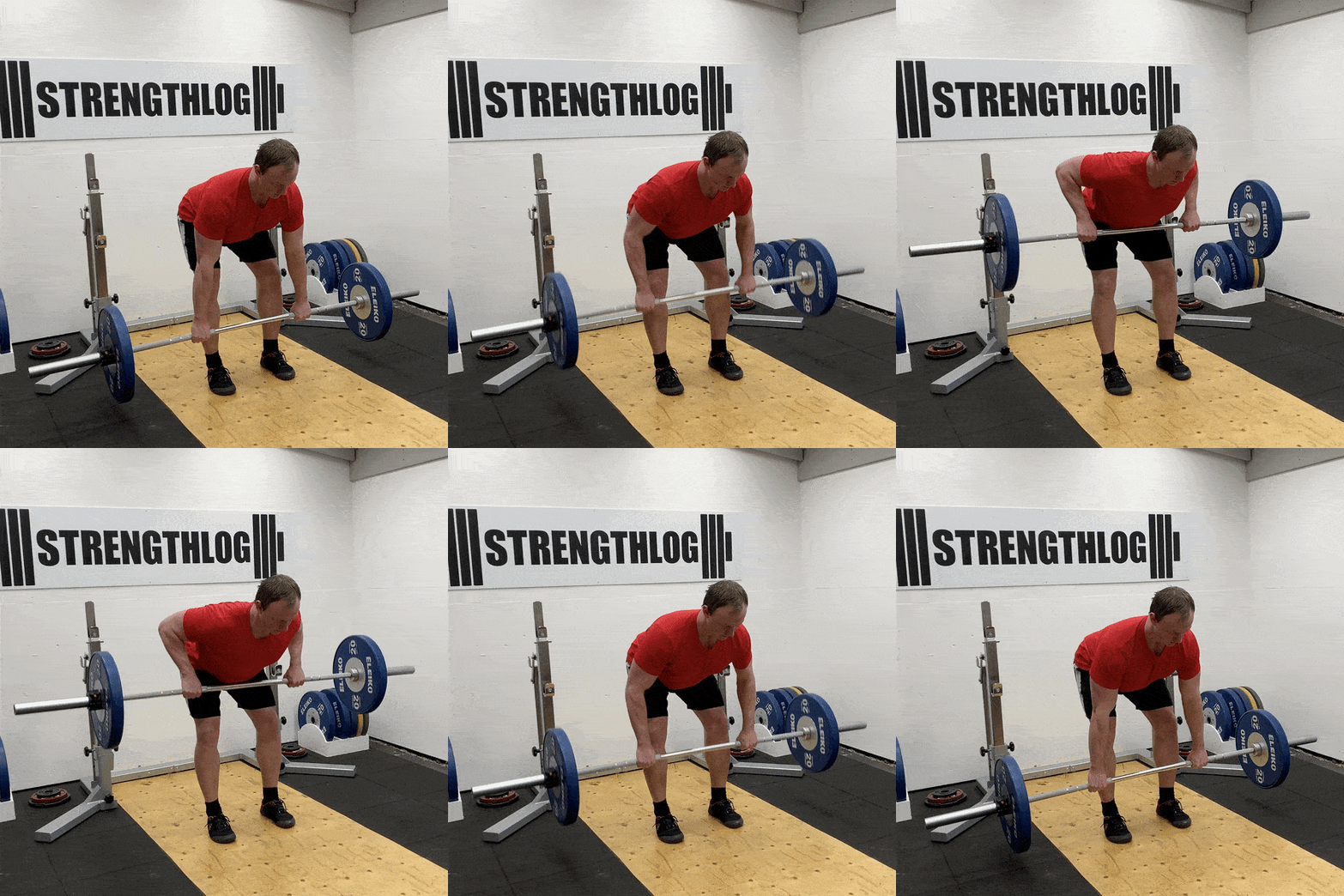
The bent-over barbell row is a tremendous exercise for developing pulling power. It works the lats, traps, upper back, and lower back to some degree.
Having strong back muscles helps you generate power through the swing. Because barbell rows strengthen the lats and other muscles involved in pulling, they indirectly improve your ability to rotate more forcefully and maintain control during the swing.
How to Do Barbell Rows
- Grasp the barbell with an overhand grip, slightly wider than shoulder-width apart.
- Stand with your feet slightly wider than feet hip-width apart, bend your knees slightly, and hinge forward at your hips, maintaining a neutral spine curve.
- Brace your core and keep your back straight. Inhale and pull the barbell towards your lower chest or upper abdomen, keeping your elbows close to your body. Squeeze your shoulder blades together at the top of the movement.
- Lower the barbell back to the starting position in a controlled manner.
- Repeat the movement for the desired number of repetitions.
Overhead Press

While not a golf-specific movement, the overhead press is excellent for building upper body strength, which makes you a better athlete in general. Stronger shoulders and arms help you maintain clubhead speed, generate more power, and improve control.
Overhead presses target the deltoid muscles (shoulders), upper chest, and triceps and stabilize the shoulder joint. Strong and stable shoulders help you maintain control over the club throughout the swing and reduce the risk of injury, especially during high-intensity swings.
How to Do Overhead Presses
- Place a barbell in a rack at about chest height.
- Grip the bar slightly wider than shoulder-width apart and step close to it.
- Tighten your abs, unrack the bar and let it rest against your front delts while you step back from the rack. This is your starting position.
- Push the barbell up, extending your arms fully, while exhaling.
- Bring the weights back down to your shoulders, slow and controlled, while inhaling.
- Repeat the movement for the desired number of repetitions.
Lat Pulldown

Another general strength exercise, not a golf-specific movement, the lat pulldown develops many of the major muscle groups involved in generating power and control during the golf swing.
Lat pulldowns primarily work the latissimus dorsi, the large muscles on either side of the back. They are important for the downward pulling motion in the golf swing and provide power generation during the downswing.
They also work your teres major, rhomboids, upper traps, and rear delts. These upper back muscles contribute to scapular control and stability, essential for a consistent and controlled swing. Your biceps and forearms are get stronger, which helps with grip strength and stabilizing your arms during the swing.
In addition, when you strengthen your back muscles, you’re rewarded with greater rotational power, essential for driving the ball further. The lats help create the torque needed to transition from the backswing to the downswing.
How to Perform Lat Pulldowns
- Sit on the lat pulldown machine and adjust the thigh pad to fit snugly against your thighs.
- Reach up and grasp the wide bar attachment with an overhand grip (palms facing away from you), slightly wider than shoulder-width. Ensure your grip is secure and comfortable.
- Keep your feet flat on the floor and sit with your back straight and chest up.
- Take a deep breath and engage your core strength to maintain a stable torso throughout the exercise.
- Begin the movement by pulling the bar down towards your upper chest while keeping your elbows pointed to the sides. Imagine bringing your shoulder blades together as you pull down.
- Continue pulling until the bar is below your chin or touches your upper chest. Maintain control and avoid using momentum to swing or jerk the weight.
- Squeeze your lats in the contracted position, slowly release the tension, and allow the bar to rise until your arms are fully extended. Maintain control and proper form throughout the entire range of motion.
- Repeat the movement for your desired number of repetitions.
Wood Chop (Horizontal)

The horizontal wood chop is excellent for improving rotational power and core stability. It targets the muscles and movements essential for a strong and effective swing: the obliques, transverse abdominis, and muscles in the lower back and hips, which work together to generate power when you swing the club. The rotational movement develops “functional strength” that translates well to the twisting and turning required in golf.
Wood chops help you maintain balance and control because it enhances your core’s ability to stabilize during dynamic movements. It also develops your ability to transfer power from your lower body to your upper body, and it reduces the risk of injuries in the lower back and shoulders (common problem areas for golfers) by strengthening the muscles involved in the rotation.
Avoid twisting only with your arms—focus on rotating from your core. Control the movement on the way back to the starting position to work both the rotational and anti-rotational muscles.
Note: you can do this exercise with either a resistance band (like in the video demonstration above) or a cable pulley system.
How to Do Horizontal Wood Chops
- Fasten an elastic band at shoulder height. Grip the band with both hands, step away, and stand sideways to the band’s anchor point.
- With almost straight arms, make a sweeping, horizontal movement to your other side.
- Return to the starting position in a controlled manner.
- Repeat the movement for your desired number of repetitions.
Trap Bar Deadlift

The trap bar deadlift is a great exercise for golfers because it builds strength in your entire body, particularly in the lower body and core. The trap bar’s design puts less strain on the back compared to a straight bar deadlift but works your quads more.
Trap bar deadlifts primarily target the quads, hamstrings, and glutes, muscles crucial for maintaining balance and stability throughout the golf swing and generating power during the downswing. Greater lower body strength in general (for which deadlifts are one of the top exercises) translates to more ground force production, meaning a more powerful and explosive golf swing, especially in the drive.
How to Do Trap Bar Deadlifts
- Step into the bar’s opening, and position yourself so that the handles are in line with the middle of your feet.
- Inhale, bend down and grip the handles.
- Hold your breath, brace your core slightly, and lift the bar.
- Lift the bar with a straight back, until you are standing straight.
- Lower the bar back to the ground with control.
- Take another breath, and repeat the movement for your desired number of repetitions.
Front Squat

The front squat is a fantastic exercise for building lower body muscle and strength. It is very beneficial for golfers because it targets key muscle groups (quads, glutes, adductors, and lower back) and improves movement patterns relevant to the sport.
Power developed through front squatting translates well into the explosive movements required in the golf swing, especially when driving the ball. Stronger legs and improved core engagement contribute to better force transmission from the ground up.
It can also help you maintain your posture throughout the swing, reducing the risk of back injuries and improving swing mechanics by emphasizing ankle, hip, and thoracic mobility.
How to Front Squat
- Grip the bar slightly wider than shoulder-width. Step forward and place the bar on the front of your shoulders: on top of your clavicles, and tight against your throat.
- Inhale and brace your core slightly, and unrack the bar.
- Take two steps back, and adjust your foot position.
- Squat as deep as possible with good technique.
- With control, stop and reverse the movement, extending your hips and legs again.
- Repeat the movement for the desired number of repetitions.
Box Jump

Box jumps are about building lower-body power, coordination, and balance—critical ingredients for sending that little white ball soaring.
They work almost every muscle in the lower body, targeting the fast-twitch muscle fibers in your quads, glutes, adductors, abductors, hamstrings, and calves, which are responsible for generating explosive movements. The speed with which you can swing the club starts in your lower body, and that explosive power of box jumps translates into greater clubhead speed.
How to Do Box Jumps
- Select a box that is appropriate for your fitness level and jumping ability.
- Stand with your feet shoulder-width apart, a few inches away from the box. Your knees should be slightly bent, and your hips pushed back in an athletic stance, like a mini squat.
- Engage your core and swing your arms back to generate momentum. Keep your chest up, and your weight balanced evenly across your feet.
- Push through the balls of your feet, extending your hips, knees, and ankles as you jump up. Swing your arms forward and upward to help propel yourself onto the box. Jump with both feet leaving the ground at the same time.
- As you land on the box, aim to have both feet hit the surface at the same time. Bend your knees slightly to absorb the impact, keeping your chest up and back straight.
- Once you’ve landed on the box, stand up tall, extending your hips completely to finish the jump.
- Step off the box one foot at a time, and reset your stance before attempting the next jump.
- Repeat the movement for your desired number of jumps.
Kettlebell Swing

The kettlebell swing works large parts of your body, from your glutes and lower back to your hamstrings and adductors up to your trapezius muscle. The movement pattern itself is all about the hip hinge, the same pattern you need in a golf swing. When you load up your glutes and hamstrings to power the kettlebell upward, you’re training the same muscles responsible for generating power in your golf swing.
To swing a golf club well, you need good hip mobility. The repetitive, explosive hip extension in kettlebell swings strengthens your hip flexors and extensors, but it also helps keep your hips flexible and mobile, leading to better rotation, essential for the fluidity and power of your golf swing.
In addition, the force you need to control the kettlebell (especially as it swings back down) activates your abs, obliques, and lower back, which are critical for maintaining a solid posture during your swing and controlling the twisting action in golf.
How to Do Kettlebell Swings
- Place a kettlebell on the ground, about one or two feet in front of you.
- Take a wide stance, lean forward, and grip the kettlebell.
- Brace your core slightly, and swing the kettlebell back between your legs while inhaling.
- Swing the kettlebell forward by extending your hip while exhaling.
- Try to swing the kettlebell to about chest height.
- Repeat for the desired number of reps and put the kettlebell back on the ground when you’re finished.
Plank

The plank builds your abs, obliques, and deep core muscles, stabilizing your midsection. That means you can whip your golf club around faster without losing your balance.
Planks challenge your body to maintain stability; for golfers, stability is the bee’s knees. Whether you’re twisting for a backswing or holding steady during a putt, stability keeps your movements smooth.
Building a strong core also helps protect your lower back from injury, a common problem for golfers. Planking strengthens the muscles around your spine, keeping you in the game instead of nursing a sore back.
How to Plank
- Stand on your elbows and feet.
- Brace your abs and try to form and hold a straight line from your head to feet.
- Hold the position for the intended length of time or as long as you can.
Dumbbell Row

The dumbbell row is a fantastic exercise for your rhomboids, traps, lats, and rear delts—key muscles for control and force when you whip your club through the air and for maintaining good posture during the swing. Compared to barbell rows, it also adds more of a rotational component to the rowing movement.
In addition, because dumbbell rows work each side independently, they help correct potential muscle imbalances, which is excellent news as golf can make one side of your body more dominant.
When doing the dumbbell row, think about how your muscles engage during a golf swing. As you pull the dumbbell up, imagine drawing your club through the impact zone, focusing on that core-back-shoulder connection. This mental cue helps train those same muscles to work together efficiently on the course.
How to Do Dumbbell Rows
- Place a dumbbell on the floor beside a bench or some other sturdy object. Stand facing the bench and place your left hand and left knee on top of it.
- Grip the dumbbell with your right hand. Bend your knees slightly and hinge forward at the hips, keeping your back flat and your torso roughly parallel to the floor.
- Engage your core muscles to stabilize your torso throughout the movement.
- While maintaining the position of your upper body and keeping your elbow close to your side, inhale and pull the dumbbell up towards your torso by retracting your shoulder blade. Focus on squeezing your back muscles as you lift.
- Continue pulling the dumbbell until it reaches the side of your torso. Row it closer to your hips to target your lower lats. Squeeze your lats at the top of the movement, ensuring a strong contraction in your back muscles.
- Lower the dumbbell back to the starting position while exhaling, maintaining control and good form throughout the descent.
- Repeat the movement for your desired number of repetitions, switch sides, and perform the above steps rowing with your left arm.
Push Press

The push press is a fantastic exercise for golfers because it improves three important parts of a powerful, controlled golf swing: power, stability, and shoulder mobility. In addition, it’s simply a top exercise for general upper body strength and power, helping you generate more clubhead speed and hitting long drives down the fairway.
Push presses target mostly the same muscles as the regular overhead press: your shoulders, upper chest, and triceps. However, it also involves a slight dip and drive from your legs to help push the weight overhead, similar to the way you use ground reaction forces in golf to generate power from the ground up.
How to Push Press
- Clean a bar to your shoulders, or lift it out from a rack.
- Let the bar rest against the front of your shoulders, with your grip slightly outside your shoulders.
- Inhale and lightly brace your core.
- Bend your knees, and then forcefully push yourself and the bar upwards using your legs.
- When your legs are extended, immediately start pressing the bar with your arms, until your arms are fully extended.
- With control, lower the bar back to your shoulders.
- Repeat the movement for your desired number of repetitions.
Hanging Leg Raise

The hanging leg raise is a great exercise for your rectus abdominis (the six-pack muscle to you and me) and the transverse abdominis (the deep core stabilizers). It builds core strength you can use to generate torque in your golf swing. Think about that moment you coil up to swing – your core is like a spring ready to release. More core strength = more distance on your drives.
Hanging leg raises also train your core’s ability to stabilize, which helps keep you balanced during your golf swing: less wobbling and more precision.
Feel free to add a slight twist as you raise your legs to mimic the rotational aspect of a golf swing. Now you’re training your obliques, too, which are crucial in hip and torso rotation during the swing.
Note: if hanging leg raises are too challenging, you can do hanging knee raises instead.
How to Do Hanging Leg Raises
- Grasp a pull-up bar with an overhand grip, shoulder-width apart.
- Hang from the bar with your arms fully extended and your body in a straight line from your head to your heels.
- Engage your core and keep your back straight.
- Raise your legs towards your chest, as high as you can, keeping your back straight and your core engaged.
- Slowly lower your legs back down to the starting position.
- Repeat the movement for your desired number of repetitions.
Bulgarian Split Squats

The Bulgarian split squat strengthens your quads, adductors, and glutes — critical muscles for generating explosive power in your golf swing.
Your glutes, in particular, are what keeps your pelvis stable. If you lack strength or endurance in your glutes, your ability to transfer force from the ground up to your upper body will fail you when you need it the most. Split squats are fantastic glute-builders and have practical benefits that translate directly to your game.
Also, stretching the hip flexors on the rear leg as you go down into a split squat improves the mobility and flexibility needed for a full rotation and smooth follow-through in your swing.
In addition, Bulgarian split squats improve balance and coordination because you stand on one leg with the other elevated behind you. This gives you the single-leg balance needed during a golf swing, making you more stable throughout the swing and less likely to wobble or sway.
How to Do Bulgarian Split Squats
- Place a bar on your upper back or hold a pair of dumbbells in your hands.
- Stand with your back turned against a bench, which should be about knee height. Stand about one long step in front of the bench.
- Place your right foot on the bench behind you.
- Inhale, look forward, and squat down with control until right before your right knee touches the floor.
- Reverse the movement and extend your front leg again, while exhaling. Your back foot should only act as support.
- Repeat the movement for the desired number of repetitions, then switch side and repeat with your right leg forward and your left foot on the bench.
Push-Up

A strong upper body is key to control your swing. Push-ups work your chest, shoulders, triceps, and core, all essential for driving the ball with precision and power. Research shows that push-ups are as effective as bench presses for building your chest and triceps muscles, especially for beginners.11 And they don’t even require any equipment.
When you do push-ups, you’re building strength and endurance in muscles that help you maintain a stable stance over a full 18 holes, which is helpful when fatigue starts to mess with your swing mechanics on the back nine.
In the Strength Training for Golf program, you’ll be supersetting (doing two exercises back-to-back with minimal rest in between) push-ups with inverted rows.
Note: start with kneeling push-ups if the standard version feels too challenging.
How to Do Push-Ups
- Begin by lying face down on the floor. Place your hands slightly wider than shoulder-width apart, with fingers pointing forward. For regular push-ups, extend your legs back, balancing on the balls of your feet. Keep your knees on the ground for kneeling push-ups instead of extending your legs.
- Ensure your body forms a straight line from your head to your heels (regular) or knees (kneeling). Engage your core muscles to prevent your hips from sagging or sticking up in the air.
- Inhale as you slowly bend your elbows to lower your body towards the floor. Aim to lower until your chest or chin nearly touches the floor. Your body should remain straight throughout the movement, with your lower back in a natural curve. Avoid any sagging or arching.
- Exhale as you push through your hands to straighten your elbows, lifting your body back to the start position. Maintain that straight body line as you push up.
- Repeat the movement for your desired number of repetitions.
Inverted Row

The inverted row involves pulling your chest towards a bar while hanging underneath it. It primarily targets the lats, traps, rhomboids, rear delts, and biceps, some of the most important muscles for a powerful, controlled golf swing.
The stronger your upper back muscles, the better you’ll be able to control your backswing and follow-through. It’s like you are building a stable foundation from which your arms and shoulders can rotate freely.
Inverted rows strengthen the muscles that pull your shoulders back, which is critical for keeping a stable posture during both your setup and swing.
How to Do Inverted Rows
- Place a barbell in a rack, high enough for you to be able to hang below it in straight arms, with your heels on the floor. It you don’t have a bar, anything sturdy like a heavy table than won’t flip over will do.
- Grip the bar with an overhand grip, slightly wider than shoulder-width apart.
- Inhale, and pull yourself up as high as you can, or until your chest touches the bar.
- Exhale, while lowering yourself back to the starting position with control.
- Repeat the movement for the desired number of repetitions.
Medicine Ball Slam

The ball slam is a great exercise for golfers because it gives you explosive power, core strength, and, with a slight modification, rotational strength.
Ball slams focus on explosiveness, which is essential for driving the ball further down the fairway. The fast, powerful movements increase your swing speed and improve your clubhead velocity.
And just like a golf swing, the ball slam requires coordination between many body parts—shoulders, hips, legs, and core all work in sync. It’s perfect for training full-body, controlled power transfer.
Instead of slamming straight down, you can rotate your torso and slam to the side—mimicking the twisting action of your golf swing.
How to Ball Slam
- Stand with your feet about shoulder-width apart, your knees and hips slightly bent, holding the ball in both hands at chest height. Engage your core, and keep a good posture.
- Extend your knees and drive your hips forward while simultaneously lifting the ball. Aim for being as tall as possible, the ball overhead, arms up, hips slightly forward, and on your toes from the force of your drive.
- Use your core and arms to slam the medicine ball straight down between your feet with as much force as possible. Press your hips back and bend your knees to further power the slam. Exhale as you slam the ball down.
- Squat down to pick up the ball from the floor, then immediately move into the next slam by repeating the movement.
- Repeat the movement for your desired number of repetitions or for the intended length of time.
Wood Chop (High to Low)

The high-to-low wood chop is similar to the horizontal version and builds a golfer’s secret sauce: rotational strength that you can use to power your swing. It targets several muscles you need on the course—like your core and hips—to improve your swing speed and control.
In this version of the wood chop, you pull the weight from above your shoulder down diagonally across your body, ending near your opposite hip. This motion trains downward rotational power, which is very useful for the deceleration phase of your swing, making it ideal for improving the follow-through in golf.
Note: you can do this exercise with either a resistance band or a cable pulley system.
How to Do Wood Chops (High to Low)
- Fasten an elastic band high up. Grip the band with both hands, step away, and stand sideways to the band’s anchor point.
- With almost straight arms, make a sweeping, chopping-like movement diagonally downward.
- Return to the starting position in a controlled manner.
- Repeat the movement for your desired number of repetitions.
Weight Training for Golf: Final Words
You have reached the end of this guide to weight training for golf. Thank you for reading! I hope you have enjoyed it and learned things that will benefit your golf game.
To follow the Strength Training for Golf training program, download our workout log app and start tracking your workouts today:
Here’s a summary of the benefits of weight training for golf:
- Strength training gives you more force behind your swing for longer drives.
- A stable core and stronger lower body muscles help you maintain balance throughout the swing.
- Strengthening the muscle groups involved in a golf swing increases the precision and consistency of your shots.
- Lifting weights is fantastic for joint stability and flexibility, lowering the chance of common golf injuries.
- Greater muscle endurance allows you to maintain performance and focus throughout the entire round.
In short, weight training for golf is about improving your game with more power, stability, and control.
With a combination of exercises for overall muscle mass and strength and golf-specific training, you’ll swing with more precision, speed, and power and reduce your risk of injury at the same time.
So, whether you’re chasing that elusive hole-in-one or looking to outdrive your buddies, strength training should be part of your game plan to maintain performance and focus throughout the entire round.
References
- Br J Sports Med. 2024 May 28;58(11):606-614. Epidemiology of musculoskeletal injury in professional and amateur golfers: a systematic review and meta-analysis.
- European Journal of Sport Science, Volume 9, 2009 – Issue 6. Golf-related injuries: A systematic review.
- Br J Sports Med. 2014 Jun;48(11):871-7. The effectiveness of exercise interventions to prevent sports injuries: a systematic review and meta-analysis of randomised controlled trials.
- J Hum Kinet. 2024 Apr 15;91(Spec Issue):135–155. The Effects of Resistance Training on Sport-Specific Performance of Elite Athletes: A Systematic Review with Meta-Analysis.
- Journal of Strength and Conditioning Research 35(9):p 2651-2660, September 2021. Effects of Resistance Training Methods on Golf Clubhead Speed and Hitting Distance: A Systematic Review.
- Life (Basel). 2020 Nov 15;10(11):284. Effects of Resistance Exercise on Balance Ability: Systematic Review and Meta-Analysis of Randomized Controlled Trials.
- J. Funct. Morphol. Kinesiol. 2022, 7(4), 102. Training Specificity for Athletes: Emphasis on Strength-Power Training: A Narrative Review.
- Int. J. Environ. Res. Public Health 2024, 21(5), 542. Epidemiology of Musculoskeletal Injuries in Golf Athletes: A Championship in Portugal.
- Healthcare (Basel). 2021 Apr; 9(4): 427. Strength Training versus Stretching for Improving Range of Motion: A Systematic Review and Meta-Analysis.
- Archives of Gerontology and Geriatrics, Volume 109, June 2023, 104954. Effect of resistance training on local muscle endurance in middle-aged and older adults: A systematic review with meta-analysis and meta-regression.
- Journal of Exercise Science & Fitness. Volume 15, Issue 1, June 2017, Pages 37-42. Low-load bench press and push-up induce similar muscle hypertrophy and strength gain.
