
Today’s swimmers know that performance in the pool isn’t just about technique and cardio—strength training also plays a big role when it comes to powering through the water.
While swimming builds endurance, adding strength training to your routine improves your power, speed, and stability, is great for injury prevention, and can take your performance from meh to medal-worthy.
This article dives ( 🥁 ) into why strength training makes you a better swimmer, the best exercises for building muscle, strength, and stability, as well as a complete 14-week weight training program to help you slice through the water like a dolphin. 🐬
Table of Contents
Benefits of Strength Training for Swimmers
Strength training for swimmers is about more than looking good in a swimsuit (though that’s a bonus). It’s about giving you the power, muscle endurance, stability, and control to perform your best in the water.
Older studies said that traditional strength training (lifting weights) is useless for swimmers, but that has been proven wrong by newer research.1 2 3
Add strength training to your swim routine, and you’ll be slicing through the pool like a shark on caffeine. Ok, that was an exaggeration, but lifting weights does offer many benefits for a swimmer. Here are the key ones:
1. Increased Power and Speed
- The number one benefit of lifting weights is that you get stronger. The power in swimming comes from strong, explosive muscles, and they create the force to push water behind you.
- Strength training allows you to swim faster by increasing the force of each stroke and kick harder, which is useful in all swimming styles, but especially in freestyle, backstroke, and butterfly.
- A strong core helps you stay aligned and hydrodynamic, which means you reduce drag in the water and transition smoothly between strokes.
2. Better Stroke Efficiency
- Stronger muscles mean less fatigue and less fatigue means better form.
- With good strength, you’ll find it easier to keep your body aligned in the water, making each stroke more efficient.
- You also improve your balance in the water thanks to a strong core while your arms and legs can do their thing to propel you forward.
3. Reduced Risk of Injury
- The repeated motions in swimming can lead to overuse injuries, with the shoulder joints, knees, and lower back being the most common injury spots (up to 91% of competitive swimmers have had some form of shoulder injury, according to some studies).4 There’s even a term for it—”swimmer’s shoulder”—coined back in the 70s.
- Strength training for your shoulders, back, and rotator cuff muscles provides joint stability and can prevents common swimmer woes like shoulder impingement. It’s always better to prevent than treat sports injuries, and strength training is the number one countermeasure against them.5
- A balanced strength training routine also prevents muscle imbalances that can lead to strain or injury over time.
4. Increased Muscle Endurance
- Quick bursts of power are essential for swimming performance, but longer swim sessions require sustained power. Your aerobic capacity is, by far, the most important aspect, but strength training, even though it won’t give you the stamina of a sea turtle on a mission, is underrated for muscular endurance.
- Strength training increases your body’s lactate threshold—that’s the point when lactic acid begins to build up in the blood faster than it can be cleared, causing the sensation of “burning”—and leads to greater endurance performance, even without any improvements in your Vo2Max.6
- Strong muscles mean each strokes take less effort, and you don’t run out of gas as quickly.
5. Power for Starts and Turns
- Powerful starts and fast turns can make or break your swim times.
- Building your leg strength with exercises like squats, lunges, squat jumps, and box jumps improves explosive power for that extra “oomph,” so you can nail the start off the block and gain crucial seconds by executing faster turns..
6. Body Composition & Hydrodynamics
- Back in the day, it wasn’t unusual for swimming coaches to advise against lifting weights, as it makes you bulkier and less buoyant. Or so they thought.
- While that might hold some truth if you’re just floating around in the pool, muscle mass drives strength, and greater muscular strength allows you to produce more force to propel yourself forward faster.
- Research supports building muscle for improved swimming performance.7 Strength training builds both muscle and strength, making you feel like you’re cutting through butter. Ok, that was a bad analogy, as butter is way thicker than water, but you get the idea.
Does Swimming Build Muscle?
Water provides natural resistance—800 to 1,000 times greater than air—so every movement you make works your muscles against this resistance, essentially giving you a full-body workout with low impact.
Swimming is like lifting weights, in a way, but for your whole body and gentler on the joints.
However!
Hypertrophy (big muscle growth) requires high loads of resistance and fewer reps—think lifting relatively heavy weights, not endless laps in the pool.
To build bigger muscles, you need to progressively increase the resistance on your muscles over time (aka progressive overload).
Without this increasing challenge, your muscles won’t grow significantly in size.
So yes, swimming builds muscle, but only if you aren’t already particularly strong and muscular, and only up to a certain point.
If you want to add extra swole—enough strength and lean mass to benefit your performance in the pool more than swimming itself—you have to hit the weight room (or add resistance in the form of bodyweight or resistance band exercises).
Swimming-specific strength training exercises, like swimming with paddles, do not provide enough intensity to be considered “real” strength training.8 They are, at best, strength endurance exercises, but are of little, if any, use for boosting maximum strength or building muscle.
How Often Should Swimmers Strength Train?
The best strength training frequency for swimmers depends on many factors: experience level, training goals, age, and the time of the competitive season, for example.
General Recommendations
If you are a recreational swimmer or compete but not at a high level, these general guidelines can help you maximize the benefits of strength training while allowing enough time and energy for your swimming sessions.
Off-Season
- Frequency: 2–3 times per week
The off-season is where you can intensify your strength training because you probably have less emphasis on high-volume swim workouts and competitions.
This is also where you build the foundational strength and power you’ll rely on during in-season.
In-Season
- Frequency: 1–2 times per week
During the competitive season, your primary focus shifts to swim performance, which takes up a lot of time and energy. That means your strength training volume takes a back seat to prevent fatigue and allow for peak performance in the pool.
Fortunately, it’s much easier to maintain your gains than to make new ones, as long as your training intensity is sufficient (you still train with heavy loads).
Tapering/Competition
The taper period is the time leading up to a major competition when swimmers reduce their training volume and intensity. The goal is to allow your body to recover, repair, adapt, and be fresh, fast, and ready during your events.
Your swim practices get shorter, and your mileage is reduced significantly, but should you still strength train? The research is still out on this question, but if you do, you should shift purely to power and mobility exercises one (max two) times per week to avoid fatigue and keep your muscles primed for competition. Maybe do some jumps and ball throws to keep the tension in your muscles, but ditch the heavy deadlift sessions and allow your body to recuperate and prepare.
Elite Swimmers
The strength training frequency for elite swimmers doesn’t differ that much compared to lower-level swimmers. Two to four times per week, depending on their training phase and individual needs, is optimal.
High-level athletes, including swimmers, can usually tolerate a lot more training without risking overtraining. Swimming, in particular, is a non-impact activity that doesn’t stress the muscles and nervous system like, say, running.
On the other hand, swimmers do a lot of it (train, that is) and have to balance on-land training with swimming so they don’t get overwhelmed by pure volume.
That’s why elite-level swimmers should follow an individually tailored program to maximize strength and power while minimizing interference with swim training volume and intensity. But in general, at least two strength sessions will be necessary for good gains. At the same time, more than four likely offer few additional benefits and might be too much for most swimmers.
Balance Your Swimming and Strength Training
- Adequate rest is a must to recover between strength training and intense swim sessions.
- Avoid scheduling heavy lifting on the same day as high-intensity swim practices or competitions.
- If you combine both types of training on the same day, schedule your strength sessions on lighter swimming days or after swim practice to avoid impacting swim performance.
- Allow at least one rest or active recovery day per week to let your body recuperate.
Strength Training Program for Swimmers
This is a training program for swimmers who want to develop their maximum strength and power to improve performance in the water. It’s suitable for off-season and pre-season training.
This program works best if you already have some strength training experience. It features many different, relatively complex exercises, and if you have never lifted weights before, it might be too much for you to jump right into.
If you’re new to the gym, start with one of our beginner programs, like the Beginner Barbell Training Program. You train three times per week, alternating between workouts A and B.
Workout A
| Exercise | Sets | Reps |
|---|---|---|
| Squat | 3 | 8–10 |
| Bench Press | 3 | 8–10 |
| Barbell Row | 3 | 8–10 |
Workout B
| Exercise | Sets | Reps |
|---|---|---|
| Deadlift | 3 | 6–8 |
| Lat Pulldown (or Pull-Ups) | 3 | 8–10 |
| Overhead Press | 3 | 8–10 |
In other words, you’ll train workouts A B A week one and B A B week two, then go back to week one and keep alternating between the two.
This beginner program (any many more) are available for free in our workout log app, StrengthLog.
You can use the strength you gain in the water, and you train your muscles, brain, and nervous system to play together, allowing you to move on to more complex programs.
If you do have some weight training experience, you’re ready for Strength Training Program for Swimmers.
14-Week Strength Training Program for Swimmers
This program will run for 14 weeks, divided into three main phases, separated by deload weeks:
Training Days: 3 days per week (e.g., Monday, Wednesday, Friday).
- General Strength (Weeks 1–4): Build a foundation of strength and muscle gains.
- Intensity: Moderate weights, 10–12 reps.
- Deload (Week 5): Reduced training volume and intensity to recover from the first phase and prepare for the second.
- Intensity: Light weights, 10–12 reps.
- Maximal Strength (Weeks 6–9): Increase maximal strength to improve power generation.
- Intensity: Heavy weights, 4–6 reps.
- Deload (Week 10): Like Week 5
- Power and Speed (Weeks 11–14): Convert strength into explosive power output and speed.
- Intensity: Moderate to heavy weights, 3–10 reps depending on the exercise, focusing on maximum speed and power.
You can pick which days you hit the weights to fit your schedule, but take at least one rest day between each strength training session. Monday, Wednesday, and Friday is the most common approach, but feel free to mix it up.
Try to add weight or do one more rep each workout. When you can do the designated number of reps for each set, increase the load the next time you hit the gym.
Follow This Training Program in StrengthLog
This program and many more are in the StrengthLog workout tracker app. The app is free to use, forever, with no ads. This program, however, is a premium program (it offers built-in progression and advanced periodization), which means it requires a premium subscription.
We offer all new users a free 14-day premium trial. You can activate it in the app without any strings attached.
Download StrengthLog and start tracking your workouts today:


The exact set and rep details (the tables below are snapshots of a single week) along with the planned intensity and volume progression route, are available in your StrengthLog workout tracker app.
Weeks 1–4: General Strength and Muscle Hypertrophy
- Goal: Build muscle mass and establish a robust strength base.
- Reps/Sets: 8–12 reps, 3–4 sets.
Workout 1
| Exercise | Sets | Reps |
|---|---|---|
| Squat | 3 | 10 |
| Romanian Deadlift | 3 | 10 |
| Bulgarian Split Squat | 3 | 10 |
| Ab Wheel Rollout | 3 | Max reps |
| Plank with Leg Lifts | 3 | 30–60 secs |
Workout 2
| Exercise | Sets | Reps |
|---|---|---|
| Pull-Up | 3 | Max reps |
| Dumbbell Chest Press | 3 | 10 |
| Dumbbell Row | 3 | 10 |
| Overhead Press | 3 | 10 |
| Dead Bug | 3 | 10/leg |
Workout 3
| Exercise | Sets | Reps |
|---|---|---|
| Trap Bar Deadlift | 3 | 10 |
| Push Press | 3 | 10 |
| Farmers Carry | 3 | 30 meters |
| Face Pull | 3 | 15 |
| Hanging Leg Raise | 3 | 12 reps |
Week 5: Deload
- Goal: Recovery and preparation for maximal strength phase.
- Frequency: 2 days of light training.
- Reps/Sets: 50–60% of regular weight, ~10 reps, 2 sets.
Workout 1
| Exercise | Sets | Reps |
|---|---|---|
| Squat | 2 | 10 |
| Romanian Deadlift | 2 | 10 |
| Bulgarian Split Squat | 2 | 10 |
| Hanging Leg Raise | 2 | 12 |
Workout 2
| Exercise | Sets | Reps |
|---|---|---|
| Dumbbell Chest Press | 2 | 10 |
| Pull-Up | 2 | 10 |
| Overhead Press | 2 | 10 |
| Kettlebell Swing | 2 | 12 |
Weeks 6–9: Maximal Strength
- Goal: Develop maximal force production.
- Reps/Sets: 4–6 reps, 3–4 sets.
Workout 1
| Exercise | Sets | Reps |
|---|---|---|
| Squat | 3 | 4–6 |
| Trap Bar Deadlift | 3 | 5 |
| Step Up | 3 | 8 |
| Ab Wheel Rollout | 3 | Max reps |
| Side Plank | 3 | 30–60 secs |
Workout 2
| Exercise | Sets | Reps |
|---|---|---|
| Pull-Up | 3 | 5 |
| Bench Press | 3 | 5 |
| Barbell Row | 3 | 6 |
| Dumbbell Pullover | 3 | 10 |
| Wood Chop | 3 | 10 |
Workout 3
| Exercise | Sets | Reps |
|---|---|---|
| Bulgarian Split Squat | 3 | 6 |
| Push Press | 3 | 6 |
| Romanian Deadlift | 3 | 6 |
| Dumbbell Row | 3 | 10 |
| Hanging Leg Raise | 3 | 12 |
Week 10: Deload
- Goal: Recovery and preparation for speed and power phase.
- Frequency: 2 days of reduced intensity.
- Reps/Sets: 50–60% of weight, ~10 reps, 2 sets.
Workout 1
| Exercise | Sets | Reps |
|---|---|---|
| Squat | 2 | 10 |
| Romanian Deadlift | 2 | 10 |
| Bulgarian Split Squat | 2 | 10 |
| Hanging Leg Raise | 2 | 12 |
Workout 2
| Exercise | Sets | Reps |
|---|---|---|
| Dumbbell Chest Press | 2 | 10 |
| Pull-Up | 2 | 10 |
| Overhead Press | 2 | 10 |
| Kettlebell Swing | 2 | 12 |
Weeks 11–14: Power Output and Speed
- Goal: Enhance power and speed for in-season swimming and competition.
- Reps/Sets: 3–10 reps, 3–4 sets.
- Note: Perform the repetitions with as much speed as possible (with good form) and resist the weight during the eccentric (lowering) phase.
Workout 1
| Exercise | Sets | Reps |
|---|---|---|
| Box Jump | 3 | 8 |
| Power Clean | 3 | 4–6 |
| Bulgarian Split Squat (explosive) | 3 | 10 |
| Ball Slam | 3 | 10 |
| Ab Wheel Rollout | 3 | 30–60 secs |
Workout 2
| Exercise | Sets | Reps |
|---|---|---|
| Pull-Up | 3 | 6–8 |
| Bench Press (explosive) | 3 | 8 |
| Kettlebell Snatch | 3 | 10 |
| Battle Rope (15s on/15s off) | 3 | 1 min |
| Windshield Wiper | 3 | 10/side |
Workout 3
| Exercise | Sets | Reps |
|---|---|---|
| Trap Bar Deadlift | 3 | 3 |
| Push Press | 3 | 3 |
| Kettlebell Swing | 3 | 12 |
| Wood Chop | 3 | 10 |
| Plank with Leg Lifts | 3 | 60 secs |
Strength Training Exercises for Swimmers
Here are detailed descriptions of all the exercises in the Strength Training for Swimmers program in the order they appear.
Squat

The squat works almost all the main muscles in your lower body and is the single best exercise for boosting athletic performance. According to research, your maximum squat strength explains at least 50% of the variance in swimming power and start performance, making it an essential part of your dryland training.9
How do squats help your swimming?
- For starters, stronger quads (the thigh muscles that straighten your knees) help you kick harder and for longer, no matter which swimming stroke you use.
- Secondly, building up your glutes gives you more power when you push your hips back during the breaststroke kick.
- Lastly, the movement in squats is a lot like what you do during a swimming start—especially flat starts—making them a must-have exercise for improving your takeoff in the pool.
You don’t need to squat deeper than to the point where your thighs are parallel to the ground, as there are no a$$-to-the-grass moments in swimming. However, full-depth squats hit your glutes harder, so they have benefits beyond what the specificity principle suggests.
How to Squat
- Place the bar on your upper back with your shoulders blades squeezed together. Inhale and brace your core slightly, and unrack the bar.
- Take two steps back, and adjust your foot position.
- Squat as deep as possible with proper form.
- With control, stop and reverse the movement, extending your hips and legs again.
- Exhale on the way up or exchange air in the top position.
- Repeat the movement for the desired number of repetitions.
Romanian Deadlift

The Romanian deadlift (RDL) is a top exercise for swimmers. It targets the posterior chain muscles—all the muscles at the back of your body, including your glutes, hamstrings, and lower back—areas that you want as strong as possible to power through the water like a torpedo and maintain a streamlined body position.
Doing the RDL teaches you how to hip hinge, and swimmers rely on hip extension for starts and dolphin kicks. Also, strong glutes and hamstrings means more powerful starts, flip turns, and underwater kicks.
In addition, the RDL is fantastic for flexibility. Swimmers often struggle with tight hamstrings, and wasting time on hours of static stretching is not the answer. You want sufficient range of motion, but you also want to be able to dynamically generate power and force within that ROM, and the RDL gives you both.
How to Do Romanian Deadlifts
- Get into the starting position by deadlifting a barbell off the floor or by unracking it from a barbell rack. Stand feet hip-width, inhale, and brace your core slightly.
- Lean forward by hinging in your hips. Keep your knees almost completely extended.
- Lean forward as far as possible with good form (no rounding your back). You don’t have to touch the barbell to the floor, although it is OK if you do.
- Reverse the movement and return to the standing position. Exhale on the way up.
- Repeat the movement for the desired number of repetitions.
Note: The dumbbell Romanian deadlift is a viable alternative to the barbell variant.
Bulgarian Split Squat

The Bulgarian split squat is a single-leg squat variation where you elevate one leg on a bench or step behind you.
Each rep strengthens your quads, adductors, and glutes—essential muscles for a powerful kick and for exploding off the blocks and walls.
In addition, the dynamic stretch of the hip flexors of the rear leg makes them stronger in their extended position—the kind of mobility that helps you move better in real life (and the pool).
How to Do Bulgarian Split Squats
- Place a bar on your upper back or hold a pair of dumbbells in your hands.
- Stand with your back turned against a bench, which should be about knee height. Stand about one long step in front of the bench.
- Place your right foot on the bench behind you.
- Inhale, look forward, and squat down with control until right before your right knee touches the floor.
- Reverse the movement and extend your front leg again, while exhaling. Your back foot should only act as support.
- Repeat the movement for the desired number of repetitions, then switch side and repeat with your right leg forward and your left foot on the bench.
Ab Wheel Rollout

The ab wheel rollout is a deceptively challenging core exercise that uses a simple wheel with handles to work your abs, obliques, and deep stabilizing core muscles like few others.
Core strength is essential for swimming because it keeps your body streamlined and stable in the water, gives you rotational (backstroke and freestyle) and undulating (breaststroke and butterfly) power, and helps you hold your body straight to minimize drag.
If you find yourself faceplanting during the rollout, start with smaller rollouts and gradually increase the range of motion as you get stronger.
How to Do Ab Wheel Rollouts
- Start by kneeling on the floor with your hands on the ab wheel, placed directly in front of your knees.
- Engage your core and slowly roll the wheel forward until your body forms a straight line from your knees to your head.
- Be sure to keep your back straight and your core engaged throughout the entire movement.
- Reverse the movement, roll the ab wheel back towards your knees, and return to the starting position.
- Repeat the movement for the desired number of repetitions.
Plank With Leg Raise

The plank is a popular on-land pool prep exercise for your core muscles (the six-pack muscle, the obliques, and the deep stabilizers that keep you streamlined in the water). This variant makes a great general exercise a great swim-specific exercise.
When you do standard planks, you’re holding a perfectly static position. With its subtle butt-lifting bonus, the leg lift introduces glute action and hip power for a stronger flutter kick. It also works the stabilizer muscles around your hips and core to help you stay steady during turns, transitions, and asymmetrical movement.
How to Do Plank with Leg Lifts
- Begin by getting into a standard plank position. Place your elbows directly under your shoulders, legs extended straight behind you, and toes pressing into the ground. Your body should form a straight line from your head to your heels.
- Brace your core, keep your back flat, and avoid letting your hips sink down or lift too high.
- Slowly lift one leg off the ground to about hip height without bending the knee. Keep your leg straight during the movement.
- Hold the lifted position for a moment, then gently lower your leg back to the starting position.
- Repeat the lift with the opposite leg, ensuring you maintain a strong plank position throughout the movement.
- Continue to alternate legs for the chosen amount of time.
Pull-Up

In the pool of strength training exercises for swimmers, the pull-up is your ticket to strengthening the muscles that drive most of your freestyle, backstroke, and butterfly power: your lats (latissimus dorsi), the big muscles along the side of your back. They are like your underwater wings and are responsible for pulling your arms down and back when you swim.
If you’re busting out reps easily, strap on a weight belt or wear a backpack with a weight plate for extra resistance. Conversely, if you’re struggling to do enough pull-ups, use resistance bands to help you up.
How to Do Pull-Ups
- Stand beneath a pull-up bar and reach up to grasp it with an overhand grip (palms facing away from you), slightly wider than shoulder-width apart. Ensure your grip is secure and comfortable.
- Hang freely from the bar, fully extending your arms. Your feet should be off the ground.
- Engage your core muscles by squeezing your abs and glutes.
- Inhale and initiate the movement by pulling your body weight up towards the bar by bending your elbows and squeezing your shoulder blades together. Focus on using your back muscles rather than relying on your upper arms.
- Continue pulling yourself up until your chin reaches or clears the bar. Keep your torso upright and avoid excessive swinging or kicking with your legs.
- Slowly lower yourself back down to the starting position while maintaining control and stability, fully extending your arms.
- Repeat the movement for your desired number of repetitions.
Dumbbell Chest Press

The dumbbell chest press is a great exercise for swimmers because it builds your chest, shoulders, and triceps, which generate power in the water. It’s not an exact replica of the swim stroke, but the pressing complements swimming by building strength in the forward plane.
Using dumbbells instead of a barbell gives you a better stretch in your pect, which is good for building muscle. It also gives you more stability training by working each side individually.
How to Do Dumbbell Chest Presses
- Lie flat on a bench with your feet firmly planted on the ground and your shoulder blades squeezed together.
- Hold a dumbbell in each hand and position them on either side of your chest with your upper arms parallel to the floor and your palms facing forward.
- Press the dumbbells up toward the ceiling, fully extending your arms.
- Lower the dumbbells slowly and under control back to the sides of your chest.
- Repeat the movement for your desired number of repetitions.
Dumbbell Row

The dumbbell row is a classic upper body strength exercise for the back muscles, the lats, rhomboids, and traps in particular. These are your prime movers for powerful strokes. It also hits the rear delts and biceps for strength in the pulling phase of your stroke and for stabilizing the shoulder joint.
Get a good stretch in your lats when the dumbbell is closest to the floor, and squeeze your back muscles at the top.
How to Do Dumbbell Rows
- Place a dumbbell on the floor beside a bench or some other sturdy object. Stand facing the bench and place your left hand and left knee on top of it.
- Grip the dumbbell with your right hand. Bend your knees slightly and hinge forward at the hips, keeping your back flat and your torso roughly parallel to the floor.
- Engage your core muscles to stabilize your torso throughout the movement.
- While maintaining the position of your upper body and keeping your elbow close to your side, inhale and pull the dumbbell up towards your torso by retracting your shoulder blade. Focus on squeezing your back muscles as you lift.
- Continue pulling the dumbbell until it reaches the side of your torso. Row it closer to your hips to target your lower lats. Squeeze your lats at the top of the movement, ensuring a strong contraction in your back muscles.
- Lower the dumbbell back to the starting position while exhaling, maintaining control and good form throughout the descent.
- Repeat the movement for your desired number of repetitions, switch sides, and perform the above steps rowing with your left arm.
Overhead Press

Pressing heavy things overhead gives you more of the pushing power you need in butterfly and freestyle, which makes the overhead press exercise directly applicable to your swimming performance.
It trains your shoulders, upper chest, and triceps. In addition, your core gets involved to keep you from folding under the bar, which is good for body rotation and for maintaining stability in the water.
How to Do Overhead Presses
- Place a barbell in a rack at about chest height.
- Grip the bar slightly wider than shoulder-width apart and step close to it.
- Tighten your abs, unrack the bar and let it rest against your front delts while you step back from the rack. This is your starting position.
- Push the barbell up, extending your arms fully, while exhaling.
- Bring the weights back down to your shoulders, slow and controlled, while inhaling.
- Repeat the movement for the desired number of repetitions.
Dead Bug

The dead bug! 🪲 Sounds kind of grim, right? But don’t worry, we’re not talking about actual bugs here. It’s just a quirky name for an excellent bodyweight core exercise.
Picture yourself lying on your back like a beetle that’s been flipped over—arms and legs flailing in the air—that’s the dead bug. Fortunately, it doesn’t just look goofy; it’s also a great exercise for your abs—the “six-pack” muscles (the rectus abdominis), outer obliques, and the deeper core muscles that support your spine.
Now, speed is actually your friend with this one. Research shows (yes, there’s research on this stuff) that you activate your core more if you pick up the pace. Just keep the movements controlled—don’t start flailing like a, well, dying bug—but don’t be afraid to move your arms and legs a little faster for maximum benefits.
How to Do Dead Bugs
- Lie on your back like a bug that’s been flipped over, with your arms straight up towards the ceiling and your legs stacked over your hips, with the knees bent in a 90-degree angle.
- Engage your core, and make sure that the lower back has contact with the surface.
- With control, straighten out the right leg and lower it towards the floor at the same time as you lower the left arm over your head as far as you can. Keep the lower back in contact with the floor the entire time.
- Reverse the movement, and repeat for the other side.
Trap Bar Deadlift

The trap bar deadlift uses a hexagonal barbell that allows you to stand inside, which shifts the weight to the center of your body for a more upright posture, compared to the regular barbell deadlift, which makes it easier on the lower back while being more quad-dominant.
Deadlifts are one of the best strength exercises for your posterior chain (glutes, hamstrings, and back), which is essential for powerful kicks and efficient body positioning in the water while also building explosive quad power for starts and turns.
How to Do Trap Bar Deadlifts
- Step into the bar’s opening so that the handles are in line with the middle of your feet.
- Inhale, bend down and grip the handles.
- Hold your breath, brace your core slightly, and lift the bar.
- Lift the bar with a straight back, until you are standing straight.
- Lower the bar back to the ground with control.
- Take another breath, and repeat the movement for your desired number of repetitions.
Push Press

The push press is kind of like the overhead press’s less strict cousin. Instead of relying entirely on your shoulders and arms, you get a little help from your legs. By adding a small dip and drive, you create momentum that lets you move heavier weight. It’s a great way to build not just strength but also explosiveness and coordination.
Push presses start with a strong leg drive, transfer through your core, and finish with your arms locking out overhead. If you think about it, that’s how your body transfers power in swimming, where your legs, core, and arms all work together to generate force.
How to Push Press
- Clean a bar to your shoulders, or lift it out from a rack.
- Let the bar rest against the front of your shoulders, with your grip slightly outside your shoulders.
- Inhale and lightly brace your core.
- Bend your knees, and then forcefully push yourself and the bar upwards using your legs.
- When your legs are extended, immediately start pressing the bar with your arms, until your arms are fully extended.
- With control, lower the bar back to your shoulders.
- Repeat the movement for your desired number of repetitions.
Farmer’s Carry

The farmer’s carry, or farmer’s walk, is a deceptively simple exercise that delivers an awesome payoff. All you have to do is grab some heavy weights—dumbbells, kettlebells, or specially designed handles—and walk a set distance. That’s it. Simple, right? Not so much when your entire body starts to protest.
What’s great about the farmer’s carry is how it works practically every muscle in your body. Your legs and glutes do the heavy lifting, but your core, traps, shoulders, and grip strength also get a serious workout. It’s a functional exercise that builds real-world strength—the kind you need when hauling groceries, moving furniture, or swimming.
You see, for swimmers, the farmer’s carry offers even more benefits. Beyond boosting full-body strength, it teaches you to stabilize your core while in motion—exactly the kind of body control you rely on when cutting through the water.
How to Do Farmers Walk
- Step in between two farmers walk-cases, or similar implements.
- Inhale, lean forward and grip the handles.
- Hold your breath, brace your core slightly, and lift the weights.
- Look ahead, and start moving forward in small steps. Increase the stride length as you increase the speed.
- Try to keep your body in a straight line and not lean excessively forward as you walk.
- When you are done, lower the implements back to the ground in a controlled manner.
Face Pull

The face pull is a super exercise for swimmers that levels up your shoulder stability and posture while keeping your rotator cuffs happy. Swimming involves a lot of repetitive overhead motion, which can cause tightness in your pushing muscles or instability in the upper back and shoulders. Enter the face pull: a top exercise for balancing out the forward pull of your stroke.
Important notice: 🚨 The face pull isn’t the exercise to show off how much you can lift. Proper technique is far more important than pulling the entire weight stack. Instead, target those smaller muscle groups with a lighter weight and more reps. Using too much weight can lead to using momentum rather than hitting the muscles you’re looking to hit.
How to Do Face Pulls
- Fasten a rope handle in a high position on a cable pulley. Grip the ropes with an overhand grip, and take a step or two back. Your arms should be almost straight with only a slight bend.
- Pull the rope towards you by letting your upper arms move straight out towards your sides at shoulder height while simultaneously rotating your forearms up. Your elbows should be high and wide, like you’re showing off your impressive wingspan.
- Don’t neglect scapular retraction. Your shoulder blades should move during the exercise. Think of them pinching together at the peak of the movement.
- Return with control to the starting position by letting your arms move forward again.
- Repeat the movement for the desired number of repetitions.
Hanging Leg Raise

The hanging leg raise is one of the most effective exercises to carve out your abs. Plus, it hits your hip flexors and obliques and even challenges your grip strength and shoulder stability.
If you’re a swimmer, you don’t need me to tell you how essential core strength is. Your abs stabilize your body in the water and generate power during every part of a lap, from starts to strokes and turns, and your hip flexors drive the upward movement of the legs during kicks.
Note: if hanging leg raises are too challenging, bend your knees and do hanging knee raises instead.
How to Do Hanging Leg Raises
- Grasp a pull-up bar with an overhand grip, shoulder-width apart.
- Hang from the bar with your arms fully extended and your body in a straight line from your head to your heels.
- Engage your core and keep your back straight.
- Raise your legs towards your chest, as high as you can, keeping your back straight and your core engaged.
- Slowly lower your legs back down to the starting position.
- Repeat the movement for your desired number of repetitions.
Kettlebell Swing

The kettlebell swing is a dynamic hip hinge movement where you use a kettlebell to generate momentum, swinging it from between your legs to shoulder height or above your head.
Kettlebell swings train the same movement (the hip hinge) and many of the same muscles that a swimmer relies on in the water, making them a killer addition to your dryland workout routine. They build power in your glutes, hamstrings, and lower back, which you use for explosive push-offs from the block and walls.
How to Do Kettlebell Swings
- Place a kettlebell on the ground, about one or two feet in front of you.
- Take a wide stance, lean forward, and grip the kettlebell.
- Brace your core slightly, and swing the kettlebell back between your legs while inhaling.
- Swing the kettlebell forward by extending your hip while exhaling.
- Try to swing the kettlebell to about chest height.
- Repeat for the desired number of reps and put the kettlebell back on the ground when you’re finished.
Step Up

The step-up is a simple but very effective functional exercise. You step onto an elevated surface (like a bench, box, or sturdy step) and push your body up using your quads, adductors, hamstrings, and, in particular, your glutes.
When you think about glute exercises, you probably think about deep squats, hip thrusts, or maybe lunges. These are all great for building your butt, but the step up has them all beat, according to research.10
Every swimmer knows the importance of an explosive push-off from the wall. Step-ups mimic the one-leg-at-a-time movement you need when launching yourself into a streamline position during starts or turns. Stronger legs = stronger push-off = faster lap times.
How to Do Step Ups
- Stand in front of a bench, an elevated platform, or step. A step that is approximately knee height or slightly lower is appropriate for most people.
- Place your right foot on the step, ensuring your entire foot is in contact with the surface.
- Use the strength of your glutes and leg muscles to drive your body upward and lift your body upward onto the platform. Avoid using momentum or relying on your back foot to assist you. You want your glutes to do as much of the work as possible.
- Fully extend your right leg, straightening your knee and pushing your hip forward as you rise.
- Lift your back foot off the ground and bring it up onto the step, fully extending your leg.
- Lower yourself in a controlled motion. Maintain control throughout the descent and resist the downward movement with your glute and leg strength.
- Repeat the movement for your desired number of repetitions.
- Step onto the platform with your left foot and repeat the steps above for the opposite leg.
Ab Wheel Rollout
The ab wheel rollout is a beast of an exercise, often underestimated until you try it and realize you might not have the core of steel you thought you had. It will expose your weaknesses—and then help you turn them into strengths. And stability. And control.
Ab wheel rollouts primarily target your rectus abdominis, but it also hammers the transverse abdominis and obliques for a full-on core assault. Swimming involves repeated extension and flexion all your ab muscles, and rollouts build strength in the exact muscles you use to power your strokes.
It’s also one of the best exercises for anti-extension strength, which is great for swimmers to resist arching or sagging in the lower back during strokes.
How to Do Ab Wheel Rollouts
- Start by kneeling on the floor with your hands on the ab wheel, placed directly in front of your knees.
- Engage your core and slowly roll the wheel forward until your body forms a straight line from your knees to your head.
- Be sure to keep your back straight and your core engaged throughout the entire movement.
- Reverse the movement, roll the ab wheel back towards your knees, and return to the starting position.
- Repeat the movement for the desired number of repetitions.
Side Plank

Side planks are a static bodyweight exercise, particularly effective for strengthening your obliques—the muscles running down the sides of your torso. But they also work your deep core muscles (the transverse abdominis), as well as your hips, shoulders, and even your glutes—though your obliques do most of the heavy lifting.
If you’re a swimmer, side planks can be especially useful. Freestyle, backstroke, and butterfly all involve a lot of twisting through your torso, and side planks give you the rotational control and strength to twist powerfully through each stroke.
How to Do the Side Plank
- Stand on your side, leaning against one elbow.
- Place the foot of the top leg in front of the other foot.
- Brace your core, and try to form and hold a straight line from your head to your feet.
- Hold the position for the chosen amount of time.
Bench Press

The bench press is the exercise powerlifters use to get strong in the chest, front delts, and triceps, and it’s a fantastic exercise for swimmers, too.
It won’t directly make you a faster swimmer, but swimmers are often pull-heavy (think backstroke or pulling through the water). Pressing exercises balance out your pulling muscles and 1) reduce the risk of shoulder imbalances or injuries, and 2) prevent your pulling strength from pulling (ha!) too far away from your pushing strength. It’s hard to improve your pulling strength more and more without having at least a semblance of balance between your back and biceps vs. your pushing muscles, and bench presses take care of the latter.
How to Bench Press
- Lie on the bench, pull your shoulder blades together and down, and slightly arch your back.
- Grip the bar slightly wider than shoulder-width apart.
- Inhale, hold your breath, and unrack the bar.
- Lower the bar with control, until it touches your chest somewhere close to your sternum.
- Push the bar up to the starting position while exhaling.
- Take another breath while in the top position, and repeat the movement for your desired number of repetitions.
Barbell Row
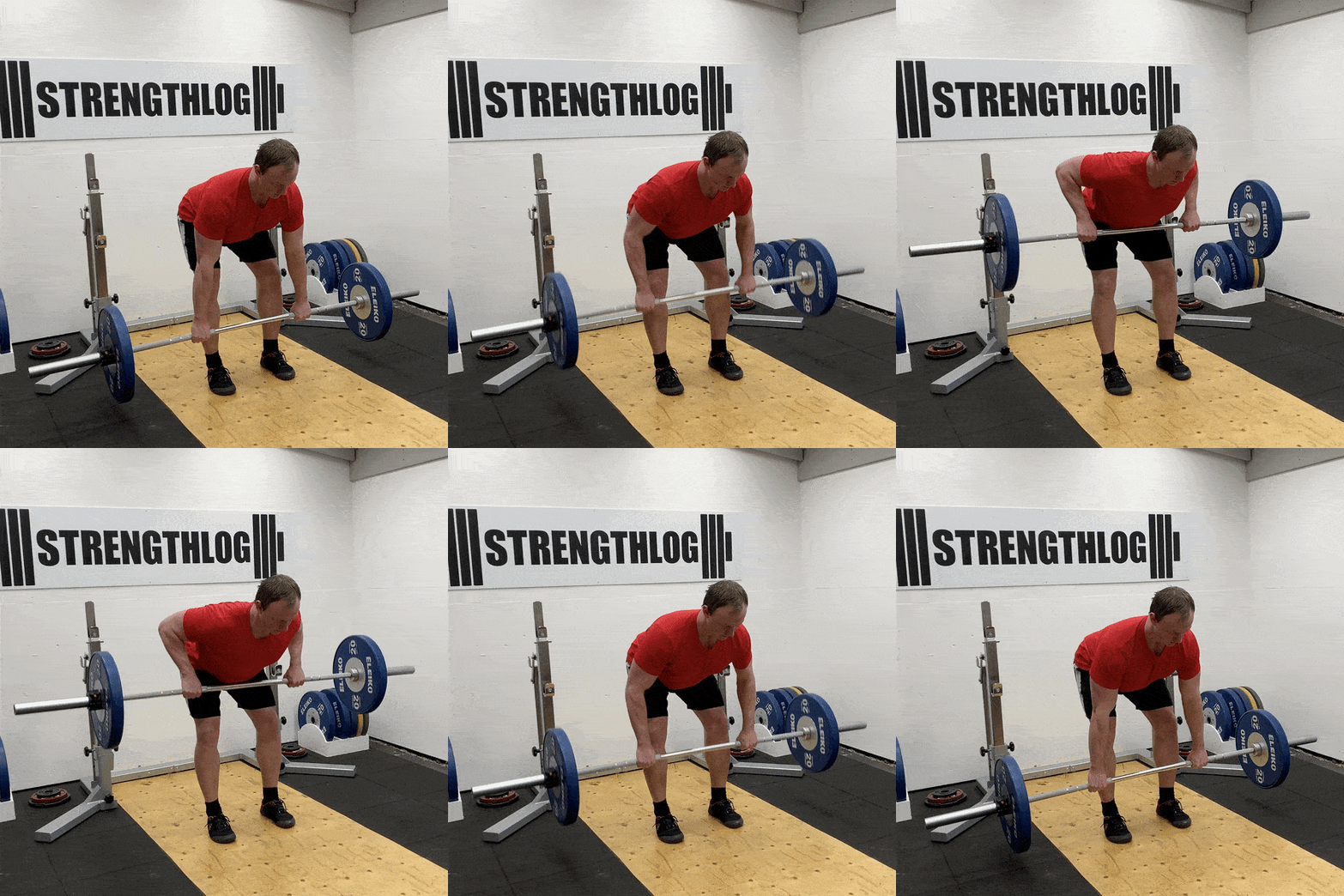
The barbell row is a compound exercise that targets your back, specifically the lats, traps, rhomboids, and rear delts. It’s like a pull-up, but instead of pulling yourself up, you’re pulling the bar toward your chest. And compared to dumbbell rows, you can load up the barbell with more weight, making it perfect for max strength gains.
Barbell rows are prime training real estate for swimmers. Swimming relies on your back to pull you through the water, and rows directly strengthen them for a more powerful stroke and a more effective pull phase.
In addition, all those hours of swimming can round your shoulders forward. Rows pull those bad boys back into alignment, improving your posture both in and out of the pool.
How to Do Barbell Rows
- Grasp the barbell with an overhand grip, slightly wider than shoulder-width apart.
- Stand with your feet slightly wider than feet hip-width apart, bend your knees slightly, and hinge forward at your hips, maintaining a straight line from your head to your hips.
- Brace your core and keep your back straight. Pull the barbell towards your lower chest or upper core, keeping your elbows close to your body. Squeeze your shoulder blades together at the top of the movement.
- Lower the barbell back to the starting position in a controlled manner.
- Repeat the movement for the desired number of repetitions.
Dumbbell Pullover

Swimming requires a strong upper body that’s mobile while generating force, powerful pulling muscles, and good shoulder stability—and the dumbbell pullover ticks all those boxes.
Dumbbell pullovers are typically done lying on a bench (although they can be done lying cross-bench) with a single dumbbell (or a barbell, although that version is more awkward). It’s a rather unique exercise in that it targets the pectoralis major (chest) and the latissimus dorsi (back) more or less depending on how you tweak your form. Bonus points? You work secondary muscles involved in swimming movements, like the serratus anterior, because you need to stabilize yourself as the weight moves.
How to Do Dumbbell Pullovers
- Lie down on a bench and lift a dumbbell up to almost straight arms above you.
- Lower the dumbbell down behind your head, while keeping your arms almost completely straight, just with a slight bend in the elbows.
- Reverse the motion and return the dumbbell to the starting position.
- Repeat the movement for the desired number of repetitions.
Wood Chop

The wood chop is a fantastic exercise for building rotational power, improving coordination, and targeting your side abs (obliques). It doesn’t stop there—it also recruits muscles in your shoulders, legs, and hips, making it a (almost) full-body move that’s both functional and practical.
For a swimmer, wood chops help you maintain better body control and alignment, reduce drag in the water, and strengthen the muscles that drive torso rotation. No actual wood-splitting skills required.
Note: you can do this exercise with either a resistance band (like in the video demonstration above) or a cable pulley system.
How to Do Horizontal Wood Chops
- Fasten an elastic band at shoulder height. Grip the band with both hands, step away, and stand sideways to the band’s anchor point.
- With almost straight arms, make a sweeping, horizontal movement to your other side.
- Return to the starting position in a controlled manner.
- Repeat the movement for your desired number of repetitions.
Box Jump

The box jump is an explosive exercise where you jump from the ground onto an elevated surface: a box or platform, for example. It’s often called a plyometric exercise, but it’s really not, although it does have plyometric elements. However, that doesn’t mean that it’s a bad exercise. On the contrary, it’s fantastic for on-land training when you’re looking to develop explosive power in the lower body.
For swimmers, box jumps help you explode off the starting block and improve your push off the wall during turns.
How to Do Box Jumps
- Select a box that is appropriate for your fitness level and jumping ability.
- Stand with your feet shoulder-width apart, a few inches away from the box. Your knees should be slightly bent, and your hips pushed back in an athletic stance, like a mini squat.
- Engage your core and swing your arms back to generate momentum. Keep your chest up, and your weight balanced evenly across your feet.
- Push through the balls of your feet, extending your hips, knees, and ankles as you jump up. Swing your arms forward and upward to help propel yourself onto the box. Jump with both feet leaving the ground at the same time.
- As you land on the box, aim to have both feet hit the surface at the same time. Bend your knees slightly to absorb the impact, keeping your chest up and back straight.
- Once you’ve landed on the box, stand up tall, extending your hips completely to finish the jump.
- Step off the box one foot at a time, and reset your stance before attempting the next jump.
- Repeat the movement for your desired number of jumps.
Power Clean

The power clean is a compound, full-body exercise that hits a ton of muscle groups in one epic move (primarily your legs, back, and shoulders) and improves your coordination and raw power. It is often used in CrossFit and athletic training because it improves force production—a fancy term for how much oomph you can generate when you need it.
And speaking of athletics, power cleans are great for swimmers, too. You need bursts of power when you are pushing off the wall, diving off the block, or surging into a sprint (faster starts, turns, and finishes). That’s where power cleans shine: they build explosive lower body and hip drive, which translates to improved performance in the water (the fact that they hammer your posterior chain while also reinforcing shoulder and core stability doesn’t exactly hurt either).
Consider working with a coach if you’re new to Olympic lifts—they’re technical but very rewarding and some of the best exercises you can do for athletic performance.
How to Power Clean
- Step up close to the bar, so that it is about over the middle of your foot.
- Lean forward and grip the bar with an overhand grip, about shoulder-width apart.
- Hold your breath, and brace your core slightly.
- Lift the bar in a smooth but fast motion. Bend your knees slightly and receive the bar on the front of your shoulders.
- Stand up on straight legs again.
- Lower the bar in front of you, with control.
- Repeat the movement for your desired number of repetitions.
Ball Slam

The ball slam is like throwing a tantrum im the gym and calling it exercise. But what an exercise it is. This full-body power move uses a weighted slam ball (the no-bounce kind, or you’ll get an unexpected facial workout) and works your core, shoulders, arms, back, glutes, and legs, while giving your heart a cardio boost.
Swimming relies on a strong core for stability and rotation, and ball slams force your abs and obliques to work dynamically and explosively. And speaking of explosiveness, they improve the explosive power your need off the block or doing flip turns, too.
Plus, they are great for coordination and core stability—your legs, hips, core, and shoulders work in harmony, much like swimming.
How to Ball Slam
- Stand with your feet about shoulder-width apart, your knees and hips slightly bent, holding the ball in both hands at chest height. Engage your core, and keep a good posture.
- Extend your knees and drive your hips forward while simultaneously lifting the ball. Aim for being as tall as possible, the ball overhead, arms up, hips slightly forward, and on your toes from the force of your drive.
- Use your core and arms to slam the medicine ball straight down between your feet with as much force as possible. Press your hips back and bend your knees to further power the slam. Exhale as you slam the ball down.
- Squat down to pick up the ball from the floor, then immediately move into the next slam by repeating the movement.
- Repeat the movement for your desired number of repetitions.
Kettlebell Snatch
The kettlebell snatch is a full-body explosive movement that takes a kettlebell from the ground (or between your legs) to overhead in one fluid motion. It’s a mix of strength, speed, and technique, giving you a great workout while making you look like the coolest person in the gym once you master it.
The kettlebell snatch works your glutes, lower back, hamstrings, core, shoulders, traps, and grip muscles. What does that mean for swimmers? More rotational strength and stability for energy transfer during strokes and turns, and a better hip drive for starts, flip turns, and dolphin kicks.
How to Do Kettlebell Snatches
- Stand with your feet fairly wide apart, with a kettlebell about 20 inches in front of you.
- Grab the handle with one hand and tilt the kettlebell towards you, then powerfully swing the kettlebell back between your legs.
- Stand up in a strong and explosive movement. The kettlebell will start to move forward.
- Pull on the kettlebell with your arm, as if you’re starting a lawnmower, to force the kettlebell into a path closer to your body.
- As the kettlebell reaches your head height, let it fly upwards while you sneak your hand underneath it.
- Catch the kettlebell at arm’s length above your head.
- When reversing the movement, begin by pushing the kettlebell forward. As it starts to fall, ease your grip to avoid forming unnecessary bulges as the handle rotates.
- Remain upright as the ball falls downward. Just as your hand approaches your groin, let your hips move backward. Guide the ball so it travels far back, not downward.
- Either perform more reps or let the ball swing forward and set it down
Battle Rope

Battle ropes are those thick, heavy ropes that you often see lying around the gym because they are too challenging (not as in difficult, but as in giving you a serious burn) for most. They’re not just for show, however; these bad boys deliver an excellent workout for both strength and muscle endurance when you’re slamming, waving, or whipping them around.
They’re deceptively tough: you think you’re in shape until your arms give out after 30 seconds, but every wave and slam works your shoulders, arms, core, and back while using your leg and glute muscles for stabilization.
Battle ropes are a fantastic dry-land training tool for swimmers, as swimming strokes (especially freestyle, butterfly, and backstroke) require shoulders, lats, and arms with plenty of strength endurance and stamina.
How to Do Battle Ropes
- Hold the ends of the rope at arm’s length in front of your hips with your hands shoulder-width apart.
- Brace your core and begin alternately raising and lowering each arm explosively.
- Keep alternating arms for your chosen amount of time or until your arms turn to lead.
Windshield Wiper

The windshield wiper we’re talking about here is not a new car part but an excellent core exercise. They strengthen the muscles that drive rotational movements (primarily the obliques, but they also hit the transverse and rectus abdominis, hip flexors, and lower back), like freestyle arm strokes or butterfly undulation.
If you find lying windshield wipers too easy, you can try hanging windshield wipers, where you hang from a pull-up bar and sweep your legs side to side in an arc, like, well, windshield wipers, instead. They’re a real test of rotational core strength, and not many people can do them with straight legs.
How to Do Lying Windshield Wipers
- Lie on your back, with your arms out to your sides and your legs straight up in the air.
- Slowly lower your legs down to one side.
- Reverse the motion, and lower your legs down to your other side.
- Repeat the movement for your desired number of repetitions.
Strength Training for Swimmers Final Words
You have reached the end of this guide to strength training for swimmers. 🏊
Thank you for reading! I hope you have enjoyed it and learned things that will take your swimming to the next level.
To follow the training routine in this article, download our workout log app and start tracking your workouts today:
Here’s a summary of the benefits of strength training for swimmers:
- Strength training builds power in your arms, legs, and core, making each stroke faster and more forceful.
- It improves your stamina and muscle endurance so that can you swim longer without getting tired.
- More strength means you can propel yourself through the water quicker.
- Lifting weights (especially if you do exercises that require using one side of the body at at time) improves balance and stability, so you move more smoothly and efficiently through the water.
- Stronger muscles protect your joints and prevent overuse injuries from repetitive strokes.
Great as it is, strength training is a complement to, not a replacement for, your time in the water. However, strength and muscle gain means more speed, power, and endurance; from explosive starts to stronger strokes, the benefits ripple through almost every aspect of your swim performance, and the time you invest in hoisting heavy iron will pay off in the pool, stroke by stroke. 🏊🐬🌊
References
- Sports Medicine 1998, 25(3):191-200. Impact of Resistance Training on Endurance Performance.
- Sports Med. 2017 Nov;47(11):2285-2307. The Impact of Resistance Training on Swimming Performance: A Systematic Review.
- Front. Physiol., 26 July 2024. The methodology of resistance training is crucial for improving short-medium distance front crawl performance in competitive swimmers: a systematic review and meta-analysis.
- Sports Health. 2012 May;4(3):246–251. Epidemiology of Injuries and Prevention Strategies in Competitive Swimmers.
- Br J Sports Med. 2014 Jun;48(11):871-7. The effectiveness of exercise interventions to prevent sports injuries: a systematic review and meta-analysis of randomised controlled trials.
- Med Sci Sports Exerc. 1991 Jun;23(6):739-43. Effects of strength training on lactate threshold and endurance performance.
- J Athl Train. 2017 Jan;52(1):45–50. Seasonal Effects on Body Composition, Muscle Characteristics, and Performance of Collegiate Swimmers and Divers.
- Int J Environ Res Public Health. 2022 Apr 28;19(9):5369. Strength Training in Swimming.
- J Strength Cond Res. 2021 Oct 1;35(10):2839-2845. The Influence of Upper- and Lower-Body Maximum Strength on Swim Block Start, Turn, and Overall Swim Performance in Sprint Swimming.
- J Sports Sci Med. 2020 Mar; 19(1): 195–203. Gluteus Maximus Activation during Common Strength and Hypertrophy Exercises: A Systematic Review.
