
Basketball is a game of speed, skill, and strategy—but it is your strength that allows you to use those qualities to their full capacity. Strength training is essential to explode off the dribble, hold your ground in the paint, or outlast your opponent in the fourth quarter.
In this guide, we’ll break down the principles of how to build lean muscle, gain strength, and maximize your power and performance in the weight room, then transfer those gains to the court. You’ll learn the best exercises for basketball players and how to perform them; plus, we’ve put together a structured training program to help you increase your on-court performance and reduce the risk of injury.
If you’re ready to outmuscle, outrun, and outplay the competition, let’s get started!
🏀🏀🏀
Want to jump right into the training program?
Click here for the Strength Training for Basketball program.
Table of Contents
Benefits of Strength Training for Basketball
For much of the early to mid-20th century, strength training was generally frowned upon among basketball players and coaches, who believed lifting weights would make you bulky, stiff, and slow—”muscle-bound”—negatively affecting your speed, agility, and shooting ability.
That mindset persisted well into the 1970s and even the early 1980s.
However, by the late 1980s and 1990s, the perception of strength training began to change as more players incorporated weights into their routines, with top players like Michael Jordan adopting it relatively early. As sports science advanced and trickled down to coaches, it soon became clear to everyone that weight training improves performance, reduces injury risk, and simply makes you a better athlete, regardless of sport.
Today, strength training is a fundamental part of basketball conditioning programs at all levels.
Here are three of the most important reasons why strength training should be part of your year-round training. Or, if you are a basketball coach, why you should program resistance training into your athletes’ workout plans.
Maximal Strength, Power, Explosiveness, and Vertical Jump
Do you know who benefits from strength, power, speed, agility, and both anaerobic and aerobic capacity? Basketball players, that’s who.1 Strength training is the best or one of the best ways to improve all of these characteristics, with the exception of aerobic capacity.
Resistance training throughout the training year significantly improves your jumping ability—the stronger you get in exercises like the deadlift, the better your jumping performance, and this is particularly true for basketball players.2 3
And while squats, deadlifts, and Olympic lifts develop lower-body power, the upper-body strength you get from presses, rows, and pull-ups helps with physicality during play. A ton of research shows that there is a positive relationship between lifting weights (both upper-body and lower-body strength training) and basketball performance.1 For example, improving your explosive muscle power will also improve your long-distance, three-point shooting performance and efficiency.4 5
Injury Prevention
The risk of injury in basketball is relatively high compared to many other sports.6 7 As a basketball player, you subject your body to many types of demanding stress, from different kinds of jumps to start acceleration to sudden changes in movement direction to altercations with other players, all of which can take a chronic toll and lead to acute injuries.
Strength training is well-known as a superb countermeasure against sports injuries, cutting them by one-third or more and reducing overuse injuries by 50%.8
While there aren’t many studies focusing specifically on basketball, a stronger body can better handle the intense, repetitive demands of the sport—sprinting up and down the court, battling for rebounds, and absorbing contact. Your muscles stabilize your joints and protect against common basketball injuries like ankle sprains and knee issues. Strengthening supporting muscle groups (e.g., hips, core, and upper back) provides stability and protects you during high-impact play.
Physicality and Defensive Capability
The basketball court is a battleyard of strength, balance, and endurance where you are constantly bumping, pushing, and fighting for position. If you’re not strong enough, you’ll likely get knocked around like a pinball.
A body with enough lean muscle mass and a reserve of strength helps you hold your ground, regardless of position, and big lifts like squats, deadlifts, and bench presses build the power you need to absorb contact and keep from getting knocked back when an opponent drives into you. The stronger you are, the harder you are to move. Plus, upper-body strength helps you contest shots and strip the ball without fouling.
In addition, weight training builds muscular endurance so that you can keep your intensity up from the first whistle to the final buzzer. Basketball is a fast-paced game with constant bursts of effort for 40+ minutes, and if your muscles can’t handle that workload, fatigue will set in, and your game will suffer.
How Often Should Basketball Players Strength Train?
As a basketball player, you should adjust your strength training frequency based on 1) your training experience and 2) the competitive season.
In the off-season, most players can manage 3–4 sessions per week without overtraining to build a strong foundation. In the pre-season, 2–3 sessions per week focused on power and speed prepare you for the season, during which 1–2 weekly strength workouts allow you to maintain your gains without compromising game performance.
Off-Season (3–4x per week)
The off-season is the best time to focus on building maximal strength, power, and muscle mass since you don’t have the physical demands of regular games and practices. Training three to four times per week allows for adequate recovery while maximizing strength training gains.
- You can follow almost any kind of training split, but full-body routines or upper/lower splits are often ideal, although it depends on your individual preferences and training history.
- Your main focus should be progressive overload, improving strength in compound exercises such as squats, deadlifts, bench presses, pull-ups, and rows. One-sided exercises should be included for stability, balance, and unilateral performance.
- Incorporate explosive exercises like Olympic lifts (hang power cleans, power cleans, snatches), plyometrics (box jumps, depth jumps), and medicine ball throws to develop explosiveness and general athletic ability.
- Core training should emphasize anti-rotation and anti-flexion movements (e.g., Pallof press, dead bugs, hanging leg raises) to improve stability.
- If needed, you can include mobility and flexibility training outside your strength work, but strength training with a full range of motion is usually as effective as stretching.
Pre-Season (2–3x per week)
As the season approaches, your goal typically shifts from pure strength work to maximizing power output, speed, and injury prevention. Training frequency can drop to two to three sessions per week to balance strength training with an increasing focus on basketball-specific skills and conditioning.
Your strength training sessions should still include heavy compound lifts but with more emphasis on explosive execution.
In-Season (1–2x per week)
During the season, your priority is maintaining the strength and power you built in the off-season and pre-season while avoiding fatigue. Most players benefit from one to two weekly strength training sessions, depending on their game schedule and workload.
- Workouts should be short and efficient (30–45 minutes) to minimize fatigue and soreness and not compromise game performance.
- Continue with compound movements but with lower volume to avoid excessive fatigue. Keep the intensity high.
- Use lower loads in explosive movements to maintain power without overloading your nervous system.
Here’s an example of a weekly off-season training plan for an intermediate-level basketball player with three days of strength training along with skill work, conditioning, and recovery sessions.
| Day | Activity |
|---|---|
| Monday | Strength Training + On-Court Skill Work |
| Tuesday | Conditioning (Sprint Intervals & Agility) + Shooting Drills |
| Wednesday | Strength Training + Mobility & Recovery |
| Thursday | Conditioning (Endurance & Footwork) + On-Court Skill Work |
| Friday | Strength Training + Shooting & Ball Handling Drills |
| Saturday | Full-Court Scrimmage + Light Recovery |
| Sunday | Active Recovery or Rest |
Strength Training Program for Basketball
This is an off-season strength training program for basketball players who want to develop maximum strength, power, balance, and stability while strengthening the body to prevent injuries. It’s suitable for intermediate-level trainees and above. And I am talking about your experience with strength training, not basketball. It is made for basketball players of all levels.
This program works best if you already have some strength training experience. It features many different, relatively complex exercises, and if you have never lifted weights before, it might be too much for you to jump right into.
If you’re new to the gym, start with one of our beginner programs, like the Beginner Barbell Training Program. You train three times per week, alternating between workouts A and B.
Workout A
| Exercise | Sets | Reps |
|---|---|---|
| Squat | 3 | 8–10 |
| Bench Press | 3 | 8–10 |
| Barbell Row | 3 | 8–10 |
Workout B
| Exercise | Sets | Reps |
|---|---|---|
| Deadlift | 3 | 6–8 |
| Lat Pulldown (or Pull-Ups) | 3 | 8–10 |
| Overhead Press | 3 | 8–10 |
In other words, you’ll train workouts A B A week one and B A B week two, then go back to week one and keep alternating between the two.
This beginner program (any many more) are available for free in our workout log app, StrengthLog.
You can use the strength you gain on the court, and you teach your muscles, brain, and nervous system to play together, allowing you to move on to more complex programs.
If you do have some weight training experience, you’re ready for Strength Training for Basketball.
14-Week Strength Training Program for Basketball
This is an 14-week progressive training program designed for off-season (into pre-season if desired) strength and power gains.
Program Overview
- Block 1 (Weeks 1–4): Foundational Strength & Hypertrophy
- Week 5: Deload
- Block 2 (Weeks 6–9): Maximal Strength
- Week 10: Deload
- Block 3 (Weeks 11–14): Power & Strength Maintenance
Each block emphasizes a slightly different training stimulus, progressing from hypertrophy-oriented (slightly higher reps) to heavier maximal strength work, and finally integrating more power-specific movements (lower reps, faster execution).
General Guidelines
- Warm-Up:
- 5–10 minutes of dynamic movements (e.g., leg swings, arm circles, hip openers).
- Light plyometrics or ladder drills (especially before lower-body lifts).
- Gradual build-up sets for the main lift.
- Progression:
- Increase the weight gradually each week while maintaining good form.
- For exercises without percentage-based progression (which is detailed in your StrengthLog app): If all sets/reps are completed with solid form, add 5–10 lbs (2–5 kg) for lower-body lifts or 2.5–5 lbs (1–2 kg) for upper-body lifts the following week.
- Rest Periods:
- Main compound movements: 2–3 minutes.
- Accessory work: 60–90 seconds.
- Tempo & Control:
- Focus on controlled eccentrics (lowering phase) and powerful concentrics (lifting phase).
- In Blocks 2 and 3, emphasize explosiveness on the upward (concentric) phase.
- Conditioning & Skills:
- Basketball skills (shooting, ball handling, conditioning drills) should be integrated around these sessions.
- Deload Weeks (Weeks 5 & 10):
- Reduce volume and/or intensity significantly.
- Focus on mobility, technique, and light accessory work.
Follow This Training Program in StrengthLog
This program and many more are in the StrengthLog workout tracker app. The app is free to use, forever, with no ads. This program, however, is a premium program (it offers built-in progression and advanced periodization), which means it requires a premium subscription.
We offer all new users a free 14-day premium trial. You can activate it in the app without any strings attached.
Download StrengthLog and start tracking your workouts today:


Click here to open the program in StrengthLog.
Block 1 (Weeks 1–4): Foundational Strength & Hypertrophy
Goal: Build a base of strength and muscle; moderate intensity and moderate-to-higher rep ranges.
Workout 1
| Exercise | Sets |
|---|---|
| Squat | 4 |
| Bench Press | 4 |
| Pull-Up | 3 |
| Walking Lunge | 3 |
| Plank with Leg Lifts | 1 min |
Workout 2
Workout 3
Optional Add-On (Light Plyometrics):
- Before Day A or Day C lower-body work, do 2–3×5 squat jumps or box jumps with full rest between sets.
Week 5: Deload
- Goal: Recovery and preparation for maximal strength phase.
- Frequency: 2 days of light training.
- Reps/Sets: 50–60% of regular weight, ~10 reps, 2 sets.
Workout 1
| Exercise | Sets | Reps |
|---|---|---|
| Squat | 2 | 10 |
| Romanian Deadlift | 2 | 10 |
| Bulgarian Split Squat | 2 | 10 |
| Hanging Leg Raise | 2 | 12 |
Workout 2
| Exercise | Sets | Reps |
|---|---|---|
| Dumbbell Chest Press | 2 | 10 |
| Pull-Up | 2 | 10 |
| Overhead Press | 2 | 10 |
| Plank | 2 | 1 min |
Block 2 (Weeks 6–9): Maximal Strength
Goal: Increase absolute strength by using heavier loads and lower-to-moderate rep ranges. Volume (total sets × reps) will be slightly reduced, but intensity (weight) will go up.
Workout 1
| Exercise | Sets |
|---|---|
| Squat | 5 |
| Bench Press | 5 |
| Barbell Row | 4 |
| Reverse Lunge | 3 |
| Plank | 3 |
Workout 2
Workout 3
Optional Power/Explosive Element:
- Day A: Depth Jumps (2–3×3–5) or Broad Jumps (2–3×3–5) before squats
- Day B: Kettlebell Swings (3×10) after deadlifts
Week 10: Deload
- Similar approach as Week 5.
Block 3 (Weeks 11–14): Power & Explosiveness + Strength Maintenance
Goal: Convert gains into basketball-specific power and maintain high levels of strength. Emphasize explosive movements, dynamic lifts, and slightly lower volume on heavy strength work.
Workout 1
| Exercise | Sets |
|---|---|
| Squat | 4 |
| Bench Press | 4 |
| Hang Power Clean | 4 |
| Jumping Lunge | 3 |
| Jackknife Sit-Up | 3 |
Workout 2
| Exercise | Sets |
|---|---|
| Trap Bar Deadlift | 4 |
| Push Press | 4 |
| Chin-Up | 4 |
| Box Jump | 3 |
| Core Twist | 3 |
Workout 3
| Exercise | Sets |
|---|---|
| Front Squat | 4 |
| Close-Grip Bench Press | 4 |
| Barbell Row | 4 |
| Step Up | 3 |
| Pallof Press | 3 |
- Use submaximal loads (50–70% of 1RM) for “speed” sets on compound and Olympic lifts, focusing on bar speed and proper technique. Don’t go to failure on these sets; terminate when the bar slows down.
- Keep rest periods around 2–3 minutes for explosive movements to maintain power output.
The program is detailed in full in your StrengthLog workout tracker, down to the exact number of repetitions per set and percentage-based progression for relevant lifts.
Strength Training Exercises for Basketball
Here are detailed descriptions of all the exercises in the Strength Training for Basketball program in the order they appear.
Squat

The king of all lifts and arguably the most important weight training exercise a basketball player can do—the barbell squat. It trains your quads, glutes, adductors, and core and is the best thing you can do for overall athletic performance.
For basketball players, it gives you a higher jump (there is a very strong correlation between your lower body strength and how high you can jump), more speed and acceleration, better balance and stability, the power to hold your ground and explode through defenders, and improved lateral quickness (defensive slides, crossovers, step-backs—squats make them all faster). Among other things.
So what should you do if you want to improve all of the above? Squats. Lots of squats.
How to Squat
- Place the bar on your upper back with your shoulders blades squeezed together. Inhale and brace your core slightly, and unrack the bar.
- Take two steps back, and adjust your foot position.
- Squat as deep as possible with proper form.
- With control, stop and reverse the movement, extending your hips and legs again.
- Exhale on the way up or exchange air in the top position.
- Repeat the movement for the desired number of repetitions.
Bench Press

Basketball isn’t exactly a sport where you’re lying on your back pressing a barbell. It’s dynamic and explosive and requires vertical power, agility, and endurance. So, does the bench press improve your performance on the hardwood?
The answer is yes because it trains your chest, shoulders, and triceps— the “get off me” muscles. They help you absorb and deliver contact, whether you’re battling for position, holding off defenders, or boxing out for rebounds.
In addition, you want a nice reserve of upper body strength for extending your shooting range and maintaining form late in the game when fatigue starts to rear its head.
Feel free to vary your benching by doing inclines (targets the upper chest more), declines (lower chest), and using dumbbells instead of a barbell.
How to Bench Press
- Lie on the bench, pull your shoulder blades together and down, and slightly arch your back.
- Grip the bar slightly wider than shoulder-width apart.
- Inhale, hold your breath, and unrack the bar.
- Lower the bar with control, until it touches your chest somewhere close to your sternum.
- Push the bar up to the starting position while exhaling.
- Take another breath while in the top position, and repeat the movement for your desired number of repetitions.
Pull Up

The pull-up is a classic bodyweight exercises and a staple of athleticism and upper-body strength. And no, I’m not talking about a pull-up jump shot (though that’s important too).
Pull-ups develop the upper body in ways that complement your lower-body power, meaning you’re not just jumping high but controlling your body in the air. They train your back (primarily the lats), biceps, rear delts, and grip strength (as long as you don’t use lifting straps). Who knows, if you build your lats wide enough, you might be able to float, adjust, and finish mid-air before dunking.
On the ground, a strong upper-body posterior chain allows you to hold your own when driving to the rim or fighting for rebounds and helps you absorb contact when you attack the hoop, so instead of getting knocked off balance, you finish through the foul.
If you’re busting out reps easily, strap on a weight belt or wear a backpack with a weight plate for extra resistance. Conversely, if you struggle to do enough pull-ups, use resistance bands to help you up:

Note: As an alternative, you can do lat pulldowns, which train the same muscles and give you similar benefits.
How to Do Pull-Ups
- Stand beneath a pull-up bar and reach up to grasp it with an overhand grip (palms facing away from you), slightly wider than shoulder-width apart. Ensure your grip is secure and comfortable.
- Hang freely from the bar, fully extending your arms. Your feet should be off the ground.
- Engage your core muscles by squeezing your abs and glutes.
- Inhale and initiate the movement by pulling your body weight up towards the bar by bending your elbows and squeezing your shoulder blades together. Focus on using your back muscles rather than relying on your upper arms.
- Continue pulling yourself up until your chin reaches or clears the bar. Keep your torso upright and avoid excessive swinging or kicking with your legs.
- Slowly lower yourself back down to the starting position while maintaining control and stability, fully extending your arms.
- Repeat the movement for your desired number of repetitions.
Walking Lunge

The walking lunge trains your quads, glutes, and adductors in a way that simulates how basketball players generate power—moving forward, backward, and laterally, often in a staggered stance, exploding off one leg for layups, fighting for position, and sprinting up and down the court.
Walking lunges force you to stabilize on one leg and give you unilateral strength, meaning they correct imbalances between your dominant and non-dominant leg (and most people have one).
Note: You can do walking lunges either with a barbell like in the video demonstration above or holding a pair of dumbbells or kettlebells in your hands. Or with just your body weight to start.
How to Do Walking Lunges
- Stand with your feet at shoulder-width apart, with a slight bend in the knees. Make sure that your core is engaged.
- Step forward with one of your legs, bending both knees at the same time. Stop the movement just before the back knee touches the floor, you should have about a 90-degree angle in both knees.
- Drive through your front foot and extend the knee until you get back to a standing position.
- Continue by repeating the movement on the other side.
- Repeat the movement for the desired number of repetitions.
Plank With Leg Raise

The plank is one of the most popular ab exercises. You hold your body in a straight line from head to heels while balancing on your forearms and toes to strengthen your core. It trains both your superficial abs (rectus abdominis, outer obliques) as well as the deep core muscles (transverse abdominis, inner obliques), and the leg raise part adds one more stabilization component to the exercise.
Core strength helps you keep your balance, move quickly, and absorb contact without losing control, making it easier to shoot, pass, and defend whatever happens without crumpling like a deflated basketball.
How to Do Plank with Leg Lifts
- Begin by getting into a standard plank position. Place your elbows directly under your shoulders, legs extended straight behind you, and toes pressing into the ground. Your body should form a straight line from your head to your heels.
- Brace your core, keep your back flat, and avoid letting your hips sink down or lift too high.
- Slowly lift one leg off the ground to about hip height without bending the knee. Keep your leg straight during the movement.
- Hold the lifted position for a moment, then gently lower your leg back to the starting position.
- Repeat the lift with the opposite leg, ensuring you maintain a strong plank position throughout the movement.
- Continue to alternate legs for the chosen amount of time.
Trap Bar Deadlift

The deadlift is one of the best lifts to make entire body stronger, and the trap bar deadlift (also called the hex bar deadlift) does it in a more upright, athlete-friendly position. You can move more weight while placing less strain on your lower back, making it safer for taller athletes (like basketball players).
Trap bar deadlifts are a hinge-squat hybrid that works the posterior chain (glutes, hamstrings, lower back) and the quads in triple extension (hip, knee, and ankle)—the same muscles that drive your vertical leap. Studies have shown that deadlifts have a high correlation with improvements in jump height.9 Not in all sports, mind you, but basketball players in particular benefit a great deal.
How to Trap Bar Deadlift
- Step into the bar’s opening so that the handles are in line with the middle of your feet.
- Inhale, bend down and grip the handles.
- Hold your breath, brace your core slightly, and lift the bar.
- Lift the bar with a straight back, until you are standing straight.
- Lower the bar back to the ground with control.
- Take another breath, and repeat the movement for your desired number of repetitions.
Overhead Press

The overhead press is a classic upper-body exercise that builds the kind of functional strength, stability, and explosiveness that translates directly to your game.
Pressing something heavy overhead trains your shoulders, upper chest, and triceps and gives you a better ability to hold your ground and extend forcefully without getting knocked off balance. You also improve scapular control for shooting and passing accuracy. Because if your pushing muscles aren’t strong enough, your shot starts breaking down as you get tired, resulting in short shots and bad misses.
Note: You can do dumbbell shoulder presses instead of using a barbell for variety. You train the same muscles, and while you won’t be able to use as heavy weights, you involve more stabilizing muscles all over your body.
How to Do Overhead Presses
- Place a barbell in a rack at about chest height.
- Grip the bar slightly wider than shoulder-width apart and step close to it.
- Tighten your abs, unrack the bar and let it rest against your front delts while you step back from the rack. This is your starting position.
- Push the barbell up, extending your arms fully, while exhaling.
- Bring the weights back down to your shoulders, slow and controlled, while inhaling.
- Repeat the movement for the desired number of repetitions.
Barbell & Dumbbell Row
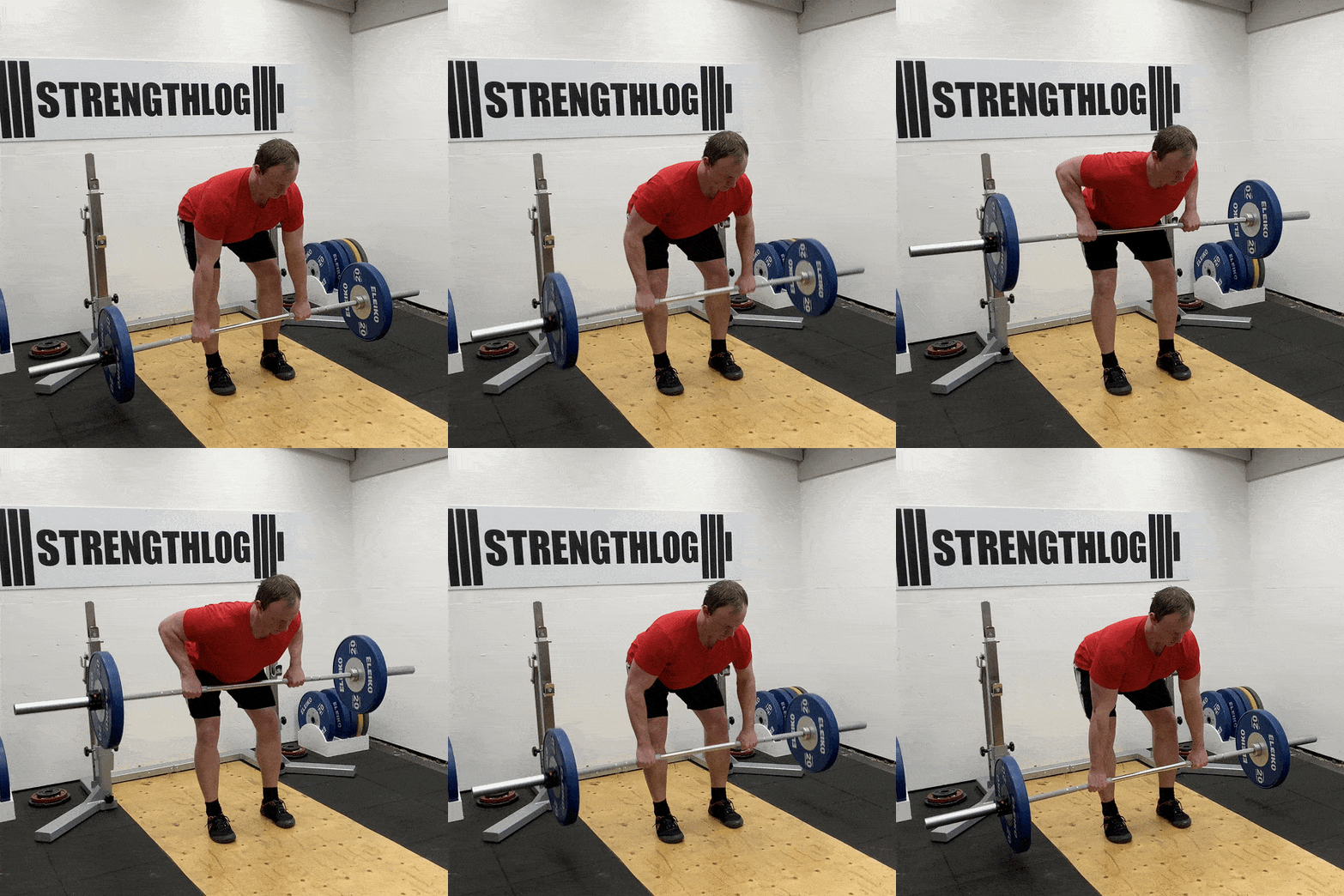

Both the barbell row and the dumbbell row are horizontal pulling movements that work your lats, rhomboids, traps, rear delts, biceps, and grip strength. They reinforce your posture, improve your pull power, and protect against shoulder injury. In addition, you build a strong upper-body posterior chain that helps you maintain control mid-air and keep your body upright and balanced during defensive possessions or physical drives to the rim.
The barbell row allows you to use heavier weights, while the dumbbell row adds a rotational component for more scapular control and is superior for muscular imbalances.
How to Do Barbell Rows
- Grasp the barbell with an overhand grip, slightly wider than shoulder-width apart.
- Stand with your feet slightly wider than feet hip-width apart, bend your knees slightly, and hinge forward at your hips, maintaining a straight line from your head to your hips.
- Brace your core and keep your back straight. Pull the barbell towards your lower chest or upper core, keeping your elbows close to your body. Squeeze your shoulder blades together at the top of the movement.
- Lower the barbell back to the starting position in a controlled manner.
- Repeat the movement for the desired number of repetitions.
How to Do Dumbbell Rows
- Place a dumbbell on the floor beside a bench or some other sturdy object. Stand facing the bench and place your left hand and left knee on top of it.
- Grip the dumbbell with your right hand. Bend your knees slightly and hinge forward at the hips, keeping your back flat and your torso roughly parallel to the floor.
- Engage your core muscles to stabilize your torso throughout the movement.
- While maintaining the position of your upper body and keeping your elbow close to your side, inhale and pull the dumbbell up towards your torso by retracting your shoulder blade. Focus on squeezing your back muscles as you lift.
- Continue pulling the dumbbell until it reaches the side of your torso. Row it closer to your hips to target your lower lats. Squeeze your lats at the top of the movement, ensuring a strong contraction in your back muscles.
- Lower the dumbbell back to the starting position while exhaling, maintaining control and good form throughout the descent.
- Repeat the movement for your desired number of repetitions, switch sides, and perform the above steps rowing with your left arm.
Hip Thrust

The hip thrust is an isolation exercise for your hip extensors, particularly your glutes.
Basketball is a sport of explosive movements—sprinting down the court, high jumps, quick lateral cuts, and posterizing dunks. All of these rely on one crucial factor: lower body power. And where does that power primarily come from? The glutes. They are the power hub for almost everything athletic you do.
Unlike squats or deadlifts, which spread the workload between your quads, adductors, and glutes, the hip thrust focuses almost entirely on your glutes. According to research, hip thrusts activate the gluteus maximus (your biggest and most powerful butt muscle) more than squats.10 And more glute strength = better force production = the horsepower you need to accelerate, decelerate, and jump higher.
Note: You can do this exercise in a hip thrust machine if you have access to one.
How to Do Hip Thrusts
- Sit on the floor with your back against a sturdy bench.
- Roll the barbell up over your thighs, until it is placed over your hips.
- Place your feet on the floor, about shoulder-width apart, with bent knees.
- Place your hands on the bar to stabilize it.
- Push the bar towards the ceiling by extending your hips. Your knees should form a ~90 degree angle at the top.
- Squeeze your glutes at the top of the thrust like you’re trying to crack a walnut before lowering the weight.
- Repeat the movement for the desired number of repetitions.
Hanging Leg Raise

The hanging leg raise is one of the best core-strengthening exercises you can do—you’re training your abs, hip flexors, obliques, grip strength, and shoulder stability in one simple to-execute but effective movement—and for a sport like basketball, where explosive movements, balance, and core control are everything, it’s the bee’s knees.
Whether you’re attacking the basket, pulling up for a jumper, or absorbing contact in the paint, your core dictates how well you move and react. A weak core means you’ll struggle to maintain stability, get pushed off balance easily, and lose movement efficiency.
If you struggle to do strict leg raises, bend them and do hanging knee raises instead.
How to Do Hanging Leg/Knee Raises
- Grasp a pull-up bar with an overhand grip, shoulder-width apart.
- Hang from the bar with your arms fully extended and your body in a straight line from your head to your heels.
- Engage your core and keep your back straight.
- Raise your legs or knees towards your chest, as high as you can, keeping your back straight and your core engaged.
- Slowly lower your legs back down to the starting position.
- Repeat the movement for your desired number of repetitions.
Front Squat

The front squat is a variation of the squat where you hold the barbell across the front of your shoulders. It works the same muscles as the back squat but emphasizes the quads more, along with more involvement from your core and upper back—exactly what you need for explosive power and balance when you’re jumping, absorbing contact in the paint, or holding your ground on defense.
In addition, the deep squat position in a front squat is great for ankle mobility while also reinforcing proper knee tracking.
How to Front Squat
- Grip the bar slightly wider than shoulder-width. Step forward and place the bar on the front of your shoulders: on top of your clavicles, and tight against your throat.
- Inhale and brace your core slightly, and unrack the bar.
- Take two steps back, and adjust your foot position.
- Squat as deep as possible with good technique.
- With control, stop and reverse the movement, extending your hips and legs again.
- Repeat the movement for the desired number of repetitions.
Chin-Up

The chin-up is a variation of the pull-up where you use an underhand grip (palms facing you). It is similarly effective for your back, but the underhand grip puts your arms in a stronger mechanical position, making your biceps do more of the work.11
When you’re doing chin-ups in the Strength Training for Basketball program, I want you to focus on bringing the chest to the bar instead of trying to clear it with your chin at any cost to form. Stop and squeeze your back and biceps at the top for a second, focusing on getting a good muscle contraction before slowly lowering yourself back down again.
How to Do Chin-Ups
- Stand underneath a pull-up bar and grip it with an underhand grip, hands shoulder-width or slightly narrower apart.
- Hang with your arms fully extended and your body in a straight line with a slight bend in your knees.
- Engage your core and retract your shoulder blades, drawing them down and back.
- Pull yourself up by bending your elbows and raising your chin above the bar.
- At the top of the movement, your elbows should be fully flexed.
- Pause briefly at the top of the movement and focus on squeezing your biceps before lowering yourself back to the original position.
- Repeat the movement for the desired number of repetitions.
Romanian Deadlift + Single-Leg Romanian Deadlift


Unlike a regular deadlift, where you pull the bar from the floor, the Romanian deadlift (RDL) starts from the top and focuses on a deep hip hinge movement, training your hamstrings, glutes, and lower back.
The posterior chain is a weakness among many athletes who overuse their quads at the expense of their backsides, and basketball players are no exception. With the RDL, you learn hip mechanics, glute activation, and how to recruit your hamstrings, which are some of the most important muscle groups for powerful, explosive, and athletic movement.
Also, the eccentric load on the hamstrings during the RDL protects against hamstring strain and tears, which are common in basketball.12 Studies show that eccentric training reduces hamstring injuries by up to 70%.13 That makes the RLD doubly important—both as a performance booster and a way to prevent injuries.
In addition to regular Romanian deadlifts, you can also do single-leg RDLs. They improve balance and build unilateral strength, which is great because you often rely on one leg in basketball.
How to Do Romanian Deadlifts
- Get into the starting position by deadlifting a barbell off the floor or by unracking it from a barbell rack. Stand feet hip-width, inhale, and brace your core slightly. If you’re doing single-leg RDLs, lift one leg off the ground.
- Lean forward by hinging in your hips. Keep your knees almost completely extended.
- Lean forward as far as possible with good form (no rounding your back). You don’t have to touch the barbell to the floor, although it is OK if you do.
- Reverse the movement and return to the standing position. Exhale on the way up.
- Repeat the movement for the desired number of repetitions.
Note: The dumbbell Romanian deadlift is a viable alternative to the barbell variant.
Pallof Press

The Pallof press, named after physical therapist John Pallof, is a simple but effective anti-rotational core exercise that offers several benefits for basketball. Unlike crunches or sit-ups, where you focus on flexing your spine, the Pallof press teaches your core to resist rotational forces.
When you are driving to the hoop and a defender bumps you mid-air, setting a screen and someone tries to knock you off balance, holding your ground against other players, or shooting a three-pointer and someone tries to throw you off rhythm—all these situations (and more) require a core that can resist external forces, and that’s what the Pallof press trains—your ability to resist unwanted movement.
It looks easy—but try it with proper resistance, and you’ll quickly feel your core working to stabilize.
How to Pallof Press
- Attach a handle in a cable machine at chest height and stand with your side facing the machine.
- Grab the handle with both hands and stand with feet hip-width apart and knees slightly bent.
- Pull the handle to your chest, engage your core, and then press your arms straight out in front of you without rotating your torso.
- Hold briefly, then bring the handle back to your chest in a controlled motion.
- Repeat for the desired number of repetitions, then switch sides.
Reverse Lunge

The reverse lunge is a lower-body exercise that builds your quads, adductors, and glutes, giving you extra oomph on jump shots and rebounds as well as better balance and stability because you’re constantly adjusting as you lunge, just like how you shift weight in a real game.
Lunges develop unilateral (one-legged) strength, which is crucial because basketball is largely played one leg at a time. When do you ever squat symmetrically in a game? You don’t. You push off one foot, plant, cut, pivot, and elevate from staggered stances—exactly what the reverse lunge trains.
Unlike a forward lunge, where you step into the movement (which can put stress on the knees), the reverse lunge lets you step back—great for basketball players who already put a ton of stress on their knees with jumping and sudden stops.
Note: You can do reverse lunges either with a barbell like in the video demonstration above or holding a pair of dumbbells or kettlebells in your hands. Or with just your body weight to start.
How to Do Reverse Barbell Lunges
- Take a big step backward and sink as deep as possible in a lunge position, without hitting the knee of the back leg in the floor.
- Return to the starting position by pushing yourself back with the front leg.
- Repeat for the desired number of repetitions, then switch sides.
Bulgarian Split Squat

The Bulgarian split squat is a single-leg squat variation where you elevate one leg on a bench or step behind you, and it is one of the best exercises you can do to boost your athleticism, improve balance, and reduce injury risk.
Almost every action you take on the court involves one leg working harder than the other. Sprinting down the court in transition? One leg is pushing off more than the other. Taking a jump shot or a dunk? You’re likely using one leg more than the other. Driving past a defender? One leg powers the movement. Landing after a contested layup? Better hope that knee can stabilize.
The above is why the Bulgarian split squat is one of the most important exercises for a basketball player. Unlike traditional squats, where both legs work equally hard, it isolates each leg individually, making it more sports-specific and able to uncover weaknesses that could be limiting your performance. Both are great exercises, and each deserves a spot in your Strength Training for Basketball program.
How to Do Bulgarian Split Squats
- Place a bar on your upper back or hold a pair of dumbbells in your hands.
- Stand with your back turned against a bench, which should be about knee height. Stand about one long step in front of the bench.
- Place your right foot on the bench behind you.
- Inhale, look forward, and squat down with control until right before your right knee touches the floor.
- Reverse the movement and extend your front leg again, while exhaling. Your back foot should only act as support.
- Repeat the movement for the desired number of repetitions, then switch side and repeat with your right leg forward and your left foot on the bench.
Ab Wheel Rollout

If you’re tired of getting pushed around on drives or losing balance mid-move, grab an ab wheel, roll out (without faceplanting), and feel your entire core—from your six-pack muscle to your deep stabilizers to your obliques—gain strength and stability.
Rollouts mimic the demands of basketball, where your core is constantly bracing when you change direction or absorb contact, and more core stability means better power transfer between your upper and lower body, whether you’re going up for a dunk, sprinting down the court, or launching a three-pointer. Conversely, if your core is weak, it’s like trying to launch a cannonball from a canoe. You need a stable base to generate maximum force, and your core is it.
If you find yourself struggling to complete full rollouts, start with smaller ones and gradually increase the range of motion as you get stronger.
How to Do Ab Wheel Rollouts
- Start by kneeling on the floor with your hands on the ab wheel, placed directly in front of your knees.
- Engage your core and slowly roll the wheel forward until your body forms a straight line from your knees to your head.
- Be sure to keep your back straight and your core engaged throughout the entire movement.
- Reverse the movement, roll the ab wheel back towards your knees, and return to the starting position.
- Repeat the movement for the desired number of repetitions.
Close-Grip Bench Press

The close-grip bench press is a variation of the regular bench press, but you bring your hands closer together on the bar—usually about shoulder-width apart or slightly narrower.
Bench and overhead presses build overall pushing strength, but the close grip version shifts the emphasis more to the triceps. For a basketball player, think about extending your arms on a jump shot, muscling through defenders, or getting a chest pass off under pressure. If you want to generate force in these movements, you need triceps and shoulder strength, which close-grip benches hammer home.


Aim for shoulder width apart or slightly closer. If your hands are too close (touching thumbs), you’ll strain your wrists and put unnecessary pressure on the elbows. There are no benefits of a really close grip. Also, keep your elbows tucked close to your body to protect your shoulders and make sure you target the right muscles.
How to Close-Grip Bench Press
- Lie on the bench, pull your shoulder blades together and down, and slightly arch your back.
- Grip the bar narrower than in a regular bench press so that your hands are directly above your shoulders or even closer.
- Take a breath and hold it, and unrack the bar.
- Lower the bar with control until it touches your chest somewhere where the ribs end.
- Push the bar up to the starting position while exhaling.
- Take another breath in the top position, and repeat the movement for the desired number of repetitions.
Side Plank

The side plank is a static core exercise that improves strength and muscle endurance in the obliques. It helps you resist lateral forces when turning and maintaining balance and improves how you handle quick direction changes. When you plant your foot to cut or drive, your core stabilizes your movement. A weak core means wasted energy, slower reactions, and a higher risk of injury.
How to Do the Side Plank
- Stand on your side, leaning against one elbow.
- Place the foot of the top leg in front of the other foot.
- Brace your core, and try to form and hold a straight line from your head to your feet.
- Hold the position for the chosen amount of time.
Hang Power Clean

The hang power clean is a weightlifting movement where you pull a (loaded) barbell from a “hang” position (just above your knees), explosively extending your hips and catching the bar in a front-rack position. Unlike the full clean, where you drop into a deep squat, in a power clean, you catch it higher—typically in a quarter-squat position.
For basketball players, the hang power clean is an excellent exercise that teaches you to move weight fast and build power, then translate that explosiveness into jumps, sprints, and rapid direction changes on the court.
The triple extension (hip, knee, and ankle) in the clean is what happens when you jump. The force you generate to pull the bar up is the same type of power you need to explode off the ground. Essentially, power cleaning teaches your body to recruit more muscle fibers faster—which leads to a higher vertical.
How to Hang Power Clean
- Grip the bar with an overhand grip, about shoulder-width apart, and lift it up to get into the starting position.
- Hold your breath, and brace your core slightly.
- Lower the bar along your thighs, down to about knee-level, by bending your hips and knees.
- Reverse the movement, and lift the bar in a smooth but fast motion by extending your legs and knees simultaneously.
- Bend your knees slightly and receive the bar on the front of your shoulders.
- Stand up on straight legs again.
- Lower the bar in front of you, with control.
Jump Lunge

The jump lunge works much of your lower body—mainly your quads, glutes, and adductors. It boosts your explosive power by forcing you to generate force from the ground up, much like you would when jumping for a rebound or driving to the hoop.
But here’s where it gets even better: stability and control. Every time you switch legs mid-air and land in a lunge, your body has to adjust, stabilize, and prevent you from wobbling. That translates to better balance on the court, quicker direction changes, and safer landings after jumps—all key for performance and injury prevention. That’s more blocks, more rebounds, and maybe—just maybe—a poster dunk.
How to Do Jumping Lunges
- Take a big step forward with your right leg and sink as deep as possible in a lunge position without hitting the knee of the back leg on the floor.
- Explosively jump up, switching the position of your legs while in mid-air. As you land, make sure to soften the landing and go directly into the lunge position with your left leg forward. Your front knee should be over your ankle and your back knee should be pointing down towards the floor.
- Continue alternating legs with each jump. Maintain a steady pace and keep your torso upright throughout the exercise.
Jackknife Sit-Up

The jackknife sit-up is an evolved regular sit-up, where instead of just curling your upper body off the floor, you’re lifting both your legs and torso at the same time, bringing them together like a… well, a jackknife. It’s a full-body crunch that involves your abs, hip flexors, and obliques, all in one continuous movement.
Without a strong and responsive core, you’re not getting far in basketball. You might have speed, but you’ll lack control, stability, and endurance. Jackknife sit-ups force you to generate a powerful contraction through your abs and hip flexors, which translates to better control and explosiveness in your jump, sprint, and acceleration/deceleration mechanics.
How to Do Jackknife Sit-Ups
- Lie on your back with your arms extended overhead and legs straight.
- Engage your core and lift both your legs and upper body off the floor simultaneously, as if trying to reach your toes with your hands.
- Continue lifting until your body forms a “V,” aiming for your hands and feet to meet.
- Briefly pause at the top, then lower in a controlled manner without letting your feet or arms touch the floor.
- Repeat the movement for the desired number of repetitions.
Push Press

The push press is a combination of a leg drive and an overhead press, making it more dynamic than a standard shoulder press. Instead of relying only on your shoulders and triceps, you recruit your legs and core to generate force and drive the bar overhead.
Push presses teach your body to transfer energy from your lower body to your upper body with maximum power and efficiency in a movement pattern that directly translates to your game. They train explosive power in the lower body, similar to when you take off for a dunk or a block, combined with the upper-body benefits of overhead pressing.
How to Push Press
- Clean a bar to your shoulders, or lift it out from a rack.
- Let the bar rest against the front of your shoulders, with your grip slightly outside your shoulders.
- Inhale and lightly brace your core.
- Bend your knees, and then forcefully push yourself and the bar upwards using your legs.
- When your legs are extended, immediately start pressing the bar with your arms, until your arms are fully extended.
- With control, lower the bar back to your shoulders.
- Repeat the movement for your desired number of repetitions.
Box Jump

The box jump is one of the best exercises a basketball player can do for explosive power, lower-body strength, and athletic performance. It’s a simple concept—leap up onto an elevated surface like a box or a bench—but the benefits go beyond just making you jump higher.
Box jumps train what’s called “triple extension”—the simultaneous extension of your hips, knees, and ankles—which is the same movement pattern you use when sprinting, rebounding, or throwing down a two-handed jam. The box jump movement pattern also pretty much forces your body to improve its coordination, balance, and reaction speed. And because the box absorbs some of the impact when you land, it’s actually safer for your joints compared to standard vertical jump training.
How to Do Box Jumps
- Select a box that is appropriate for your fitness level and jumping ability.
- Stand with your feet shoulder-width apart, a few inches away from the box. Your knees should be slightly bent, and your hips pushed back in an athletic stance, like a mini squat.
- Engage your core and swing your arms back to generate momentum. Keep your chest up, and your weight balanced evenly across your feet.
- Push through the balls of your feet, extending your hips, knees, and ankles as you jump up. Swing your arms forward and upward to help propel yourself onto the box. Jump with both feet leaving the ground at the same time.
- As you land on the box, aim to have both feet hit the surface at the same time. Bend your knees slightly to absorb the impact, keeping your chest up and back straight.
- Once you’ve landed on the box, stand up tall, extending your hips completely to finish the jump.
- Step off the box one foot at a time, and reset your stance before attempting the next jump.
- Repeat the movement for your desired number of jumps.
Core Twist

The core twist is a rotational core exercise where you sit on the ground, lean back slightly, and twist your torso from side to side, holding a weight, medicine ball, or just clasping your hands together. It’s an ab exercise with extra focus on your obliques—the muscles running along the sides of your abdomen that help with twisting movements.
A powerful core gives you the edge in everything from ball control to defensive slides. Need a quicker crossover? A faster spin move? A more powerful pass? Your ability to generate torque comes from your obliques, and core twists boost that twisting power.
How to Do Core Twists
- Sit on the floor with your knees bent and feet either on the ground or lifted slightly off.
- Hold a weight plate, medicine ball, or kettlebell with both hands in front of your chest.
- Lean slightly back with a straight back and engaged core.
- Twist your torso to one side and bring the weight toward your hip, keeping your hips stable.
- Return to the center and rotate to the other side.
- Repeat for the desired number of repetitions.
Step Up

Step-ups primarily target the quads, glutes, adductors, hamstrings, and calves—basically, the entire lower body muscle complex that gets you off the ground and keeps you moving explosively.
Now compare the step-up to most standard lower-body exercises—squats, leg presses, deadlifts. Great? Sure. But they mostly train both legs together. That’s not how basketball works. In a game, you’re almost never pushing off both feet equally but doing unilateral (one-sided) movements—jumping off one leg, pivoting, sprinting, and changing direction on a dime.
That’s where step-ups shine. They force each of your legs to work independently, building single-leg power, balance, and coordination. Not to mention that they are one of the best glute-builders of all.14 If you’re serious about adding inches to your vertical and improving stability on drives, step-ups should be in your routine. And they are if you follow this training program.
In Strength Training for Basketball, I want you to do power step-ups with an explosive knee drive. That means less weight and more focus on speed.
How to Do Step-Ups
- Stand in front of a bench, an elevated platform, or step. A step that is approximately knee height or slightly lower is appropriate for most people.
- Place your right foot on the step, ensuring your entire foot is in contact with the surface.
- Use the strength of your glutes and leg muscles to drive your body upward and lift your body upward onto the platform. Avoid using momentum or relying on your back foot to assist you. You want your glutes to do as much of the work as possible.
- Fully extend your right leg, straightening your knee and pushing your hip forward as you rise.
- Lift your back foot off the ground and bring it up onto the step, fully extending your leg.
- Lower yourself in a controlled motion. Maintain control throughout the descent and resist the downward movement with your glute and leg strength.
- Repeat the movement for your desired number of repetitions.
- Step onto the platform with your left foot and repeat the steps above for the opposite leg.
Strength Training for Basketball: Final Rep
You have reached the end of this guide to strength training for basketball. ⛹️
Thank you for reading! I hope you have enjoyed it and learned things that take your basketball game to the next level.
To follow the training routine in this article, download our workout log app and start tracking your workouts today:
Click here to open the program in StrengthLog.
Good luck with your training!
References
- Front Sports Act Living. 2023 Oct 25;5:1272478. Acute influence of resistance exercise on basketball shooting mechanics and accuracy.
- J Sports Med Phys Fitness. 2016 Jul-Aug;56(7-8):874-83. Epub 2015 Jul 14. The effects of resistance training interventions on vertical jump performance in basketball players: a meta-analysis.
- Front. Sports Act. Living , 15 January 2024. The magnitude of correlation between deadlift 1RM and jumping performance is sports dependent.
- Mot Rev Edu Fis. (2014) 20:408–17. The relationship between physical fitness and shooting accuracy of professional basketball players.
- J Strength Cond Res. (2018) 32:1981–92. Association between conditioning capacities and shooting performance in professional basketball players: an analysis of stationary and dynamic shooting skills.
- Life 2024, 14(7), 898. Sports Injuries in Basketball Players: A Systematic Review.
- J Athl Train. 2018 May;53(5):503–509. It’s a Hard-Knock Life: Game Load, Fatigue, and Injury Risk in the National Basketball Association.
- Br J Sports Med. 2014 Jun;48(11):871-7. The effectiveness of exercise interventions to prevent sports injuries: a systematic review and meta-analysis of randomised controlled trials.
- Front. Sports Act. Living , 15 January 2024. The magnitude of correlation between deadlift 1RM and jumping performance is sports dependent.
- J Appl Biomech. 2015 Dec;31(6):452-8. A Comparison of Gluteus Maximus, Biceps Femoris, and Vastus Lateralis Electromyographic Activity in the Back Squat and Barbell Hip Thrust Exercises.
- Journal of Strength and Conditioning Research 24(12):p 3404-3414, December 2010.Surface Electromyographic Activation Patterns and Elbow Joint Motion During a Pull-Up, Chin-Up, or Perfect-Pullup™ Rotational Exercise.
- Muscles Ligaments and Tendons Journal 12(02):79, May 2022. Hamstring Injury Epidemiology in the National Basketball Association Over a Five-Year Period.
- Am J Sports Med. 2023 Jun;51(7):1927-1942. Evidence-Based Hamstring Injury Prevention and Risk Factor Management: A Systematic Review and Meta-analysis of Randomized Controlled Trials.
- J Sports Sci Med. 2020 Mar; 19(1): 195–203. Gluteus Maximus Activation during Common Strength and Hypertrophy Exercises: A Systematic Review.
