
How do you do, fellow kids? This is the only guide to strength training you need, written for teens by me, an old guy.
But I have been where you are, and in this article, I’ll share what I have learned from close to four decades of training—what I wish I had known when I was your age and just starting out.
Key Points
- Strength training is the best way to get stronger, making you more confident, better at sports, and improving your mood.
- Lifting weights will not stunt your growth, and you don’t have to be a certain age to start. Those are myths that have been debunked long ago.
- You don’t need to train every day. Strength training 2–4 times a week with rest days in between is ideal, especially if you’re also doing sports.
- Learn good form and technique before you hit the heavy weights.
- Once you have your form down, lifting a little more or doing one more rep on a regular basis is the key to progress. But increase weight, sets, and reps over time—don’t rush it.
- Include exercises for all major muscle groups: legs, chest, back, shoulders, arms, and core. Don’t skip leg day!
- A balanced diet with enough calories, protein, and other nutrients is essential to fuel your workouts and to get the results you’re looking for.
- Supplements aren’t necessary, although protein supplements can be convenient, and creatine will boost your performance a bit.
💪💪💪
Maybe you’re thinking about hitting the gym for the first time, getting better at your sport, or just feeling more confident.
Whatever your reason, strength training is one of the best things you can do for yourself—building strength and muscle, boosting confidence, and even improving mood and focus (yes, really).
In this article, I’ll break down what strength training actually is, why it’s awesome for teens, and help you get started safely and in the most effective way possible.
No boring lectures—just real, science-backed advice to help you build strength, feel great, and reach your goals.
Table of Contents
Why Strength Training?
I started lifting in my early teens when I was in junior high (or the equivalent in Sweden).
I was overweight, and when one of my classmates started training, I joined him in the small gym in the school basement, filled with old barbells, dumbbells, and rusted machines.
It was one of the best decisions I have ever made.
Not only did I go from overweight to in good shape within the first year of training, I gained a tremendous amount of confidence and strength (physical and mental) and made life-long friends.
And it sparked the interest in health and fitness that has permeated and enhanced my life ever since.
That was almost 40 years ago, and I still benefit every day from hitting the gym for the first time back in the 1980s.
Strength training will give you noticeable results right from the start like almost nothing else can, but it also builds the foundation for life-long strength and health.
And even if you’re mainly interested in the immediate benefits right now, your future self is waiting to thank you for hitting the weights.
What Is Strength Training?
Strength training is a way—the best way—to build strength and muscle, but it also brings a ton of other benefits, like boosting your confidence, making your bones stronger, making you better at your sport (if that’s your thing) and improving your health in many ways behind the scenes. It makes you look and feel better.
Strength training is about doing stuff that makes your muscles work harder than usual so they grow stronger over time.
We’re talking about doing exercises that make your muscles work against resistance (strength training or weight training is often called just that—resistance training—in textbooks or scientific context).
You can use your own body weight, barbells, dumbbells, resistance bands, or gym machines. Or a combination of them all.
As a teenager, you’re in a great place to start strength training.
If you haven’t started puberty yet, you’ll get stronger, but you’ll have to wait a while to see your muscles grow. You don’t have to wait to start lifting, though.
Once you hit puberty, or if you’ve already been there, your gains can come faster and stronger than at almost any other time in life. Strength training as a teen = unlocking cheat codes for health, strength, confidence, and performance. Plus, if you start now, you’ll be way ahead of the game as you get older.
Benefits of Strength Training for Teens
The benefits of strength training are too many to count (almost). Most of them happen no matter how old or young you are, but as a teen, some might feel more important to you right now.

Muscle and Strength
The obvious ones and the ones most people think of when they see a barbell or someone pumping iron.
Strength training makes you stronger in every way and builds muscle more effectively than anything else you can do (once you’ve reached puberty—before that, you don’t have the hormones to add much muscle, but you’ll still gain strength).
You Build A Strong Foundation Early
Starting now helps you build coordination, good form, and habits that stick with you for life.
You’ll learn how to move well, lift safely, and get strong in a way that helps you avoid injuries—both now and down the road.
Boost Confidence
Lifting weights isn’t just about muscles. You’ll feel more confident and capable—both in and out of the gym.

Seeing your progress makes you realize how much control you actually have over your own body and mind.
It Helps With Sports
Want to jump higher, run faster, hit harder, or get better at just about any sport? Athletes of any age who lift are usually stronger, more explosive, and less likely to get hurt.
Competitive sports are not for everyone, but if you’re into one, strength training will improve your performance and build up your body so you can handle practice and games without getting injured.
Mental Benefits
Lifting helps you focus, reduces stress, makes you sleep better, improves your mood, and even helps with anxiety and depression. It’s like therapy but with barbells.
It’s Amazing for Your Health
Strength training doesn’t just help muscles—it helps your heart, bones, and brain, too. We’re talking:
- Better heart health
- Stronger bones
- Lower body fat
- Improved blood sugar control
Strength training also improves your body composition—more muscle, less body fat—and it’s particularly beneficial if you are overweight, often easier and more enjoyable than doing cardio.
And the mental health benefits I mentioned above are certainly part of your overall health, too.
You Don’t Have to “Bulk Up”
Not everyone wants to build muscles like a bodybuilder. And you don’t have to unless that’s your goal. You can train to get leaner, more athletic, or just stronger for fun—strength training is super customizable.
Myths & Misconceptions About Strength Training for Teens
Not everyone has caught up to the fact that strength training does more than build your body—it’s good for you.
Teachers, parents, and even coaches still sometimes believe that lifting weights is ineffective below a certain age or even unsafe or harmful.
It’s not.
Myth: Strength Training May Stunt Growth
One of the oldest and most common myths is that strength training can “stunt growth” or damage growth plates, forever sealing your fate as the shortest person in your class photo.
However, there is no evidence that strength training or weightlifting is bad for your growth plate health or that it will stunt growth. If anything, youth is the best time to load your skeleton with weight training because it builds bone mass and makes it stronger.
When injuries to the growth plates happen, it’s typically in sports where you run, kick, or pivot, not when you lift weights. And even then, they don’t usually lead to stunted growth.
Myth: Strength Training is Unsafe for Teens
With proper technique and supervision when you’re new to the gym, strength training is actually safer than a lot of sports.
For example, playing football is ~1,000 times more likely to lead to injury. For competitive young powerlifters who train with heavy loads in the bench press, deadlift, and squat, the risk of injury is a bit higher than in regular gym training but still several hundred percent lower than in some team sports.
Most injuries in the weight room happen when people mess around with weights unsupervised—not when they’re training smart.
It’s always possible to injure yourself doing something physical—but that’s true regardless of your age. And doing nothing is not a safe alternative. An inactive lifestyle is the real culprit behind injuries and health problems later on.
And, if you play a sport, strength training will make you less likely to get injured. A big study found that strength training can reduce the injury rate during other sports by up to 66%. That’s a huge difference. And if you do get injured, you’ll get back on track (or the field) much faster if you’ve been hitting the weights.
Myth: You Should Wait Until You’re 12 to Lift Weights
Another myth. Kids are ready to start lifting (with supervision and light weights) as soon as they understand and follow instructions and safety rules.
As a teenager, you are more than ready to take on the weights. You’re primed.
If anything, the earlier you start, the better. You’re at a massive advantage if you start building healthy habits early on—which is way better than trying to learn how to do a push-up at 35.
Myth: Strength Training For Teens Is Only For Athletes
Young athletes benefit hugely from strength training, but that doesn’t mean they are the only ones who do.
On the contrary, lifting weights is for everyone.
Even if you are entirely uninterested in sports or athletic performance, it means keeping your body strong as you grow with a ton of health- and skill-related benefits. Plus, it low-key helps you look and feel amazing.
***
Parents! If you’re unsure if you should let your teen lift weights—don’t be.
You shouldn’t worry about them lifting weights. It’s safer than almost any other type of exercise they can do. If anything, it’s more appropriate to worry about the consequences of your teen not lifting weights.
The muscular fitness of kids and teens is on the decline at a population level, and a low level of muscular fitness during youth is a potential sign of health trouble to come.
💪💪💪
Healthy habits you plant when you’re young are more likely to stick than taking them up as an adult.
Foundational Principles of Strength Training
Before you jump into lifting weights, there are three super important things you need to know.
Progressive Overload – Getting Stronger Over Time
Progressive overload is the golden rule of strength training.
It means lifting a little more over time—a little more weight or one more rep than last time. Your muscles won’t grow or get stronger unless you challenge them.

You don’t have to beat your last workout every time you hit the gym—if that were possible, you’d be breaking world records before you hit 20—but you should try to do so.
However! When you are new to the weights, you should not chase progressive overload at the cost of technique and form. You shouldn’t later on, either, but it is even more important when you are learning the movements.
Proper Technique and Form
Good form = better results and way less chance of injury.
When you’re learning a new exercise (like squats, deadlifts, or bench presses), the right way to do it matters way more than how much weight you lift. Lifting too heavy with bad form is how you get hurt.
So take your time. Ask for help if you need it—from a coach, a PE teacher, videos from legit strength coaches online, or the video instructions in the StrengthLog app.
You want to build your strength on a solid foundation. Start light, focus on learning the exercises, and then increase the weight. Not too fast — but steadily.
Consistency
One great workout won’t change your body. But a lot of good workouts, done regularly, absolutely will.
Think of strength training like brushing your teeth—you don’t have to do it for hours, but you’ve got to do it often. Aim for 2–4 sessions per week, depending on your schedule. The key is to stick with it.
Even if you don’t feel super motivated some days, showing up and doing your best matters. Over time, you’ll see progress, feel stronger, and actually look forward to it.
Should Teens Strength Train Like Adults?
As a teen, can you train like an adult?
Sure you can, once you’ve learned how.
It is more relevant to look at your training experience rather than your age.
For example, if you are 14 and have been doing sports since you were 7, you are likely more ready for a fairly advanced strength training program from the get-go than a 35-year-old who has never exercised in their life.
So, if you’re new to weight training, ease into it with uncomplicated exercises, light weights, and a low training volume (not too many exercises and sets). But that is not teen-specific—it would be the best way to go about it as a beginner at 20, 30, 40, or 50 as well.
You can use any type of strength training equipment, from your body weight to free weights to machines, and once you have learned to do the exercises with good technique, there is no reason why you can’t follow advanced training routines.1
Structuring a Teen Strength-Training Program
Let’s talk about how you can structure your training the right way based on what experts say.1
Frequency—How Often Should You Train?
Two to three times per week is a great start. That’s enough to make serious progress without burning out or interfering with school, sports, or sleep.

Make sure your training days are spread out—think “every other day” or “Monday/Wednesday/Friday”—so your body has time to recover (and grow—you don’t get stronger while you’re lifting, but when you rest afterward).
As you get more experienced, you can add a fourth or even a fifth training day, but don’t rush it. Quality is more important than quantity.
Intensity—How Heavy Should You Lift?
Start with lighter weights that allow you to learn how to perform the exercises with good form.
Once you’ve got the technique down, you can gradually increase the load. At first, aim for less than 60% of your 1-rep max (the heaviest you can lift once), then slowly build to about 70–80% as your skill and strength improve.
And testing your 1RM by working up to the maximum weight you can lift is safe. Just make sure you maintain your form and have a spotter.
Lighten the load if you’re lifting so heavy that your form breaks down. The goal is quality reps, not ego lifts. Lifting heavier than you can handle means worse results and a higher risk of injury, nothing more.
Volume—How Many Sets and Reps?
When you’re starting out:
- 1–2 sets of 6–12 reps per exercise is plenty.
- Focus on learning the moves—especially the “big ones” like squats, deadlifts, presses, and rows.
As you get stronger and more experienced:
- You can go up to 2–4 sets.
- For strength, use lower reps (3–6) with heavier weight.
- For general fitness or muscle growth, 8–12 reps with moderate weight.
And you don’t need to do the same number of reps or sets for every exercise. Some lifts (like a heavy squat) may just need 3 sets of 3. Others (like a dumbbell lunge) might work better with 2 sets of 8–10.
When you are learning complex exercises (like squats or deadlifts where you use many muscles and joints at the same time), it’s often better to do fewer reps per set (just 1–3) and focus on perfect form.
Exercise Selection—What Exercises Should You Do?
Use whatever gear you’ve got access to and like to use—it’s all good. You can do bodyweight training or use dumbbells, barbells, resistance bands, or machines.
Free weights (like barbells and dumbbells) are awesome because they help build coordination and balance, but they require more control.
It’s usually a good idea to focus on compound exercises. Those are exercises that involve several muscle groups and joints at the same time, like squats, deadlifts, bench presses, pull-ups, overhead presses, and rows.
Instead of just isolating one muscle (like curls for biceps), you’re training several at once and teaching your body to move better and how to work as one system—just like in sports. For example, doing bench presses works your chest, shoulders, and triceps, all in one exercise.
Isolation exercises, like curls and flyes, work one muscle group through a single joint. They are fun and effective, too, but for most people, compound lifts give you more bang for your training buck.
When you’re ready, you can try more technical lifts like cleans or snatches—but it’s a good idea to have proper coaching from someone who knows their stuff for those.
Good Form Is More Important Than Heavy Weights
Regardless of exercise choice, your form and technique matter more than how much weight you use.
Learning how to do the exercises now will protect your joints, help you lift more in the future, and actually make you stronger. It is like learning to play an instrument— perfect practice makes perfect performance.
How Should You Progress?
Once you can do a certain number of reps with a certain weight and good form, that’s your cue to:
- Add more weight
- Add another set or a few reps
Don’t try to change everything at once. Little consistent improvements are the key. And when you are just starting out, chasing progression is less important than practicing the lifts.
Rest Periods—How Long Should You Rest Between Sets?
Resting for 1–2 minutes between sets is enough when starting strength training.
However, if you’re doing heavy lifting or complex movements, increasing your rest time to 2–3 minutes between sets is better to keep your form.
💪💪💪
Lastly, it is an excellent idea to train under the guidance of a coach, trainer, or someone who has been lifting for a while and knows how to perform the exercises, especially if you’re new to strength training.
You want to make sure you’re performing your exercises safely and effectively.
Also, listen to your body and don’t hesitate to ask for help or advice.
If something hurts or feels off, stop and adjust your form or the weight you’re using. Your training should be challenging but enjoyable, never painful or overwhelming.
“Good pain,” as in your muscles burning at the end of a set and some soreness the day after a workout, is great, but any other kind of pain is a sign that something is not right.
The Importance of Rest and Recovery
If you’re pushing yourself hard in the gym—lifting heavy, training consistently, chasing PRs—rest and recovery can make or break your progress,
I know it can feel like skipping a day means you’re falling behind. But if you never take your foot off the gas, you’re actually holding yourself back.
Your muscles don’t grow while you’re training—they grow when you’re resting. Not enough recovery means not getting the gains you want. Worse, you’re risking overtraining, fatigue, and even injury.
Rest Days
A rest day is exactly what it sounds like—a day when you don’t lift weights. You can (and should) still be active, but let your body recover from super-hard training. Your nervous system, joints, and muscles all get time to recharge.
Without rest, your body builds up fatigue, meaning you can’t lift as heavy or as well as you’d like. Stressing your muscles is good—it’s what makes them stronger—but only as long as you allow them to recover.
Also, make sure you’re getting enough sleep—around 8–9 hours each night. Sleep is when your body does most of its recovery and growth. And as a teenager, you need plenty of it.
Deload Weeks
A deload is a planned week (usually every 4–8 weeks) when you significantly reduce the weight, reps, or volume. Think of it as giving your body a mini-break. They help you avoid burnout and keep your body and mind fresh.
You won’t lose progress. Actually, after a deload, you’ll often come back stronger. And many people find their motivation through the roof after a week away from heavy lifting.
Do you have to take deload weeks? No. But if you start to feel unusually tired (and a good night’s sleep won’t fix it), plateauing in performance, or experiencing nagging aches, they can be a really good idea.
💪💪💪
Training + Nutrition + Sleep + Rest = Progress
Leave one out, and everything slows down. So hit the gym hard and be consistent, but know that your gains happen when you let your body catch up.
Strength Training Exercises for Teens
Here are 10 of the best strength training exercises for teens—heck, for anyone who wants to build strength and muscle, look better, and become more fit.
They form the basis of many of our best training programs, and you can’t go wrong with them (as long as you pay attention to form, of course).
Squat
Squats train your legs, glutes, and core. Almost every athlete does them—they make you stronger in natural movements like standing, jumping, and sitting, which makes them super useful in sports and daily life.
Bodyweight squats are a great starting point before adding weight and moving on to regular barbell squats.

How to Squat
- Place the bar on your upper back with your shoulders blades squeezed together. Inhale and brace your core slightly, and unrack the bar.
- Take two steps back, and adjust your foot position.
- Squat as deep as possible with proper form.
- With control, stop and reverse the movement, extending your hips and legs again.
- Exhale on the way up or exchange air in the top position.
- Repeat the movement for the desired number of repetitions.
Push-Up
Push-ups build chest, shoulder, and triceps strength. They need no equipment, and you can do them pretty much anywhere.
Mastering push-ups sets you up for more advanced upper-body exercises later on, but they are great for building muscle and strength in their own right.

How to Do Push-Ups
- Assume the starting position, with hands slightly wider than shoulder-width apart.
- Try to form a straight line from head to feet, and brace your abdomen slightly.
- Lower yourself as deep as you can, while inhaling.
- Reverse the motion when you’ve touched the floor, and push yourself up to straight arms again while exhaling.
- Repeat the movement for the desired number of repetitions.
Pull-Up
Pull-ups are amazing for building back and arm strength, and they also improve your grip.
If you can’t do one yet, use bands or an assisted pull-up machine for a little help.

How to Do a Pull-Up
- Grip the bar with palms facing away from you, slightly wider than shoulder-width.
- Keep your chest up, and look up at the bar.
- Inhale and pull yourself up until your chin is over the bar or the bar touches your upper chest.
- Exhale and lower yourself with control until your arms are fully extended.
- Repeat the movement for the desired number of repetitions.
Lunges
Lunges build lower-body strength, improve your balance, and fix strength differences between your legs. They’re great for athletes because they mimic real movements like sprinting or jumping.
Doing lunges also hits your glutes hard, which both builds a better-looking butt and improves your athletic performance (your glutes are like the power engine for running and jumping).

How to Do Lunges
- Take a big step forward and sink as deep as possible in a lunge position, without hitting the knee of the back leg in the floor.
- Return to the starting position by pushing yourself back with the front leg.
Bench Press
The bench press is great for building upper body strength in your chest, shoulders, and triceps.
It’s a go-to exercise if you want to get stronger for sports or just fill out your T-shirt. Just be sure to use a spotter if you use heavy weights.

How to Bench Press
- Lie on the bench, pull your shoulder blades together and down, and slightly arch your back.
- Grip the bar slightly wider than shoulder-width apart.
- Inhale, hold your breath, and unrack the bar.
- Lower the bar with control, until it touches your chest somewhere close to your sternum.
- Push the bar up to the starting position while exhaling.
- Take another breath while in the top position, and repeat the movement for your desired number of repetitions.
Rows
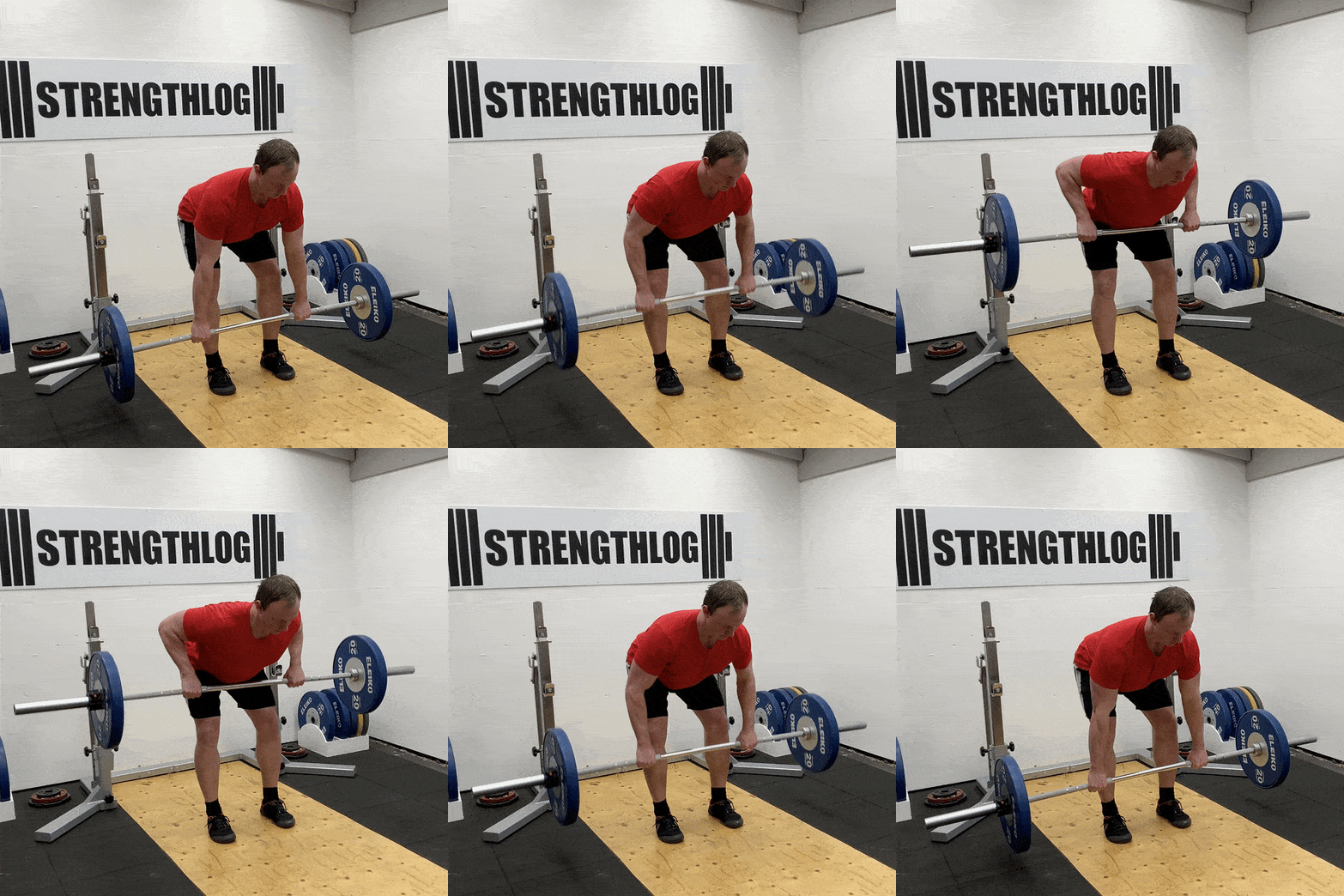
Rows (barbell, dumbbell, and machine) build a strong back (and hit your biceps, too) and help keep your shoulders healthy by balancing out all the pushing movements like the bench press.
A strong back means better posture and more power in almost every sport (and everything else you do).
How to Do Barbell Rows
- Grip the bar with an overhand grip.
- Lean forward with the bar hanging from straight arms.
- Inhale and pull the bar towards you.
- Pull the bar as high as you can so that it touches your abs or chest, if possible.
- With control, lower the bar back to the starting position.
- Repeat the movement for your desired number of repetitions.
Overhead Press
The overhead press trains your shoulders and triceps in a functional way—plus, it forces your core to work to keep you upright.
Use dumbbells or a barbell—both work—as long as you keep the movement controlled and push with the right muscles.

How to Overhead Press
- Place a barbell in a rack at about chest height.
- Grip the bar slightly wider than shoulder-width apart and step close to it.
- Tighten your abdominal muscles, unrack the bar and let it rest against your front delts while you step back from the rack with your feet shoulder-width apart. This is your starting position.
- Push the barbell up, extending your arms fully, while exhaling.
- Bring the weights back down to your shoulders, slow and controlled, while inhaling.
- Repeat the movement for the desired number of repetitions.
Deadlift
Deadlifts train your entire backside—glutes, hamstrings, lower back, and traps—and they teach you how to lift heavy stuff safely
Keep the form tight—no ego lifts—so your back stays safe as you get stronger.

How to Deadlift
- Step up close to the bar so that it is about over the middle of your foot.
- Inhale, lean forward, and grip the bar.
- Hold your breath, brace your core slightly, and lift the bar.
- Pull the bar close to your body, with a straight back, until you are standing straight.
- Lower the bar back to the ground with control.
- Take another breath, and repeat the movement for your desired number of repetitions.
Plank
Planks might look simple, but they light up your entire core and help build stability for every other lift. They train your abs functionally and help you stay tight under heavy weight.
Plus, they’re low-impact and great for building endurance in your midsection.

How to Do the Plank
- Stand on your elbows and feet.
- Brace your abs and try to form and hold a straight line from your head to feet.
Romanian Deadlift
Romanian deadlifts are a hamstring and glute destroyer—in the best way. They teach you how to hinge at the hips, which is an essential movement pattern for strength and injury prevention.
Also, they’re great for flexibility and muscle growth in your posterior chain (your backside).

How to Do Romanian Deadlifts
- Get into the starting position by deadlifting a barbell off the floor, or by unracking it from a barbell rack.
- Inhale, brace your core slightly, and lean forward by hinging in your hips. Keep your knees almost completely extended.
- Lean forward as far as possible without rounding your back. You don’t have to touch the barbell to the floor, although it is OK if you do.
- Reverse the movement and return to the starting position. Exhale on the way up.
- Take another breath, and repeat the movement for the desired number of repetitions.
Strength Training Programs for Teens
If you want to see the best possible results from your training, following a program instead of doing random exercises when you’re in the gym is a great idea.
Random training often means random results.
In our workout tracker app, you’ll find some of the best training programs you can do.
It is called StrengthLog and is 100% free. You can also use it to log your workouts so you know what to beat the next time you hit the gym. Trying to do one more rep than last time or lifting a little heavier is a big part of building muscle and getting stronger.
You can download StrengthLog with the buttons below:


Here are two of the best programs for a strength-training teenager. The first is fantastic for beginners, and the second is the perfect next step once you have followed the beginner program for a few months.
Beginner Strength Training Program
In this program, you train your whole body two or three times per week, like this:
Week 1
- Monday: Workout A
- Tuesday: Rest
- Wednesday: Workout B
- Thursday: Rest
- Friday: Workout A
- Saturday: Rest
- Sunday: Rest
Week 2
- Monday: Workout B
- Tuesday: Rest
- Wednesday: Workout A
- Thursday: Rest
- Friday: Workout B
- Saturday: Rest
- Sunday: Rest
Then, on Week 3, you go back to the routine you did on Week 1, and so on.
You can also do two weekly workouts instead of three. In that case, do Workout A on one day and Workout B on another. You can pick any two days you like. Just take at least one day of rest between your training sessions.
You’ll do the following strength training exercises:
Workout A
| Exercise | Sets | Reps |
|---|---|---|
| Squat | 3 | 6–8 |
| Overhead Press | 3 | 8–10 |
| Barbell Row | 3 | 8–10 |
| Tricep Pushdown | 2 | 8–10 |
| Leg Curl | 2 | 8–10 |
| Crunch or Hanging Knee Raise | 2 | 10–12 |
Workout B
| Exercise | Sets | Reps |
|---|---|---|
| Deadlift | 3 | 5–6 |
| Bench Press | 3 | 8–10 |
| Lat Pulldown or Pull-Up | 3 | 8–10 |
| Barbell Curl | 2 | 8–10 |
| Leg Extension | 2 | 8–10 |
| Standing Calf Raise | 2 | 10–12 |
This program is available for free in our workout log app. If you have it installed, you can click here to go directly to it:
Beginner Strength Training Program
Upper/Lower Body Split Program
When you have been doing a beginner program for a few months, an upper/lower split is a perfect next step.
An upper/lower split means you split your body into two sessions instead of training every muscle group every workout. You train you upper body one workout, then your lower body the next. Typically, you work out four times per week, doing upper body twice and lower body twice.

The upper/lower split is also free in our workout app. Click here to open it:
StrengthLog’S Upper/Lower Program
💪💪💪
Once you have more training experience, you can move on to more advanced programs, like a push/pull/legs split if you are interested in bodybuilding, a powerlifting program if lifting heavy stuff is your thing, or a Olympic-style weightlifting program.
I have written another article where I go through many of our top routines, and you can likely find one that fits your goals perfectly there:
The Best Strength Training Program for All Fitness Goals
But try a beginner routine first! Even if it can be tempting to jump right into an advanced program, it won’t give you faster results before you have built a base of strength and muscle and learned the exercises.
Tracking Your Progress
If you are serious about building muscle and getting stronger and fitter, there’s one simple habit you absolutely should pick up: tracking your workouts.

Here’s why it matters:
Progress
Remember when we talked about progressive overload earlier and how it’s essential if you want good gains?
Strength training is all about progress, and if you’re not tracking, it’s easy to forget what weight you used, how many reps you managed, or how hard it felt.
If last week you squatted 100 lbs for 10 reps, this week you know to aim for 105 or maybe an extra rep or two—like having a clear game plan every time you step into the gym.
By writing things down (for example, using an app like our workout tracker), you’ll see how you improve from workout (or week, month, and even year) to workout.
Motivation
Seeing your lifts improve over time is super motivating—especially on those days when you feel like you’re not making progress.
Just look back at where you were a few months ago and let the records show that you’re definitely getting better. It’s a huge motivation boost!
Smash Through Plateaus
Without a training log, you might end up doing the same thing every workout. Or just do random exercises based on your gut feeling. Your gut knows a lot, but it’s probably not the most reliable source when it comes to building strength and muscle.
Tracking helps you spot plateaus early and know when it’s time to adjust your program—maybe add more weight, change reps, or switch exercises.
You’ll also notice if you’ve been going too hard and heavy for too long and signs that you might need a lighter week or a rest day to recover properly.
💪💪💪
In short, tracking isn’t just for pro athletes—it’s for anyone serious about their goals. It takes just a few minutes per workout but can make a big difference in how quickly and consistently you gain strength.
And if you’re wondering about the best way to track your workout, it’s our workout log app, StrengthLog. It’s free, it has no ads, and you can track your training and progress fast and easily and follow many fantastic training programs directly in the app.
You can download StrengthLog with the buttons below:
Maintaining Motivation
Lifting weights can be a lot of fun. Getting stronger and seeing yourself improve workout to workout sure is.
Until it isn’t. Sometimes, your motivation just isn’t there.
And that’s OK. If you really need time away from the weights, take it.
However, if you want to see good results from your efforts, consistency is key.
Think Back On Why You Started
First off, remember why you started strength training. Everyone starts lifting for a reason. Maybe it was to get stronger, to feel more confident, to get better at a sport, or to change something about how you see yourself.
Write that reason down. Look at it when you don’t feel like training.
Motivation fades, but purpose sticks.
Set Goals
Another tip is to set goals for yourself. And I’m not just talking about a far-away goal like benching 225 or squatting double your body weight.
Big goals are awesome, but don’t forget to chase the small ones, too—like hitting a PR, doing more reps than last week in an exercise, or just showing up when you didn’t want to—those stack up.
Track Your Progress
Nothing kills motivation faster than feeling like you’re not improving.
It’s worth repeating: keep a workout log.
When you look back and see how far you’ve come—more reps, heavier weights—you can’t help but feel motivated.
Motivation Isn’t Everything
Lastly, don’t rely on motivation alone.
All the fitness influencers you see on social media? The pro athletes? You can bet that most of them don’t feel like training every day, week in and week out, even if they make it look like they do.
You won’t always feel like training either, but if you can still show up on those days, that’s what separates you from the average.
Build a habit and make it part of your routine—like brushing your teeth or walking your dog. Good habits carry over to everything else in life.
Strength Training for Teens: Nutrition
In my experience, most teens struggle with nutrition. Or rather, they think it’s more complicated than it is.
Everyone can train hard, but nutrition isn’t self-explanatory, and there is a massive amount of misinformation being spread on things like social media.
The good news is that eating for strength training isn’t very hard.
Let’s start with the basics: calories.
What Are Calories?
Think of calories as fuel for your body. Just like a car runs on gas, you run on calories. Everything you do—lifting weights, walking, growing taller, even breathing—burns calories. They’re energy, plain and simple.
Why Is Getting Enough Calories Essential For Strength Training?
When you train hard—whether you’re lifting weights or doing other sports—your body needs more energy to:
- Build and repair muscle.
- Recover faster.
- Stay focused and feel good mentally.
- Keep your bones strong and hormones working right (this is extra important when you’re still growing).
And where does that energy come from? You guessed it: calories from the food you eat.
What Happens If You Don’t Eat Enough?
If you don’t eat enough calories, your body starts running on empty.
In the long run, that can lead to something called RED-S (Relative Energy Deficiency in Sport). That’s a fancy way of saying your body doesn’t have enough fuel to function properly.9
You might start to feel:
- Super tired and weak during workouts.
- Injured more often.
- Moody or down.
- Like your strength gains are stalling.
- For girls: irregular or missing periods.
- For guys: drops in testosterone.
None of that’s good, especially if you’re trying to train hard and get the results you want at the same time.
Teenage athletes (like you) need enough calories not just for training—but also for growing and staying healthy. Eating too little doesn’t just mean slower gains; it can mess with your bones, mood, strength, and immune system.
You’re building a strong body, and to do that, you’ve got to feed it right.
Don’t skip meals. Don’t be scared of eating more. Food is your ally.
You want calories from:
- Protein for building muscle.
- Carbs for energy.
- Fats for hormones and vitamin absorption.
Those three are your macronutrients.
A macronutrient is a nutrient you need a lot of every day and gives you energy (calories).
A micronutrient, on the other hand, is a nutrient that can be just as important, but you only need a tiny amount of it, and it does not provide any calories. I am talking about vitamins and minerals.
Teenage athletes need more calories than adults with the same body weight because they have a lot more going on in their bodies, with natural growth—which also requires energy—happening at the same time.
I can’t tell you exactly how many calories you need to eat because it differs a lot depending on how big you are and how active you are outside the gym.
But active teens need plenty of healthy fuel, and in general, moderately active teen girls need about 2,200 calories per day and teenage boys about 2,500–3,000.9 Very highly active teenage girls need roughly 2855–2875 calories and teenage boys 3,450–3,925 calories daily.10
If You Want to Gain Weight
If you’re trying to build muscle and gain weight, the key is to eat more than you burn, but do it in a way that fuels your training and helps your body grow strong—not just pack on body fat.
Add extra food to your meals, like an extra scoop of rice or pasta, a second sandwich, or a glass of milk with snacks.
If you’re struggling to eat larger meals, try eating more often, even if it’s just a handful of nuts, a protein shake, or a banana with peanut butter.
Focus on real, nutrient-dense foods that give you energy for your workouts and help your muscles recover, and don’t be afraid of eating a little more fat or carbs—your body needs it right now. You should already be eating all the protein your muscles need to grow.
Track your weight once a week. If you’re not gaining about 0.25–0.5 kg (0.5–1 lb) per week, increase your daily calories by 200–300 and try again.
If You Are Overweight
If you are an overweight teenager and strength train, you will burn more calories than a smaller teen, especially one who doesn’t work out, but you should avoid eating more calories than you need.
It is a good idea to maintain your current weight as you continue to grow taller. By eating at a maintenance level and exercising, you’ll gradually lose body fat (your height increases while your weight stays steady) and build muscle fitness.
It’s important that even if you are overweight, you should eat as much as you need for your training—falling short can backfire by slowing your metabolism or reducing growth.
As an overweight teenager, you actually have the best chance to gain muscle and lose fat at the same time, something that is quite challenging for most people to do.
If you are very overweight, you might need to go on a weight-loss diet and eat fewer calories than your body needs. It could be as simple as cutting out processed junk food and sugary sodas, but talking to a dietician can also be a great way to get concrete tips on how you can get back to a healthy body weight.
💪💪💪
Now, let’s talk more about those macronutrients: protein, carbs, and fat.
Protein
Protein is what your body uses to build your muscles. When you strength train, you need more protein than someone who doesn’t.
No protein, no progress. Think of it like this: you’re putting in the work, but without protein, it’s like trying to build a Lego house with no bricks.

Teens who lift weights and want the best results need ~1.5 grams of protein per kilogram or approximately 0.68 grams per pound of body weight per day.11
That amount of protein gives your body what it needs to support natural growth and build muscle and strength, plus the protein it uses for many other processes.
Eating even more protein is not bad for you, but there is no evidence that you will see better gains or perform better.
How often you eat your protein isn’t usually a big deal. Many small meals or a few large servings—your body and muscles can absorb and use all the protein you feed them, regardless of how you distribute it over the day.
The total amount of protein you eat during a day is much more important than when you eat it.
That being said, eating (or drinking) protein after a workout is always a good idea to give your muscles what they need when they need it the most.
In theory, proteins from animal sources (meat, fish, eggs, chicken, milk, and so on) are slightly better for strength and muscle gains than vegetable sources, but it doesn’t seem to matter much in practice. So, if you’re plant-based, you can still make gains as long as you get enough protein.
Carbs
Carbs (short for carbohydrates) are your body’s main source of energy when you do high-intensity things like running or lifting weights.
When you eat carbs, your body breaks them down into glucose (a type of sugar), which goes into your blood and powers your muscles and brain.

If you’re strength training, carbs are not as essential for performance as if you were an endurance athlete or did a team sport like basketball or football, but they are still helpful because:
- They give you the energy to train hard.
- Without enough carbs, you might feel like you run out of gas in the middle of your workout.
- They help your muscles recover.
- After lifting, your muscles use carbs to refill their energy stores and kick off recovery.
Good carbs to eat include rice, pasta, potatoes, oats, bread, and fruit.
Sugary stuff like candy, soft drinks, ice cream, and so on are not good foods, but you can eat them in moderate amounts.
You don’t have to give up treats just because you’re into lifting—no single food makes your diet good or bad. It’s all about your overall diet, and a good diet for strength training can include the occasional sugary treat.
And if you hear about low-carb this or keto that—don’t stress about carbs being “bad”—they’re not. If you’re a training teen, carbs are your friend. Just focus on mostly whole foods, and you’re set.
Fat
Fat is the most energy-dense nutrient in food, meaning it contains the most calories. And that’s not a bad thing (an old myth is that eating fat makes you fat—it doesn’t. Eating more calories than you need does, but it’s your overall diet that counts).

Fats come in different types—like saturated and unsaturated—and are found in foods like nuts, seeds, meat, eggs, oils, avocados, cheese, and some junk food.
But not all fats are created equal (more on that in a second).
Here’s why fat matters if you’re training hard:
- Fat gives you a lot of energy. One gram of fat gives you 9 calories (compared to 4 from carbs or protein). It’s especially important during lower-intensity activities and between meals.
- Fat helps you produce hormones that help you build muscle and recover well.
- Your brain is made up of a lot of fat, and eating enough healthy fat keeps it sharp.
- Fat is a part of the membranes that cover all your cells and protect them from damage.
- Some vitamins (A, D, E, and K) need fat to be absorbed. Without it, even the healthiest diet on paper might not give you the nutrients you think you’re getting.
Young athletes and teenagers should eat between 20 and 35% of their calories from fat.9 You don’t have to count it—a balanced diet with whole foods typically lands somewhere within those numbers.
You can find good fats in olive oil, nuts, seeds, avocados, fatty fish (like salmon), eggs, and natural peanut butter.
Traditionally, saturated fats like those in red meat and butter have been called “bad” fats, as in they are bad for your heart, but you don’t have to avoid them. Red meat, for example, is also filled with other healthy nutrients and great protein for building muscle.
The only type of fat you should downright try to avoid is trans fats— they’re in a lot of packaged junk food and are straight-up trash for your body.
Micronutrients: Vitamins & Minerals
You already know that protein, carbs, and fats matter. But there’s something else that can make or break your performance, recovery, and even how your body grows: micronutrients.
Micronutrients are vitamins and minerals your body needs in small amounts—but don’t let the “micro” fool you—they’re hugely important.
Unlike carbs or protein, they don’t give you energy directly, but they help your body use energy properly, build strong bones, move oxygen, heal, and keep your immune system healthy.
They help with:
- Building and maintaining muscle and bone.
- Producing energy.
- Keeping your immune system strong.
- Carrying oxygen to your muscles.
- Preventing injuries and helping you recover from your training.
If you fall short on key micronutrients, your performance can drop, your recovery slows, and your risk for injuries or illnesses increases.
Some of the most important ones for a teen athlete include:
Iron
- Carries oxygen in your blood to your muscles.
- Low iron = fatigue, shortness of breath, and poor recovery.
- Where to get it: beef, turkey, spinach, fortified cereals, cashews.
- Eat iron-rich foods with something high in Vitamin C (like oranges or bell peppers) to help your body absorb it better.
Calcium & Vitamin D
- These two work together for bone health and muscle function.
- Training hard without enough calcium or vitamin D increases your risk of bone injuries.
- Where to get it:
- Calcium: dairy, fortified plant milks, tofu, leafy greens.
- Vitamin D: fatty fish (like salmon or trout), eggs, fortified milk—and sunshine (but not always enough, especially in winter).
B Vitamins (like B2 and B12)
- Help your body turn food into energy.
- Support brain function and red blood cell production.
- Where to get it: whole grains, eggs, meat, dairy, leafy greens.
You generally want to get vitamins and minerals from real foods whenever possible, not supplements (with the exception of vitamin D and B12 (vegans only).
Building your meals around protein sources like meat or fish, colorful fruits and vegetables, whole grains, dairy (or fortified alternatives), and healthy fats (like nuts or avocados) usually covers the bases as long as you eat as many calories as you need.
Supplements
This is going to be a short segment.
There is very little evidence that you need supplements to improve your strength training results.
The only exceptions you might need are vitamin D if you don’t get enough sunlight and vitamin B12 if you are a vegan.
Protein Supplements
Other than that, a protein powder can help you get enough protein.

Getting your protein from whole foods is the best, but sometimes, a shake is convenient.
You should know that protein powders do not build more muscle than the same amount of protein from food (even if the companies making them want you to believe so).
They are just powdered food (whey protein is protein from cow’s milk, for example), nothing more and nothing less.
Whey protein is a great option if you do dairy. If not, soy or pea protein are good alternatives.
Creatine
Creatine is a substance your body already makes. You also get some from foods like meat and fish. But when you train hard—especially heavy lifting, sprinting, or explosive sports—your muscles burn through it fast.
When you take creatine as a supplement, you’re topping off your body’s creatine stores. More creatine means more fuel for your muscles.
If you take creatine consistently, you can usually lift a bit heavier or get an extra rep or two, which helps you gain muscle faster over time.

Tons of studies show it’s safe when used properly.12 Three to five grams a day is a good dose, and there is no particular reason why you shouldn’t use it. I recommend it for everyone.
Caffeine & Energy Drinks
Energy drinks and caffeine do boost performance if you take them half an hour to an hour before training. However, teens should be careful with them because we don’t know if they are safe to use day after day.
Do I think they are harmful or dangerous? In moderation—no. But I am fully convinced that it’s important to learn how to train properly—how to train hard—without being dependent on chemicals in your body.
If you do use energy drinks, limit yourself to one (or the same amount of caffeine) before training. If nothing else, too much caffeine will mess up your sleep, even if you don’t notice it yourself, and sleep is super-important for your gains.
Strength Training for Teens: Final Rep
Hey, you made it to the end, which already tells me one thing: you’re serious about getting stronger.
That’s a big deal.
Strength training is about lifting heavy stuff, sure. But it’s also about lifting yourself up, building confidence, and proving to yourself what you’re capable of, one rep at a time.
Thanks for reading, and good luck with your training!
Last reviewed: 2026-01-09
References
- Br J Sports Med. 2014 Apr;48(7):498-505. Position statement on youth resistance training: the 2014 International Consensus.
- Resistance Training for Children and Adolescents. Pediatrics, Volume 145, Issue 6, June 2020.
- Int J Environ Res Public Health. 2021 Sep 8;18(18):9477. Effects of Training with Different Modes of Strength Intervention on Psychosocial Disorders in Adolescents: A Systematic Review and Meta-Analysis.
- The Impact of Resistance Training on Mental Health: Neuropsychological and Behavioral Functioning. Resistance Training – Bridging Theory and Practice. 28 December 2024.
- British Journal of Sports Medicine, Vol 44, Issue 1. Resistance training among young athletes: safety, efficacy and injury prevention effects.
- Pediatrics. 1983 Nov;72(5):636-44. Medical history associated with adolescent powerlifting.
- The effectiveness of exercise interventions to prevent sports injuries: a systematic review and meta-analysis of randomised controlled trials. Br J Sports Med. 2014 Jun; 48(11):871-7.
- The prevention of sports injuries in high school students through strength training. National Strength Coaches Assoc. J. 1982; 4:28Y31.
- Paediatr Child Health. 2013 Apr;18(4):200–202. Sport nutrition for young athletes.
- Nutrients 2024, 16(16), 2803. Nutrition for Children and Adolescents Who Practice Sport: A Narrative Review.
- Journal of the Pediatric Orthopaedic Society of North America, Volume 5, Issue 1, February 2023, 599. Nutritional Recommendations for the Young Athlete.
- Nutrients 2021, 13(2), 664. Creatine Supplementation in Children and Adolescents.
