
Strength training isn’t just for bodybuilders or strength athletes—it can be a game-changer for equestrians, too.
Whether you’re trotting, jumping, or galloping, horseback riding requires balance, control, and endurance. And while your horse does a lot of the heavy lifting, your muscles play a huge role in keeping you steady, strong, and responsive in the saddle.
In this guide, we’ll break down how strength training can improve your ride, enhance your posture, and make long rides feel a bit easier (and maybe even a bit less bumpy). In addition, you’ll find not one but two strength training programs that will take all the theory and put it to practical use.
***
Want to jump right into the training programs?
- Click here for the bodyweight strength training program.
- Click here for the weight training program.
Get ready to boost your equestrian fitness—your body and your horse will thank you!
Table of Contents
Benefits of Strength Training for Equestrians
Riding isn’t just about your horse doing all the work (though wouldn’t that be nice?). It’s about you being in control, stable, and strong in the saddle.
Riding may look all elegant and effortless from the outside, but you know it takes serious physical skill to keep that up.
Let’s break down why strength training helps you crush it in the saddle:
Core Stability & Control
Equestrians rely on core stability to maintain posture and control over the horse.
A strong core helps you maintain control when you’re absorbing, balancing, and staying in sync with your horse’s movement
It also makes it easier to stay centered, helping you communicate better with your horse.
Muscle Strength
Riding involves lower body strength to grip, control, and direct the horse, while sufficient upper body strength is necessary for holding the reins, steering, and maintaining posture.
And there is no better way to increase your strength than strength training. It’s in the name. Lifting heavy iron and bodyweight strength training are both excellent options for equestrians.
Muscle Endurance
Riding is physically demanding and can wear you down during long or competitive scenarios. Strength training boosts your maximum strength, but it also builds the muscular endurance you need to maintain a strong riding position and avoid fatigue during long sessions.
- When you ride, you’re basically holding a squat position, especially when you post or stay in a half-seat. A stronger lower body makes it easier to keep that position without turning your legs to jelly.
- Weight training for the upper body builds powerful shoulders and back muscles, which prevents slumps and improves your ability to stay upright and resist fatigue.
Improved Reaction Time & Coordination
Strength training exercises that involve stability and balance (exercises that work a single leg at a time or include balancing moments, for example) give you better proprioception (your body’s ability to sense its position, movement, and orientation in space without relying on visual cues) and coordination. You’ll be able to react more quickly and confidently to sudden movements from the horse.
Injury Prevention
Equestrians are at risk of injuries from falls, sudden jolts, and repetitive stress in the saddle.
If you lift weights regularly, you’ll have better balance, joint stability, and muscle strength, which means fewer falls and less likelihood of injury if you take a tumble.
In addition, you’ll strengthen your body to handle the bumpy and repetitive nature of riding.
And if you do injure yourself, your recovery will be faster, and you’ll be back in the saddle with less time and rehab. Strength training builds up your ligaments and tendons along with your muscles, which makes recovering from minor aches or accidental bumps or tumbles much quicker.
Reaction Time & Coordination
Strength training can improve your reaction time, so you’re always one step ahead of your horse. Explosive and plyometric moves train you to be alert, giving you the agility to handle sudden moves or even avoid the occasional ditch.
Confidence & Resilience
Let’s face it: when you know your body is strong, you feel ready for any surprise trot or quick maneuver. And yes, that confidence translates to better riding.
In addition, physical strength often translates to mental strength. Feeling strong and capable boosts your confidence, which is crucial for riders as they communicate with and control large, powerful animals like horses.
And speaking of communication:
Improved Communication with Your Horse
The better you can control your muscles, the clearer your cues are to your horse. A little squeeze to encourage them forward, a gentle shift for a turn—it’s all more precise when you’re not fighting your own body to get there.
Key Areas for Equestrian Strength Training
Strength training for equestrians is about building a foundation of muscle, endurance, balance, and core strength.
You need a strong and coordinated body to handle the unique demands of riding and working with horses. Because equestrians rely heavily on body control, coordination, and balance, your strength training program should focus on functional, compound exercises (exercises that work multiple joints and muscle groups together) that boost riding performance, improve stability in the saddle, and prevent injuries.
A powerful, confident body translates into improved partnership and effective communication with your horse. Nothing gives you strength and muscle endurance like lifting weights (whether we’re talking about barbells and dumbbells or your own body weight), and you’ll notice the difference quickly, too.
Let’s gallop through what matters most. Here’s an overview of what an equestrian-focused strength program entails:
Why Strength Training Is Important for Equestrians
Core Stability
Your foundation – it’s what keeps you stable in the saddle and absorbs the impact when your horse’s gait gets bumpy. A strong core lets you maintain control without relying on the reins, which is better for both you and the horse.
Also, equestrians rely on core strength to maintain posture, absorb movement, and communicate effectively with the horse, and core stability helps you stay connected with your horse’s movement.
Lower Body Strength
Think glutes, quads, adductors, hamstrings, and calves. You need controlled lower body strength to maintain a proper seat and keep your heels down, and for things like posting, holding a two-point stance, or enduring long trail rides.
In addition, your legs are your communication lines. Strong legs improve your ability to cue your horse with subtle leg pressure and maintain balance without gripping for dear life.
Upper Body Strength & Endurance
Good overall upper body strength means you can stay upright, open, and relaxed through your torso.
A stable back and strong shoulders and arms give you the endurance to maintain posture and manage the reins without slumping forward.
Balance and Coordination
Let’s face it: riding can get bumpy, and strength training helps you stay steady no matter what your horse decides to do.
Good balance and coordination are about proprioception—knowing where your body is in space. Training with unilateral exercises like single-leg deadlifts and lunges improves both and helps you make quick adjustments without even thinking about it. Plus, these exercises expose imbalances between legs, so you can address them before they affect your riding.
Hip Flexibility & Mobility
You need hip flexion to mount up and maintain good form in the saddle. With good hip flexion, you can sit deep in the saddle, moving fluidly with the horse rather than bouncing around like a popcorn kernel.
Good hip mobility allows you to move your legs in multiple directions with less effort, making for smoother transitions and better control. If your hips are tight, though, your leg cues can be awkward and less accurate, leading to misunderstandings with your horse.
Strength training with a full range of motion improves your flexibility as much as dedicated stretching, and it gives you strength you can use in that range of motion at the same time.
Injury Prevention
Horses can have a mind of their own (ask any rider who’s experienced an unexpected “dismount”). A stronger, more balanced body reduces injury risk when things get… unpredictable.
How Often Should Equestrians Strength Train?
Riding takes a lot of time (both in the saddle and taking care of your horse and everything else that needs doing in the equestrian facility) and can be taxing on your body. Many riders don’t lift weights because they feel they don’t have time for even more training.
The good news is that strength training for equestrians doesn’t have to add hours and hours to your already busy schedule. And the strength you gain makes the physically demanding parts of horse riding easier.
Here’s the deal: Two to three days a week of strength training is ideal for most equestrians and will complement your riding beautifully. This frequency builds strength, endurance, and stability while allowing enough recovery for both strength sessions and riding.
Here’s a breakdown of what that might look like:
Two Days a Week
Twice a week is great if you’re balancing a lot of riding and want to start with something manageable. It also works well for maintaining your gains during intense or frequent riding schedules.
If you train twice weekly, I suggest you do full-body workouts, training your entire body each session.
Three Days a Week
Three times a week is ideal if you’re comfortable with a bit more intensity. It allows you to split up major muscle groups or hit certain areas harder for greater gains in strength and endurance.
If you opt for three weekly training sessions, you can split your routine up, training the lower body one workout, the upper body the next, and finishing off with a full-body session, for example.
You also have greater flexibility to schedule your weight training around your riding sessions. You want to make sure you’re not overly fatigued on the horse—so no maxing out on leg day before a big jump session, for example.
Or you can stick with the full-body approach.
Each session can be around 45 minutes (think quality over quantity), certainly less than an hour with a warm up.
The strength training programs for equestrians below (one for weight training and one for bodyweight training) are both 3-day routines with one day of lower body focus, one of upper body focus, and one full-body workout. However, you can adapt them to a 2-day schedule.
Strength Training Programs for Equestrians
In this section, you’ll find not one but two strength training programs for equestrians.
- The first – Weight Training Program for Equestrians – features traditional strength training exercises with weights. It’s ideal if you can access a gym (or at least a well-equipped home gym).
- The second is perfect if you want to get started with bodyweight strength training that doesn’t require any advanced or expensive equipment – just your body weight. It’s called Body Weight Strength Training for Equestrians.
Both programs are 3-day programs structured like this:
- Workout 1: Lower body focus
- Workout 2: Upper body focus
- Workout 3: Full body
A training week could look like this:
- Monday: Workout 1
- Tuesday: Rest
- Wednesday: Workout 2
- Thursday: Rest
- Friday: Workout 3
- Saturday: Rest
- Sunday: Rest
Feel free to switch days around to fit your schedule. But try to squeeze in at least one rest day from lifting between sessions.
Do you only have time for two strength sessions some weeks? No problem. You can either do the lower-body workout plus the upper-body workout or two full-body sessions.
Also, if you have access to a gym on some days but not on others, you can train with weights one session and do a bodyweight workout the next session. The programs are similarly structured so you can switch a day from one to the other freely.
Follow These Programs in StrengthLog
These programs (and many more) are free in the StrengthLog workout tracker app, which is free to use forever and has no ads.
We do offer a Premium version of the app that gives you access to more advanced features, programs, and statistics. All new users can activate a free 14-day premium trial to try it out. We won’t try to sell you anything, and there are no strings attached.
Download StrengthLog and start tracking your workouts today:


Weight Training Program for Equestrians
This training program uses free weights and mostly compound movements to target the muscle groups and movement patterns equestrians need to focus on.
Workout 1: Lower Body Focus
| Exercise | Sets | Reps |
|---|---|---|
| Squat | 3 | 6 |
| Dumbbell Lunge | 3 | 8 |
| Single Leg Romanian Deadlift | 3 | 8 |
| Standing Calf Raise | 3 | 12 |
| Plank with Leg Lifts | 3 | 30 secs |
Workout 2: Upper Body Focus
| Exercise | Sets | Reps |
|---|---|---|
| Lat Pulldown | 3 | 10 |
| Dumbbell Chest Press | 3 | 10 |
| Cable Seated Row | 3 | 10 |
| Dumbbell Shoulder Press | 3 | 10 |
| Dead Bug | 3 | 12 |
Day 3: Full Body
| Exercise | Sets | Reps |
|---|---|---|
| Trap Bar Deadlift | 3 | 5 |
| Kettlebell Swing | 3 | 12 |
| Dumbbell Step Up | 3 | 10 |
| Push Press | 3 | 6 |
| Wood Chop | 3 | 12 |
Bodyweight Strength Training Program for Equestrians
This program is structured similarly to the weight program but uses only the best bodyweight exercises for the same purposes.
Workout 1: Lower Body Focus
| Exercise | Sets | Reps |
|---|---|---|
| Bodyweight Squat | 3 | 12 |
| Lunge | 3 | 10 |
| One-Legged Glute Bridge | 3 | 10 |
| Side Lunge | 3 | 10 |
| Wall Sit | 3 | 30 secs |
Workout 2: Upper Body Focus
| Exercise | Sets | Reps |
|---|---|---|
| Push-Up | 3 | 10 |
| Inverted Row | 3 | 8 |
| Bench Dip | 3 | 8 |
| Floor Back Extension | 3 | 12 |
| Plank with Leg Lifts | 3 | 30 secs |
Workout 3: Full Body
| Exercise | Sets | Reps |
|---|---|---|
| Burpees | 3 | 12 |
| Lunge | 3 | 10 |
| Push-Up | 3 | 10 |
| Heel Raise | 3 | 15 |
| Side Plank | 3 | 30 secs |
For a simultaneous cardiovascular challenge, you can perform all the exercises in the workout in a row, resting as little as possible between sets. Perform three rounds, and you’ll get your heart rate up and save time while you work on your strength.
Strength Training Exercises for Equestrians
Here are detailed descriptions of all the exercises in the Weight Training Program for Equestrians and Bodyweight Strength Training Program for Equestrians programs in the order they appear.
Squat

The squat is the most effective exercise for athletic performance and a fantastic way to strengthen many muscles essential for riding, like the glutes, quads, adductors, and lower back. These muscles all contribute to keeping you stable and aligned while absorbing the movement of your horse.
The strength you gain from squatting improves your position, control, and ability to deliver consistent signals to your horse. You’ll notice better endurance in your inner thighs and hips—key areas when you’re posting, cantering, or maintaining a two-point position.
How to Squat
- Place the bar on your upper back with your shoulders blades squeezed together. Inhale and brace your core slightly, and unrack the bar.
- Take two steps back, and adjust your foot position.
- Squat as deep as possible with proper form.
- With control, stop and reverse the movement, extending your hips and legs again.
- Exhale on the way up or exchange air in the top position.
- Repeat the movement for the desired number of repetitions.
Dumbbell Lunge

Lunges work your quads, adductors, and glutes—essential for maintaining control in the saddle and even explosive moves like rising in the trot.
Lunges also add balance and stability requirements that train your body to maintain control and stay upright and aligned, even when the ground (or, in this case, your horse) isn’t so stable.
In addition, they are great for improving the flexibility of your hip flexors, which can get notoriously tight from hours in the saddle.
How to Do Lunges
- Stand up straight with your feet shoulder-width apart with a dumbbell in each hand by your sides.
- Take a big step forward with your right leg and sink into a lunge position as deep as your comfort and flexibility allow. The front knee should be directly above your ankle, and the back knee should hover just above the ground. Your rear knee should not touch the floor.
- Return to the starting position by pushing yourself back with the front leg.
- Repeat the movement for the desired number of repetitions, switch legs, and perform the exercise with your left leg forward.
Single-Leg Romanian Deadlift

Picture yourself balancing on one leg while you hinge at the hips, keeping your back straight and reaching downward while the other leg lifts behind you. That’s the single-leg Romanian deadlift.
Single-leg Romanian deadlifts train your posterior chain, including your hamstrings, glutes, and lower back, which gives you the stability to stay centered and resist getting thrown off balance during turns and jumps. It also works the little stabilizing muscles that help with your stance when you try to keep steady in the stirrups.
How to Do Single Leg Romanian Deadlifts
- Stand upright and hold a barbell with your hands about shoulder-width apart.
- Brace your core, and lift one leg off the ground.
- Keep the back straight and lean forward by hinging at the hips. Lower until you feel a stretch in the standing leg’s hamstring. Make sure to keep your hips still; you don’t want the side with your lifted leg to start rotating upwards.
- Return to the starting position. Finish all your reps on one side first, then repeat on the other leg.
Standing Calf Raise

The calf raise is the single best exercise to strengthen your calf muscles. Calf strength contributes to the endurance of your entire leg, meaning you can ride longer without fatigue setting in.
Also, when you’re riding, your calves help stabilize you and keep you steady in the stirrups through sudden movements or bumpy rides.
In addition, when every trot, canter, and gallop sends shockwaves up your legs, well-conditioned calves act like your own built-in shock absorbers, making the ride smoother for you and easier on your joints.
How to Do Standing Calf Raises
- Place your toes and the ball of your feet on the foot support. Place the shoulder pads against your shoulders and stand upright in the starting position.
- Lower yourself down by bending your ankles in a controlled movement.
- Push yourself up by extending your ankles.
- Repeat the movement for the desired number of repetitions.
Plank with Leg Lift

The plank with leg lift is like the regular plank – a great core exercise that builds endurance and stability to help you stay upright and balanced on unpredictable terrain or when your horse decides to make a sudden move – with an additional leg raise.
Lifting each leg while in plank challenges your hip stability for improved control over each leg independently — a must for precise leg cues.
How to Do Plank with Leg Lifts
- Begin by getting into a standard plank position. Place your elbows directly under your shoulders, legs extended straight behind you, and toes pressing into the ground. Your body should form a straight line from your head to your heels.
- Brace your core, keep your back flat, and avoid letting your hips sink down or lift too high.
- Slowly lift one leg off the ground to about hip height without bending the knee. Keep your leg straight during the movement.
- Hold the lifted position for a moment, then gently lower your leg back to the starting position.
- Repeat the lift with the opposite leg, ensuring you maintain a strong plank position throughout the movement.
- Continue to alternate legs for the chosen amount of time.
Lat Pulldown

You might not think pulling down a bar simulates galloping across fields, but the lat pulldown brings a lot to the table (or saddle).
Riding involves stability and maintaining control of your upper body, especially when you go through turns and over jumps. Lat pulldowns build strength and stamina to maintain a steady posture for hours on horseback. Also, with a strong back, you naturally reduce strain on your neck and shoulders.
How to Do Lat Pulldowns
- Sit on the lat pulldown machine and adjust the thigh pad to fit snugly against your thighs.
- Reach up and grasp the wide bar attachment with an overhand grip (palms facing away from you), slightly wider than shoulder-width. Ensure your grip is secure and comfortable.
- Keep your feet flat on the floor and sit with your back straight and chest up.
- Take a deep breath and engage your core strength to maintain a stable torso throughout the exercise.
- Begin the movement by pulling the bar down towards your upper chest while keeping your elbows pointed to the sides. Imagine bringing your shoulder blades together as you pull down.
- Continue pulling until the bar is below your chin or touches your upper chest. Maintain control and avoid using momentum to swing or jerk the weight.
- Squeeze your lats in the contracted position, slowly release the tension, and allow the bar to rise until your arms are fully extended. Maintain control and proper form throughout the entire range of motion.
- Repeat the movement for your desired number of repetitions.
Dumbbell Chest Press

The dumbbell chest press is an exercise for your pushing muscles (your chest, shoulders, and triceps) that even your horse would approve of. 🐴
When you’re riding, your chest, shoulders, and triceps stabilize you, help you stay balanced, and improve your grip on the reins. With a strong chest and shoulder region, you’ll be able to maintain posture, handle your horse with more control, and avoid fatigue in fast, high-energy rides.
Plus, when you use dumbbells in the the chest press, you work the little stabilizing muscles that keep you balanced in the saddle, too.
How to Do Dumbbell Chest Presses
- Lie flat on a bench with your feet firmly planted on the ground and your shoulder blades squeezed together.
- Hold a dumbbell in each hand and position them on either side of your chest with your upper arms parallel to the floor and your palms facing forward.
- Press the dumbbells up toward the ceiling, fully extending your arms.
- Lower the dumbbells slowly and under control back to the sides of your chest.
- Repeat the movement for your desired number of repetitions.
Seated Cable Row

The seated cable row works your back muscles (mainly the lats, rhomboids, and traps), biceps, and even the core to some degree. These muscles give you a strong, stable seat and upper body control while riding.
A strong upper back is essential for maintaining a “tall in the saddle” posture without collapsing or hunching forward, and it also helps you communicate better with your horse.
In addition, the seated row teaches you to stabilize your torso while pulling back, which is what you need to stay centered and fluid with the horse’s motion.
How to Do Cable Seated Rows
- Sit on the seated row bench, facing the cable machine. Your feet should be flat on the footrest, knees slightly bent, and your torso upright with your chest out, shoulders back, and core engaged.
- Grab the handle with a neutral grip (palms facing together) and ensure your arms are fully extended and your back straight in the starting position.
- Pull the handle towards your abdomen by retracting your shoulder blades (squeezing them together). Focus on driving your elbows backward and keeping them close to your body.
- Squeeze your shoulder blades together and contract your lats before extending your arms and leaning forward again. Maintain a controlled motion throughout the movement and avoid using excessive momentum.
- Stretch your lats out without letting your shoulders slump forward, then repeat the movement for your desired number of repetitions.
Dumbbell Shoulder Press

The dumbbell shoulder press builds shoulder muscles that can handle the ups and downs of a good ride and improves posture, stability, balance, and upper-body endurance you rely on in the saddle.
When done standing, your core has to kick in to stabilize the movement. A strong core means better control and balance while riding.
How to Dumbbell Shoulder Press
- Stand upright with your feet shoulder-width.
- Grab a pair of dumbbells, and lift them up to the starting position at your shoulders.
- Inhale and lightly brace your core.
- Press the dumbbells up to straight arms, while exhaling.
- Inhale at the top, or while lowering the dumbbells with control back to your shoulders.
- Repeat the movement for your desired number of repetitions.
Dead Bug

The dead bug is a fantastic exercise for equestrians, and no, it’s not about adopting the style of a bug squished under a hoof. Instead, this exercise builds the core strength, stability, and control every rider wants.
You need a solid core to stay balanced, control movements, and communicate effectively with your horse through subtle body shifts. The dead bug gives you the cross-coordination and balance required in the saddle. When done right, it strengthens the deep core muscles (like the transverse abdominis and multifidus) that stabilize your spine, along with your outer abdominal muscles, which are essential for absorbing movement from the horse.
How to Do Dead Bugs
- Lie on your back like a bug that’s been flipped over, with your arms straight up towards the ceiling and your legs stacked over your hips, with the knees bent in a 90-degree angle.
- Engage your core, and make sure that the lower back has contact with the surface.
- With control, straighten out the right leg and lower it towards the floor at the same time as you lower the left arm over your head as far as you can. Keep the lower back in contact with the floor the entire time.
- Reverse the movement, and repeat for the other side.
Trap Bar Deadlift

Deadlifting is one of the best things you can do to get stronger throughout your body, and the trap bar deadlift allows you to do it with a more neutral spine position than a traditional barbell, reducing strain on your lower back.
Deadlifts build strength in your entire lower body, glutes, and core—all crucial for controlling a thousand pounds of horse.
How to Do Trap Bar Deadlifts
- Step into the bar’s opening, and position yourself so that the handles are in line with the middle of your feet.
- Inhale, bend down and grip the handles.
- Hold your breath, brace your core slightly, and lift the bar.
- Lift the bar with a straight back, until you are standing straight.
- Lower the bar back to the ground with control.
- Take another breath, and repeat the movement for your desired number of repetitions.
Kettlebell Swing

The kettlebell swing packs power, balance, and coordination into one smooth motion. In the saddle, you need the core strength to stay balanced, the hip strength to move with your horse, and the back endurance to keep posture. The kettlebell swing hits all those muscles and skills.
A kettlebell swing recruits the hamstrings, glutes, and lower back, training your hips to drive forcefully for more endurance, control, and fluidity in the saddle.
How to Do Kettlebell Swings
- Place a kettlebell on the ground, about one or two feet in front of you.
- Take a wide stance, lean forward, and grip the kettlebell.
- Brace your core slightly, and swing the kettlebell back between your legs while inhaling.
- Swing the kettlebell forward by extending your hip while exhaling.
- Try to swing the kettlebell to about chest height.
- Repeat for the desired number of reps and put the kettlebell back on the ground when you’re finished.
Step Up

Research shows that the step-up is a great exercise for your quads, adductors, hamstrings, and, especially, your glutes.1
Lifting your body weight to step up on a surface, then stepping down again, gives you the controlled, one-leg-at-a-time strength and stability you need in the saddle. Because riding is never perfectly balanced, especially over jumps or rough terrain, focusing on one leg at a time trains your balance against resistance and prevents you from tipping forward or back while on your horse.
How to Do Step Ups
- Stand in front of a bench, an elevated platform, or step. A step that is approximately knee height or slightly lower is appropriate for most people.
- Place your right foot on the step, ensuring your entire foot is in contact with the surface.
- Use the strength of your glutes and leg muscles to drive your body upward and lift your body upward onto the platform. Avoid using momentum or relying on your back foot to assist you. You want your glutes to do as much of the work as possible.
- Fully extend your right leg, straightening your knee and pushing your hip forward as you rise.
- Lift your back foot off the ground and bring it up onto the step, fully extending your leg.
- Lower yourself in a controlled motion. Maintain control throughout the descent and resist the downward movement with your glute and leg strength.
- Repeat the movement for your desired number of repetitions.
- Step onto the platform with your left foot and repeat the steps above for the opposite leg.
Push Press

The push press gives you explosive power, stability, and coordination that can do wonders in the saddle. It’s like a hybrid of a shoulder press and a mini squat, and it’s fantastic for building both upper body strength and core stability that equestrians need.
It builds shoulder stamina and stability so you can ride longer with better form, and the quick dip and drive build power through your legs. That means better upper and lower-body control and stability, even if your horse throws a little attitude your way.
How to Push Press
- Clean a bar to your shoulders, or lift it out from a rack.
- Let the bar rest against the front of your shoulders, with your grip slightly outside your shoulders.
- Inhale and lightly brace your core.
- Bend your knees, and then forcefully push yourself and the bar upwards using your legs.
- When your legs are extended, immediately start pressing the bar with your arms, until your arms are fully extended.
- With control, lower the bar back to your shoulders.
- Repeat the movement for your desired number of repetitions.
Wood Chop

The wood chop is an excellent strength training exercise for equestrians because it mimics the rotational movements you use when balancing in the saddle and gives you a strong core, stability, and control—three essentials when you are managing a powerful horse beneath you.
Just like you need core stability to stay balanced while riding, wood chops fire up your obliques, transverse abdominis, and other stabilizing muscles. It improves your rotational power, which is great for posture and control when making subtle turns, signaling your horse, or keeping balance on tricky terrain.
Note: you can do this exercise with either a resistance band (like in the video demonstration above) or a cable pulley system.
How to Do Horizontal Wood Chops
- Fasten an elastic band at shoulder height. Grip the band with both hands, step away, and stand sideways to the band’s anchor point.
- With almost straight arms, make a sweeping, horizontal movement to your other side.
- Return to the starting position in a controlled manner.
- Repeat the movement for your desired number of repetitions.
Bodyweight Squat

The bodyweight squat works the same muscles and provides the same benefits as the barbell squat – stability, control, and endurance in the saddle – but with your body weight only as resistance.
While you might eventually want to add resistance for even more strength gains, squatting with your body weight goes a long way, and it is one of the best lower body exercises you can do without weights.
Feel free to hold at the bottom and pulse up and down for an added challenge; it is perfect for an endurance burn and helps you last longer in the saddle.
How to Do Bodyweight Squats
- Stand with your feet about shoulder width apart.
- Squat as deep as possible.
- Reverse the movement, and return to a standing position.
- Repeat the movement for the desired number of repetitions.
Bodyweight Lunge

Lunges are excellent for building leg strength, balance, and coordination. They train each leg independently, which translates well to riding.
In the saddle, you need equal strength in both legs to maintain balance and control. However, you also need to be able to produce maximum effort and coordination using one leg only sometimes. Lunges iron out any muscle imbalances, making you more stable and centered, and teach you to use one side of your lower body at a time with maximum force when needed.
How to Do Bodyweight Lunges
- Take a big step forward with your right foot and sink as deep as possible in a lunge position, without hitting the knee of the left leg in the floor.
- Return to the starting position by pushing yourself back with the front leg.
- Repeat the movement for the desired number of repetitions.
- Switch legs and repeat the above steps with your left foot forward.
One-Legged Glute Bridge

Like its name suggests, the one-legged glute bridge primarily hits your glutes. All three gluteal muscles fire during the movement, and in addition, it hits the hamstrings, hip abductors, and core muscles.
Not only does it strengthen the glutes (key for staying balanced and secure in the saddle), but it also builds core stability, hip control, and single-leg strength – all essential for handling the twists, turns, and unpredictable movements horses love to throw your way.
How to Do One-Legged Glute Bridges
- Lie down with one foot on the floor, one leg extended.
- Tuck the pelvis in to properly activate the glutes.
- Push your hips towards the ceiling by using the glute muscle in the bent leg, until your body forms a straight line from head to foot.
- Squeeze your glutes at the top.
- Reverse the movement, and repeat for the desired number of repetitions.
Side Lunge

The side lunge is a variation of the standard lunge where you take a step to the side instead of forward or backward. It works the glutes and quads, with an extra emphasis on the muscles on your inner thigh (adductors).
Lateral lunges stretch the inner thigh muscles and improve hip flexibility, which is crucial for riders, who need a deep, controlled seat and a stable leg position. In addition, the lateral movement challenges your balance in ways squats don’t. As you step side-to-side, your body learns to adjust for lateral stability, just like you’d need to in the saddle when shifting weight subtly as your horse moves.
How to Do Side Lunges
- Stand up straight with plenty of space to your side for you to step out.
- Lightly brace your core, and take a big step to the side.
- Go as deep as possible without your heel lifting from the ground and while maintaining control.
- Push yourself back up by pressing the foot from the ground.
- Repeat the movement for the desired number of repetitions.
Wall Sit

The wall sit is more than just a squat’s stubborn cousin; it’s an excellent exercise for riders looking to boost strength and endurance in the legs and core. It also helps you maintain a steady seat and control over the horse.
Holding the squat position with your back against the wall as the only support fires up your quads, glutes, and adductors. It’s a great way to simulate the control you need to support your legs while riding, especially when posting or maintaining balance in the saddle.
How to Wall Sit
- Stand with your back flat against a smooth, sturdy wall.
- Place your feet shoulder-width apart and step them about two feet (60 cm) from the wall. They should be parallel and point forward.
- Bend your knees and slide your back down the wall until your thighs parallel the ground. Your knees should form a 90-degree angle directly above your ankles. Keep your head, shoulders, and upper back in contact with the wall.
- Hold the seated position for the desired amount of time.
- Straighten your knees and slide your back up the wall to return to a standing position.
Push-Up

The push-up is a fantastic bodyweight exercise for your pushing muscles, the chest, shoulders, and triceps. It’s as effective as the barbell bench press for building these muscles, especially for beginners.2
Strong pushing muscles give you the upper-body stability you need to control the reins and communicate effectively with your horse, even during dynamic movements. They also help you maintain good posture and stay balanced and centered in the saddle.
Note: start with kneeling push-ups if the standard version feels too challenging.
How to Do Push-Ups
- Begin by lying face down on the floor. Place your hands slightly wider than shoulder-width apart, with fingers pointing forward. For regular push-ups, extend your legs back, balancing on the balls of your feet. Keep your knees on the ground for kneeling push-ups instead of extending your legs.
- Ensure your body forms a straight line from your head to your heels (regular) or knees (kneeling). Engage your core muscles to prevent your hips from sagging or sticking up in the air.
- Inhale as you slowly bend your elbows to lower your body towards the floor. Aim to lower until your chest or chin nearly touches the floor. Your body should remain straight throughout the movement, with your lower back in a natural curve. Avoid any sagging or arching.
- Exhale as you push through your hands to straighten your elbows, lifting your body back to the start position. Maintain that straight body line as you push up.
- Repeat the movement for your desired number of repetitions.
Inverted Row

The inverted row primarily targets your upper back (lats, traps, rhomboids), which is essential for maintaining a good posture, whether on the horse or the ground. A strong upper back keeps your shoulders back and counteracts the forward slouch many riders struggle with after long rides.
Inverted rows also improve your shoulder stability, which helps you manage the little micro-adjustments in the reins to communicate smoothly with your horse.
How to Do Inverted Rows
- Place a barbell in a rack, high enough for you to be able to hang below it in straight arms, with your heels on the floor. It you don’t have a bar, anything sturdy like a heavy table than won’t flip over will do.
- Grip the bar with an overhand grip, slightly wider than shoulder-width apart.
- Inhale, and pull yourself up as high as you can, or until your chest touches the bar.
- Exhale, while lowering yourself back to the starting position with control.
- Repeat the movement for the desired number of repetitions.
Bench Dip
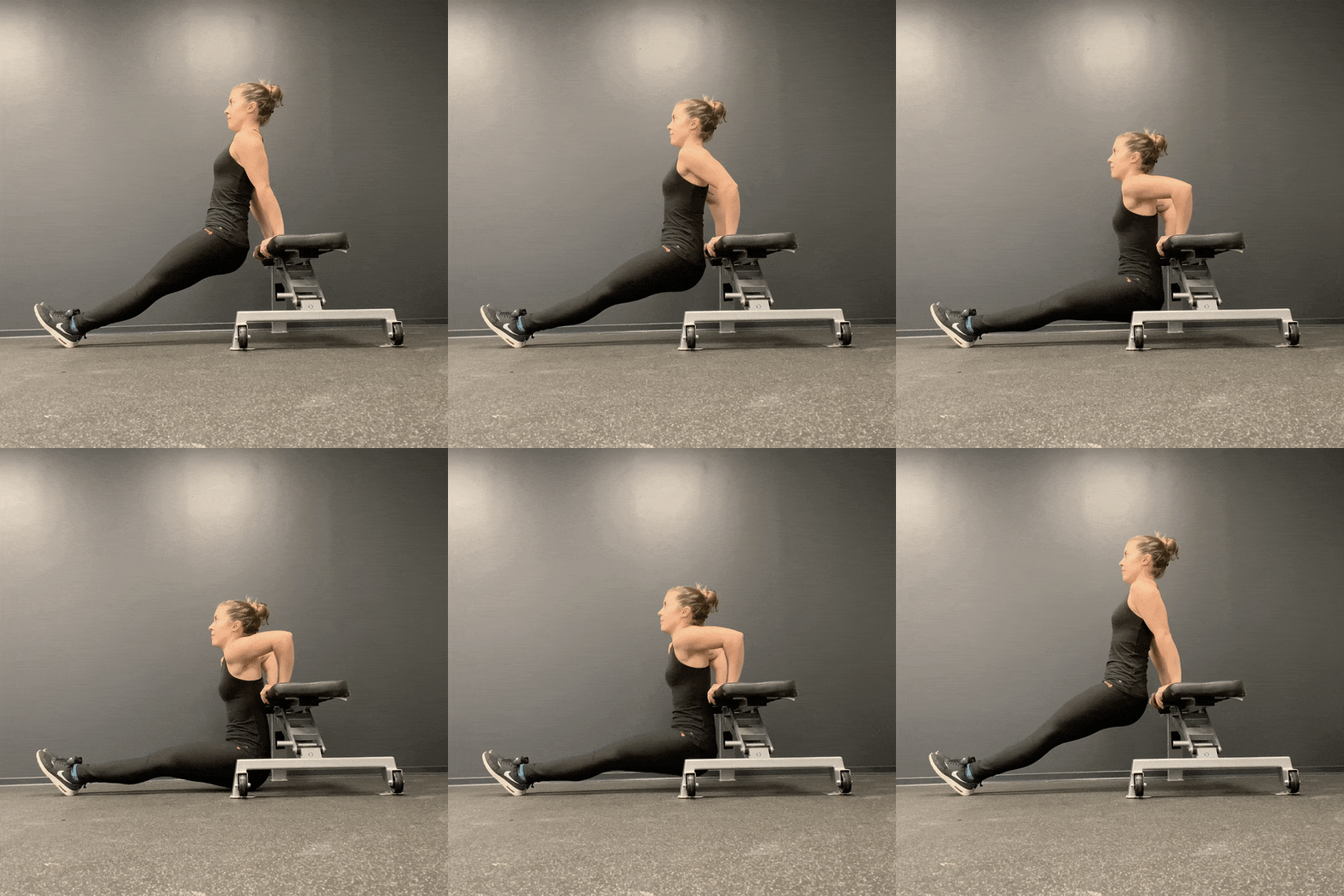
The bench dip strengthens the triceps and shoulders, two important muscle groups for a stable and controlled upper body. Equestrians rely on their upper body strength for maintaining posture, managing reins, and absorbing impact while riding.
How to Do Bench Dips
- Turn your back towards a sturdy training bench, and put your hands on the pad about shoulder-width apart. Extend your legs in front of you.
- Lower yourself with control for as far as comfortable by bending your arms.
- Reverse the motion and return to the starting position.
- Repeat the movement for the desired number of repetitions.
Floor Back Extension

The floor back extension gives equestrians a strong, stable lower back and core, allowing them to stay balanced, absorb shock, and communicate with their horse through their seat.
Riding can put a lot of demand on the spine, especially if you’re doing jumps or cross-country, where stability is crucial. Floor back extensions help strengthen the erector spinae muscles along the spine for torso stability that can flow with the horse’s movements without losing control or posture.
How to Do Floor Back Extensions
- Lie on the ground with your arms at about a 90-degree angle to your sides.
- Fix your eyes on the ground to keep the neck in a natural position.
- Lift your upper body by using your lower back. You may pause at the top of the movement, feeling the lower back muscles working.
- Lower your upper body in a slow and controlled motion.
- Repeat the movement for the desired number of repetitions.
Burpees

A burpee combines a squat, plank, push-up, and jump and works large parts of both the lower and upper body.
They require coordination through several chained movements, which can transfer to riding by helping you stay agile and responsive to your horse’s movements, especially those that require coordination and effort from head to toe.
In addition, burpees are great cardio and improve performance during high-intensity types of riding.
How to Do Burpees
- Stand with your feet shoulder-width apart, arms relaxed by your sides.
- Push your hips back, bend your knees, and lower yourself into a squat position. Bring your hands down to the floor in front of you, about shoulder-width apart.
- With your hands on the floor, jump your feet back, landing in a plank position. Your body should form a straight line from head to heels.
- Lower your chest to the floor by bending your elbows, then push back up to return to the plank position. This step adds difficulty but is not required for a basic burpee.
- Jump your feet back up toward your hands, returning to the squat position.
- From the squat, jump up explosively, reaching your arms overhead.
- Land softly with your knees slightly bent to absorb the impact, and immediately go back into the squat position for the next burpee.
- Repeat the movement for the desired number of repetitions.
Side Plank

The side plank primarily works your abs and obliques, which are like your stabilizer muscles in the saddle and responsible for keeping you steady through turns and unpredictable movements.
Also, holding a side plank builds awareness of where your body is in space (aka proprioception), which translates to better control in the saddle.
How to Do Side Planks
- Stand on your side, leaning against one elbow.
- Place the foot of the top leg in front of the other foot.
- Brace your core, and try to form and hold a straight line from your head to your feet.
- Hold the position for the intended length of time or as long as you can.
Heel Raise

The heel raise trains your calf muscles and little else, but your calves are very important in horse riding.
Strong calves help keep your heels down and steady, providing a more secure connection with the stirrup. That downward pressure translates to better balance, control, and overall stability.
Calf muscles that are strong and responsive absorb shock, protect your joints, and reduce fatigue as each stride of your horse generates impact, especially during faster gaits or on rougher terrain.
Balance on one leg to work on your stability and to make the exercise more challenging.
How to Do Heel Raises
- Stand on a solid surface, or an elevation for increased range of motion. Hold on to something for balance.
- Raise your heels by using your calves. Contract your calf muscles hard at the top.
- Lower yourself with control until you feel a stretch in your calves.
- Repeat the movement for the desired number of repetitions.
Strength Training for Equestrians: Final Words
You have reached the end of this guide to strength training for equestrians.
Thank you so much for reading! I hope you have enjoyed it and learned things that will benefit your riding.
To follow the strength training programs in this article, download our workout log app and start tracking your workouts today:
Here’s a summary of the benefits of strength training for equestrians:
- Better balance, control, and finesse in the saddle.
- Increased muscle endurance and ability to handle longer rides.
- Reduced likelihood of common equestrian injuries, especially in the lower back and knees. And lower risk of injury if you should fall off your horse!
- Better posture, coordination, and overall performance and communication with the horse.
In short, strength training not only enhances your riding skills and technique but also ensures your body can take the punishment of the saddle and reduces the risk of those all-too-familiar aches and pains.
Your horse isn’t the only one who deserves conditioning and strength work—when you’re strong, focused, and in control, you’re a better partner for them, too, so start reining in the benefits of pumping some iron today!
Last reviewed: 2025-11-25
References
- Journal of Sports Science and Medicine (2020) 19, 195 – 203. Gluteus Maximus Activation During Common Strength and Hypertrophy Exercises: A Systematic Review.
- Journal of Exercise Science & Fitness. Volume 15, Issue 1, June 2017, Pages 37-42. Low-load bench press and push-up induce similar muscle hypertrophy and strength gain.
